
At the end of the nineteenth century, one of the most famous athletes in America rode a bicycle. His name was Marshall Walter Taylor, but cycling crowds knew him as Major Taylor, a young man whose extraordinary speed made him a celebrity in a country where bicycle racing was one of the great spectator sports. Thousands gathered at velodromes to watch professional cyclists compete, newspapers followed their victories and defeats, and successful riders could earn substantial prize money. Taylor broke world records, defeated established champions and, at twenty, became world champion. He accomplished all this in an America where the colour of his skin could determine whether he was permitted to enter a race.
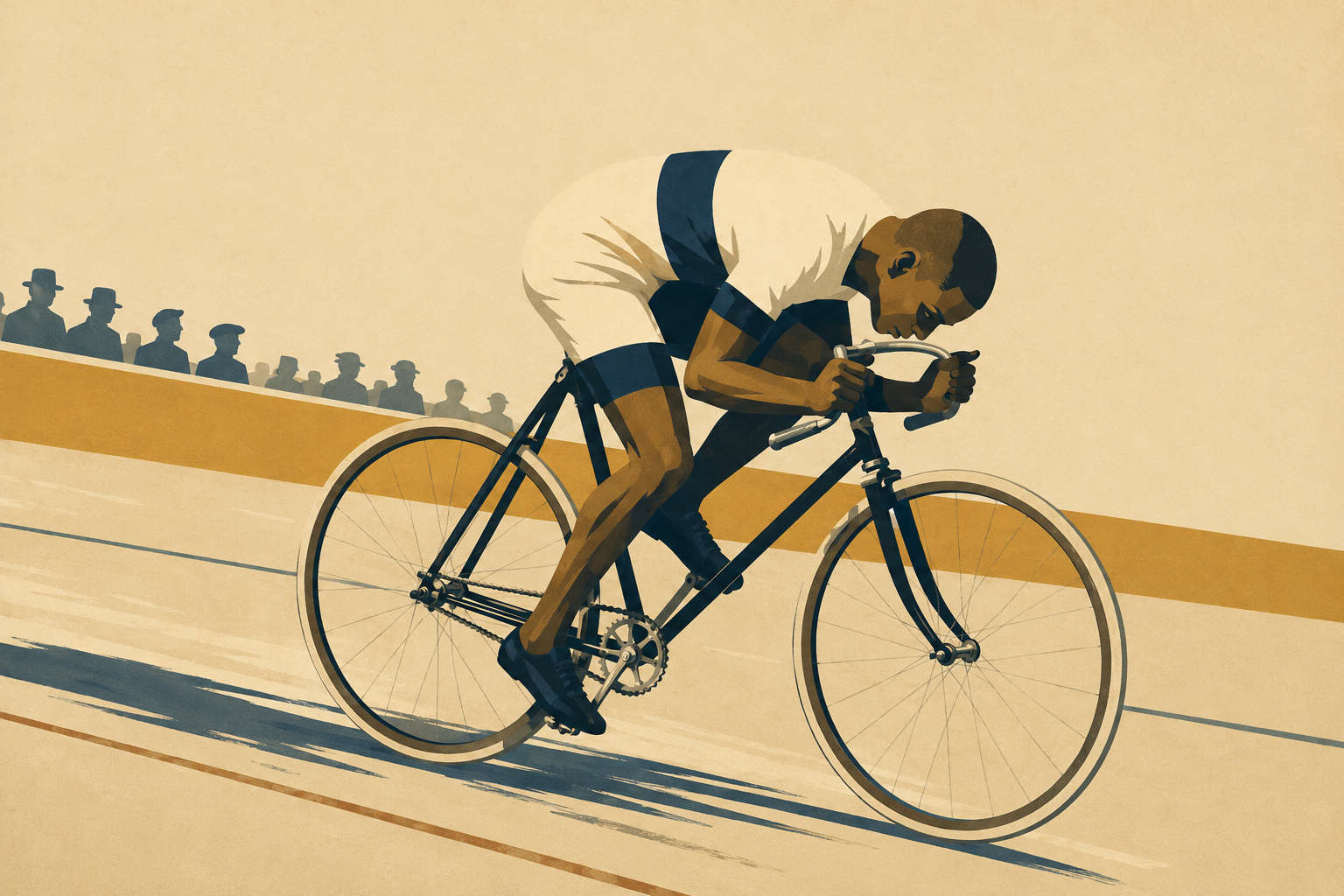
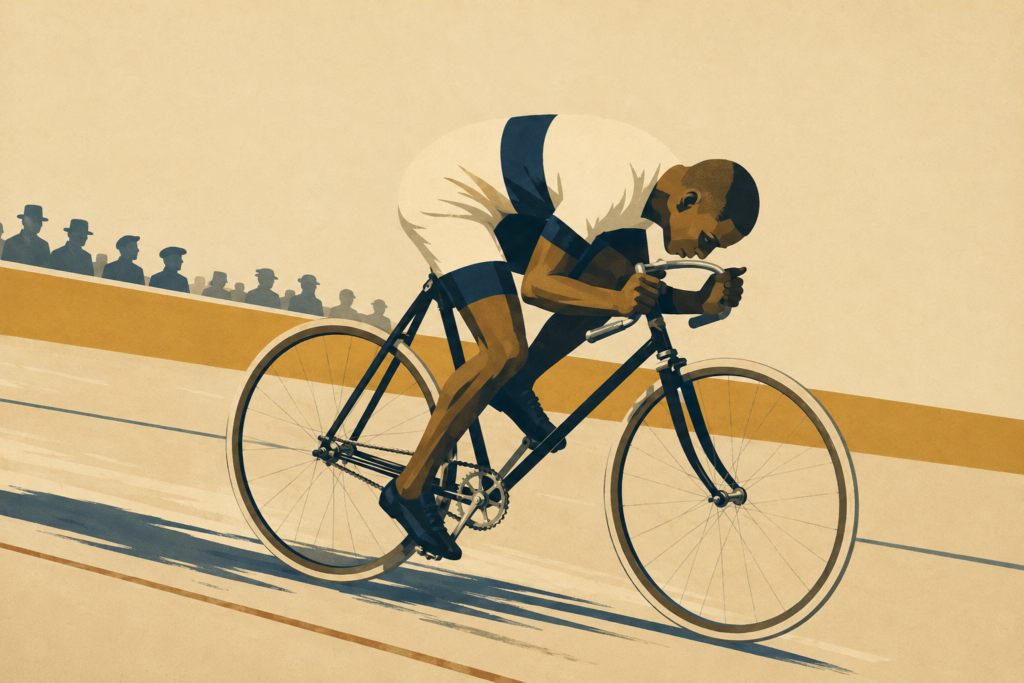
Cycling in the 1890s looked very different from the sport most people recognise today. The Tour de France did not yet exist, and much of professional cycling’s excitement belonged to the velodromes, enclosed tracks with steeply banked bends that allowed riders to maintain remarkable speeds. Spectators could follow every moment of a contest, watching competitors manoeuvre for position before launching their final sprints. In a short-distance match, two riders might travel slowly for much of the race, each attempting to force the other to lead, because attacking first could give an opponent the advantage of riding in the slipstream. A cyclist could also climb higher on the banking before descending into an acceleration, using the slope to gain speed. Winning required judgment as well as strength, and Taylor developed an exceptional ability to recognise the precise moment to attack.
Marshall Walter Taylor was born on 26 November 1878 in Indianapolis, Indiana, thirteen years after the end of the American Civil War. His father, Gilbert, worked as a coachman for the wealthy Southard family, and young Marshall became close friends with their son, Dan. Through that friendship he gained access to an education and comforts that his own family could not easily afford, including a bicycle, which remained an expensive possession for many Americans. When the Southards moved away, Taylor returned to a less comfortable life, but he retained the skills he had developed on two wheels.
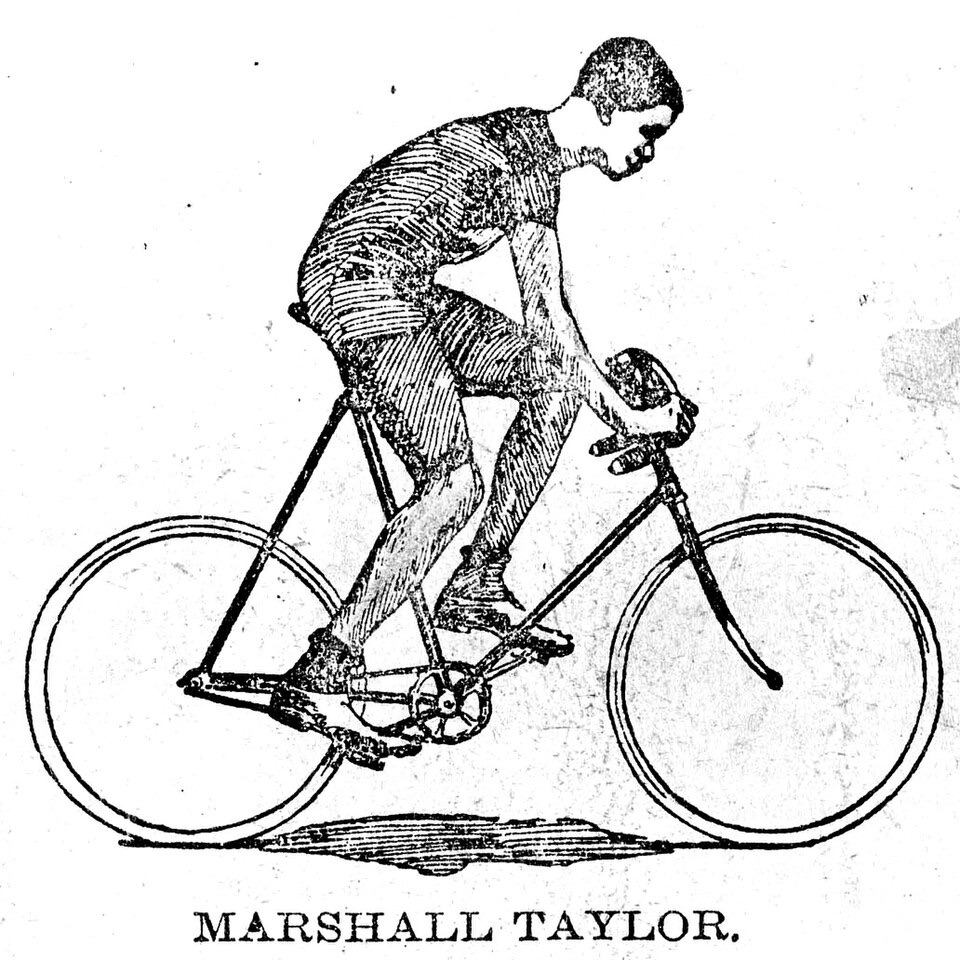
An Indianapolis bicycle shop soon employed him to perform tricks outside its premises, attracting customers with displays of balance and control. He wore a military-style uniform during the performances, an episode traditionally associated with the nickname Major, although accounts of its precise origin differ. What began as an advertising job helped introduce him to competitive cycling, where his unusual speed quickly attracted attention. One of the first people to recognise his potential was Louis “Birdie” Munger, a former racing cyclist involved in bicycle manufacturing, who encouraged Taylor to train systematically and became his mentor.
In June 1895, Taylor won a demanding 75-mile road race in Indiana, defeating older competitors despite the hostility he encountered as a Black teenager. Later that year he followed Munger to Worcester, Massachusetts, where the bicycle industry was flourishing and opportunities for competition appeared more promising. Worcester offered a better environment, but it did not free him from the discrimination that shaped American sporting life. The League of American Wheelmen had adopted a whites-only membership rule in 1894, and race organisers could exclude Black competitors regardless of their ability. Hotels and restaurants could refuse them service, while some white cyclists objected to racing against them at all.
In September 1896 Taylor returned to Indianapolis and rode at the Capital City track, where he unofficially broke records against the clock. His speed should have made him a welcome attraction, but instead he was barred from competing at the venue. The experience demonstrated the contradiction that would follow him throughout his career: success brought recognition, yet it could also provoke determined efforts to prevent him from competing.
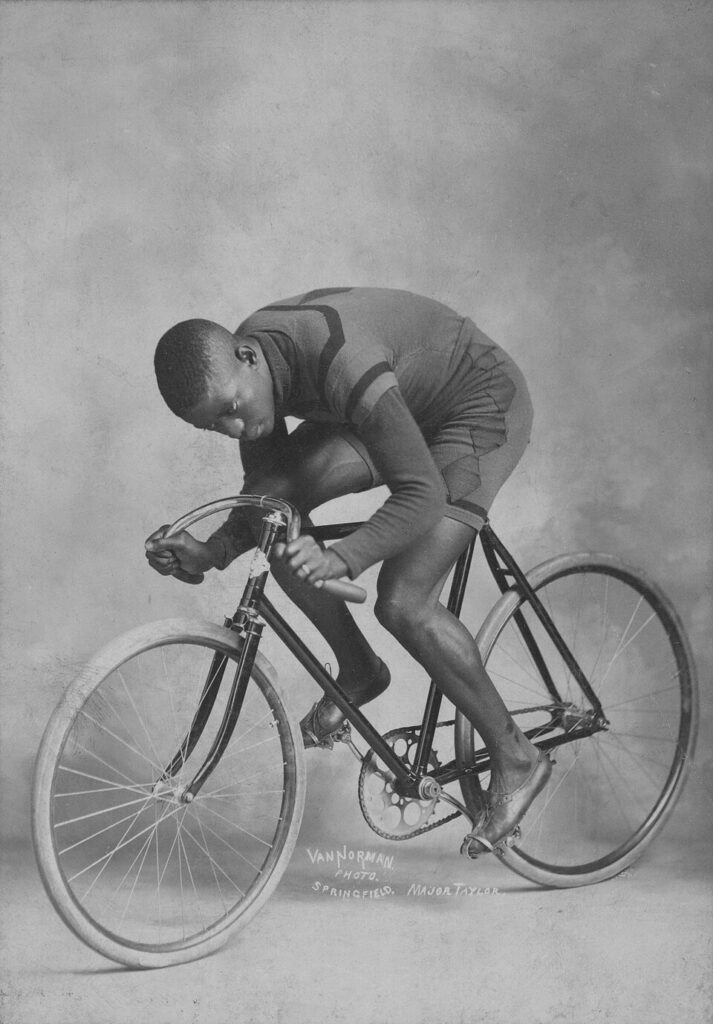
Three months later, shortly after his eighteenth birthday, Taylor made his professional debut at Madison Square Garden in New York. He won a half-mile handicap race against established professionals, earning $200 in prize money, which he sent to his mother. He then entered the Garden’s famous six-day endurance contest, one of the most punishing forms of bicycle racing ever devised. Competitors circled the indoor track for almost an entire week, sleeping only briefly while attempting to cover the greatest possible distance. Taylor finished eighth, an impressive performance for a teenager, but his greatest potential lay in shorter events. His explosive acceleration, rather than his endurance, would make him one of the finest sprinters in the world.
By 1898 he held seven world records, including performances over distances ranging from a quarter-mile to a mile. His growing reputation made him valuable to promoters, who sometimes advertised his races in openly racial terms. An 1898 contest against Eddie McDuffee was promoted as “Black vs. White”, turning a sporting competition into a confrontation designed to exploit the prejudices of spectators. Other competitors sometimes attempted to trap Taylor against the barriers or prevent him from finding a clear route through the field, tactics that could be particularly effective against a sprinter who depended on reaching maximum speed at the decisive moment.
The hostility occasionally became violent. At Taunton, Massachusetts, in September 1897, William Becker attacked Taylor after a race, choking him until he lost consciousness. Becker accused Taylor of improper riding, but the assault went far beyond an ordinary sporting dispute. He was fined and subsequently reinstated, while Taylor continued competing against riders who were not always prepared to accept defeat by a Black cyclist.
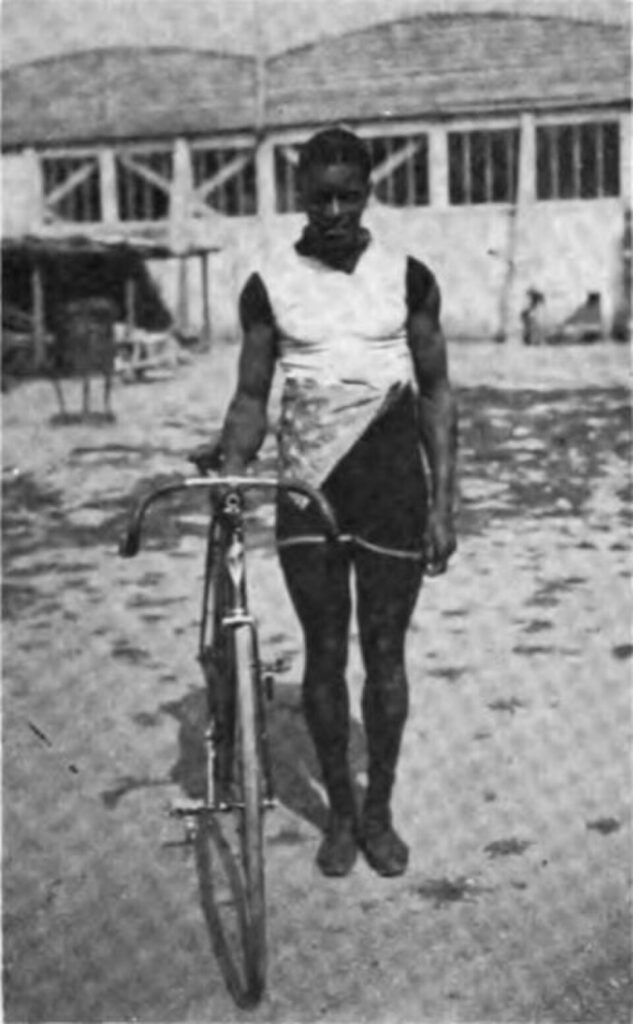
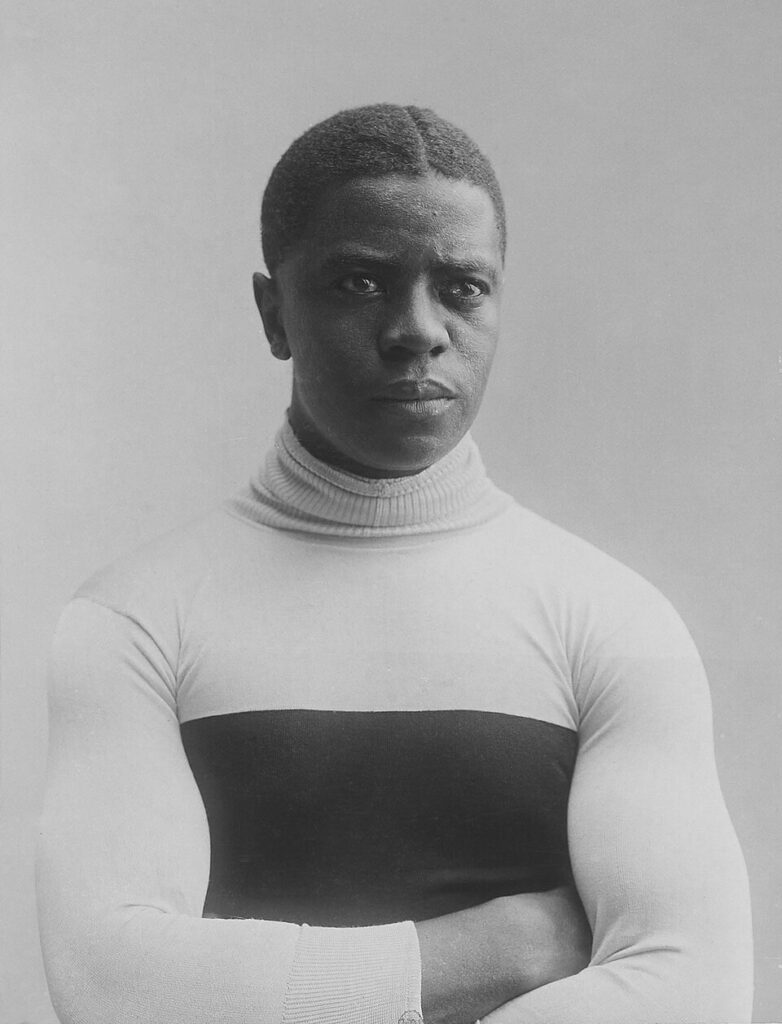
His greatest breakthrough came in August 1899, when the World Track Cycling Championships were held in Montreal. Taylor entered the one-mile professional sprint against some of the strongest riders of the period, including his American rival Tom Butler. On 10 August he won the championship, becoming the second Black athlete widely recognised as a world champion in a major international sport, following boxer George Dixon. He was twenty years old, and the victory established his place among the finest cyclists of his generation.
Taylor secured the American sprint championship in 1900, but opportunities to compete freely remained limited in parts of the United States. Europe offered another possibility, though his Baptist faith complicated negotiations with promoters. Taylor refused to race on Sundays, when many of the continent’s most important meetings took place, and organisers had to accommodate that condition before he agreed to travel. In the spring of 1901 he crossed the Atlantic to challenge Europe’s leading sprinters.
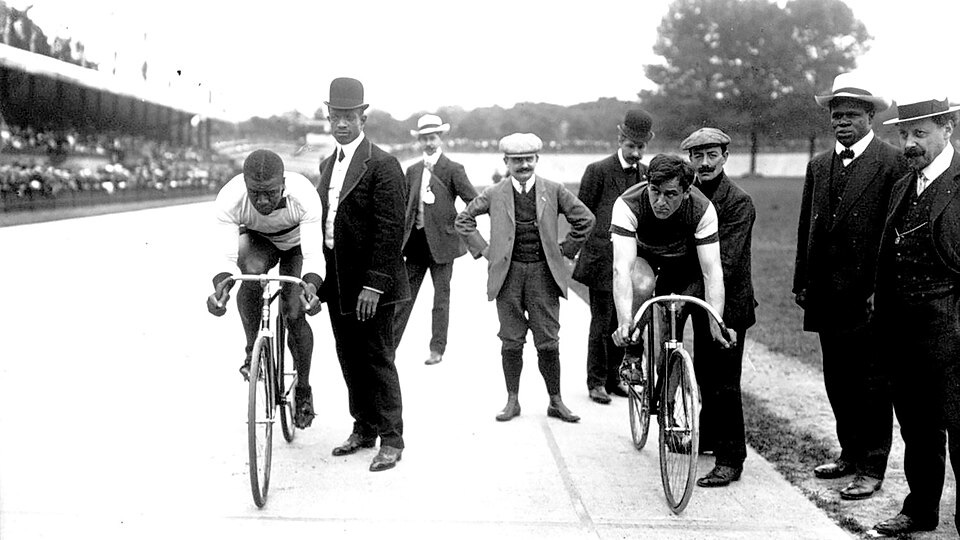
The most anticipated contest of his first European campaign was against Edmond Jacquelin, the reigning world sprint champion and one of the great favourites of French cycling. Their first meeting took place at the Parc des Princes velodrome in Paris on 16 May 1901, attracting a large crowd eager to discover whether the American’s reputation matched his ability. Jacquelin won both heats, defeating Taylor by approximately a wheel length in the first and two lengths in the second. The French spectators celebrated their champion, but eleven days later the two men met again at the same track.
On 27 May the result was reversed. Taylor defeated Jacquelin in two consecutive heats, winning the first by four lengths and the second by three. The margins left little doubt about the superiority of his performance that day, and the rivalry became one of the great attractions of the Parisian cycling season. Taylor continued defeating leading European sprinters throughout his first international campaign, establishing himself against the best riders on their own tracks.
The success made Taylor an international sporting attraction. He returned to Europe in subsequent seasons, competing in France, Germany, Belgium and Britain, and his career eventually carried him to Australia and New Zealand. Such journeys required weeks at sea, but professional cycling had become sufficiently popular in these countries for promoters to offer generous payments to the world’s leading riders.
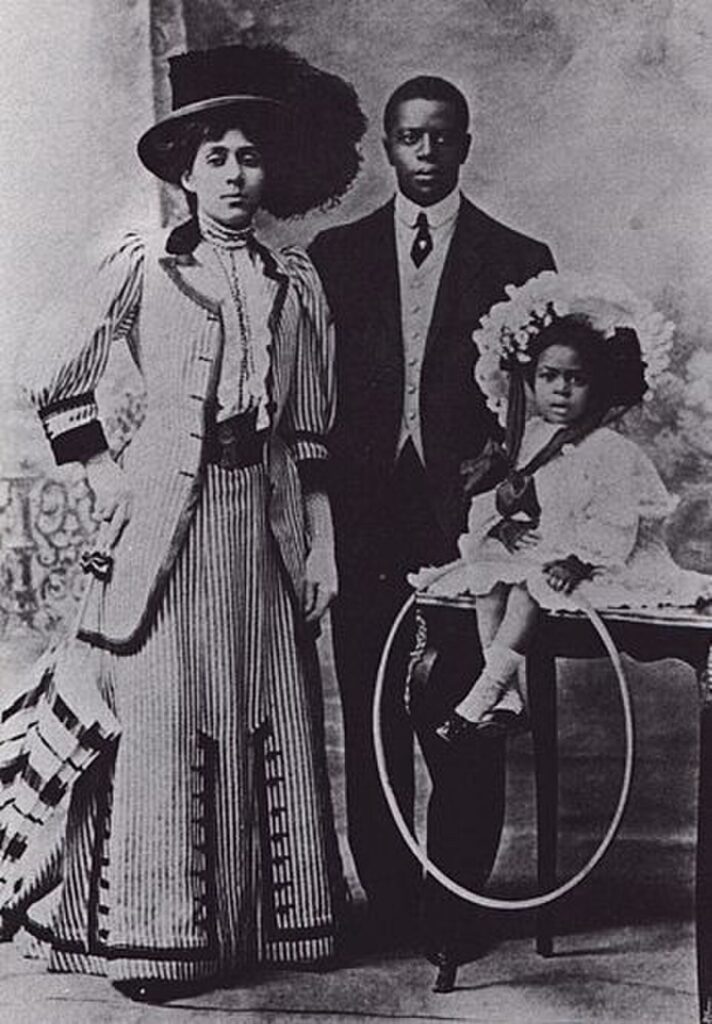
In March 1902 Taylor married Daisy Morris, and in late 1903 she accompanied him on his second tour of Australasia, where their daughter, Rita Sydney Taylor, was born in Sydney in May 1904. The Australian campaigns brought financial rewards, but they also exposed him to fierce rivalries and dangerous racing. Among his opponents was Iver Lawson, an American cyclist with whom Taylor had already developed a hostile relationship.
In February 1904 the two men met in Melbourne. Taylor won the first heat of their match, but during the second Lawson moved across his path and the riders collided. Taylor crashed heavily, suffering injuries that prevented him from continuing. He accused Lawson of deliberately causing the collision, and the officials initially suspended Lawson for twelve months. On appeal, however, the governing body concluded that deliberate intent had not been established, although it still found Lawson guilty of unfair and careless riding. His suspension was reduced to three months.
When Taylor returned to Worcester later that year, the accumulated strain of international travel, difficult competition and repeated hostility had taken its toll. He withdrew from racing for a period before returning to competition in 1907, eventually retiring in 1910 after more than a decade at the highest level of professional cycling.
Retirement proved difficult. Business ventures failed, his health deteriorated and much of the money he had earned disappeared. His marriage also suffered, and he eventually became estranged from Daisy and their daughter. In 1928 he published his autobiography, The Fastest Bicycle Rider in the World, hoping to preserve his achievements and describe the obstacles he had encountered throughout his career. The book found only a limited audience, and by 1930 he was living in Chicago, staying at a YMCA and attempting to sell copies himself.
Taylor died on 21 June 1932, aged fifty-three, in the charity ward of Cook County Hospital. He was buried in an unmarked grave at Mount Glenwood Cemetery near Chicago, and for several years his extraordinary achievements received little public attention. In 1948 a group of former professional cyclists arranged for his remains to be moved to a more prominent part of the cemetery, with financial assistance from bicycle manufacturer Frank W. Schwinn. A headstone was placed at the new grave, acknowledging a champion whose name had once been familiar to cycling spectators across several continents.
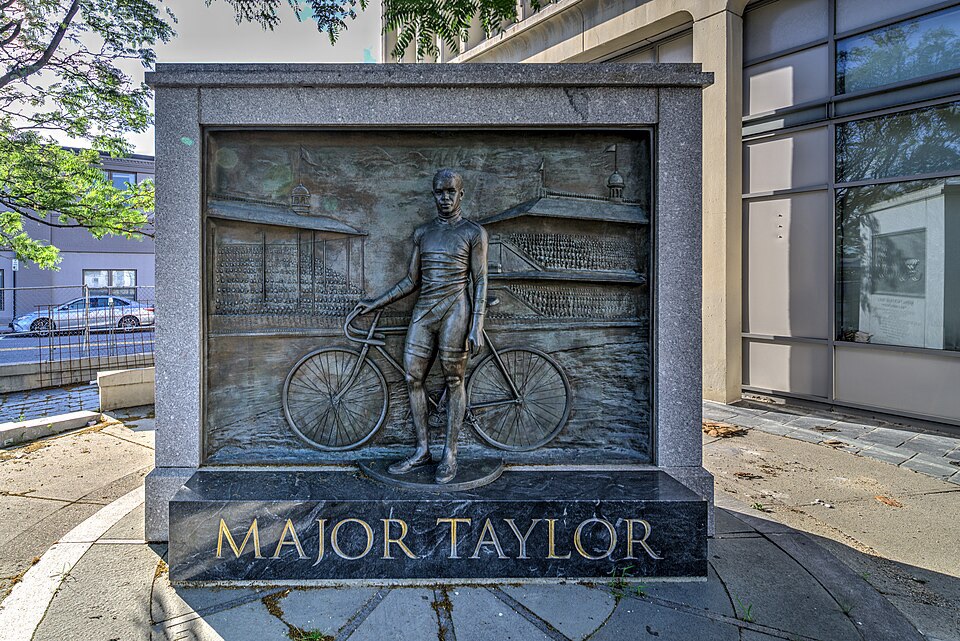
His reputation gradually returned. Historians recovered his records, cycling organisations adopted his name, and Worcester eventually honoured him with a bronze monument outside its public library. His autobiography became an important account of professional cycling during an era when the sport occupied a place in American popular culture that is difficult to imagine today.
Major Taylor’s life is often remembered through the racial discrimination he endured, and that history is inseparable from his achievements. Yet it is equally important to remember the quality of the cyclist himself, the young sprinter who could defeat established champions, understand the complicated tactics of track racing and produce astonishing bursts of speed when a contest was decided. He did not become world champion because history needed a symbol, but because on the track very few people in the world could beat him. What makes his story so remarkable is how often others tried to prevent him from having the opportunity to prove it.
Did You Know?
Taylor performed in vaudeville theatres before his first European tour. Between October 1900 and January 1901, he appeared alongside Charles “Mile-a-Minute” Murphy in an act featuring the two cyclists racing on stationary rollers across theatre stages in Massachusetts.
Taylor set an extraordinary motor-paced mile record in 1899. On 15 November, in Chicago, he covered one mile in just 1 minute 19 seconds while riding behind a motorised pacing machine. The pacer reduced the wind resistance he faced, allowing him to reach speeds impossible in an ordinary unpaced sprint.
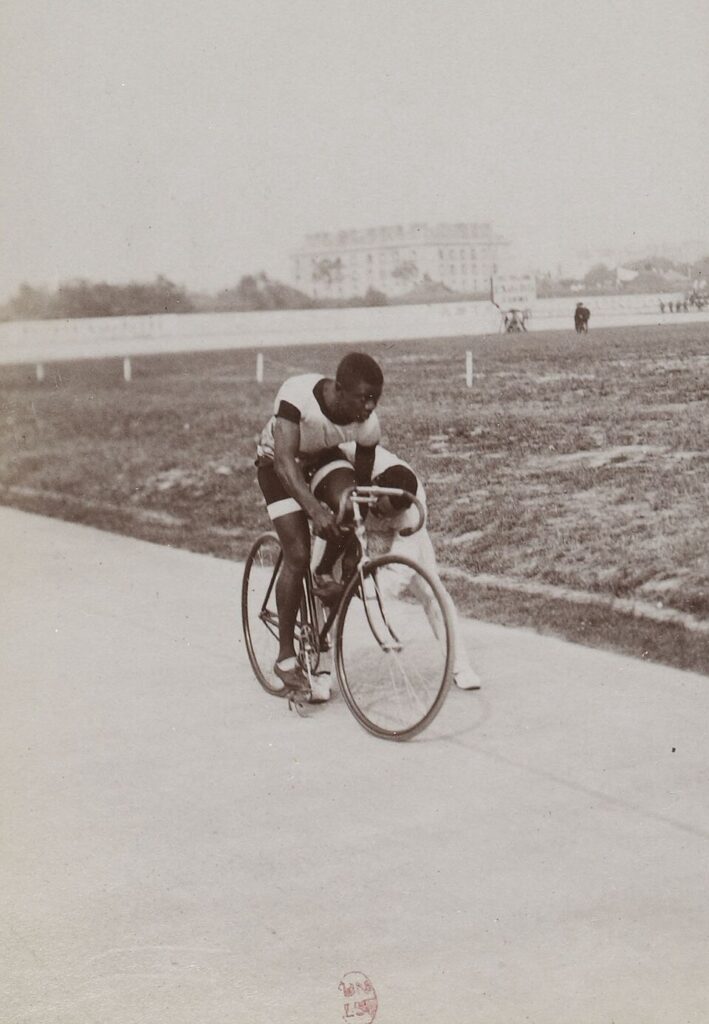
Taylor raced during the height of the safety-bicycle boom. The chain-driven bicycle with two similarly sized wheels had largely displaced the old high-wheel machines, transforming cycling into a popular sport and an increasingly practical form of everyday transport.
Where Is It Today?
In Worcester, Massachusetts, a bronze monument honouring Major Taylor stands outside the Worcester Public Library. It was unveiled on 21 May 2008, with three-time Tour de France winner Greg LeMond participating in the dedication.
Indianapolis commemorates Taylor in two important places. The Major Taylor Velodrome, opened in 1982, continues the city’s connection with competitive track cycling. A historical marker at the intersection of 38th Street and the Monon Trail commemorates his unofficial record-breaking performances at the former Capital City track in 1896. The marker was installed in 2009.
Taylor’s grave remains at Mount Glenwood Cemetery in Illinois, where the headstone installed following his 1948 reburial recognises his achievements as a world champion.