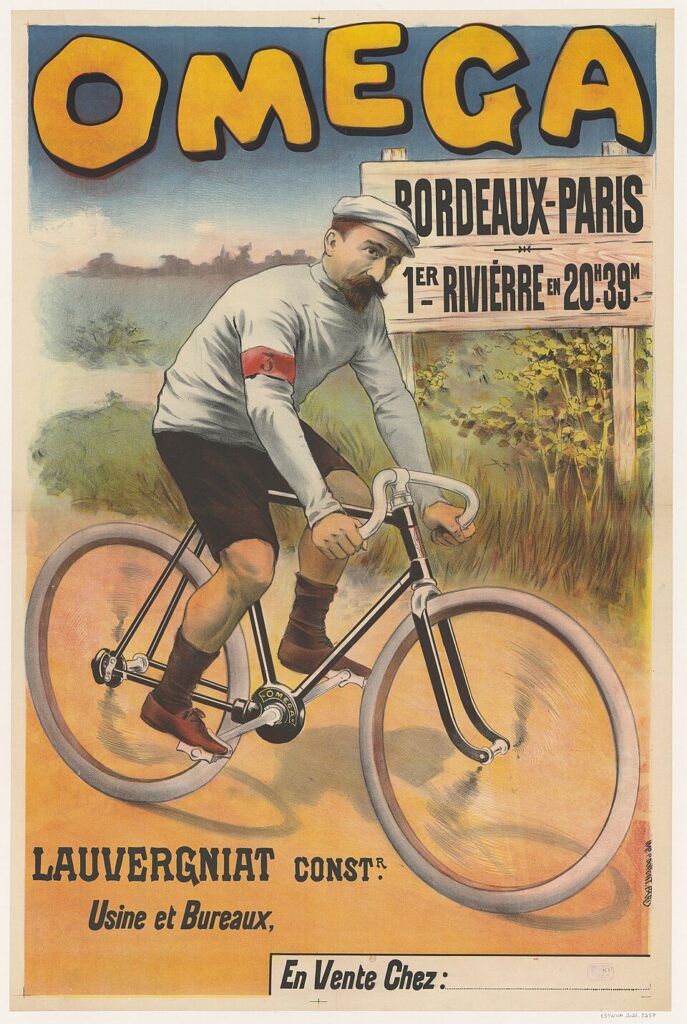

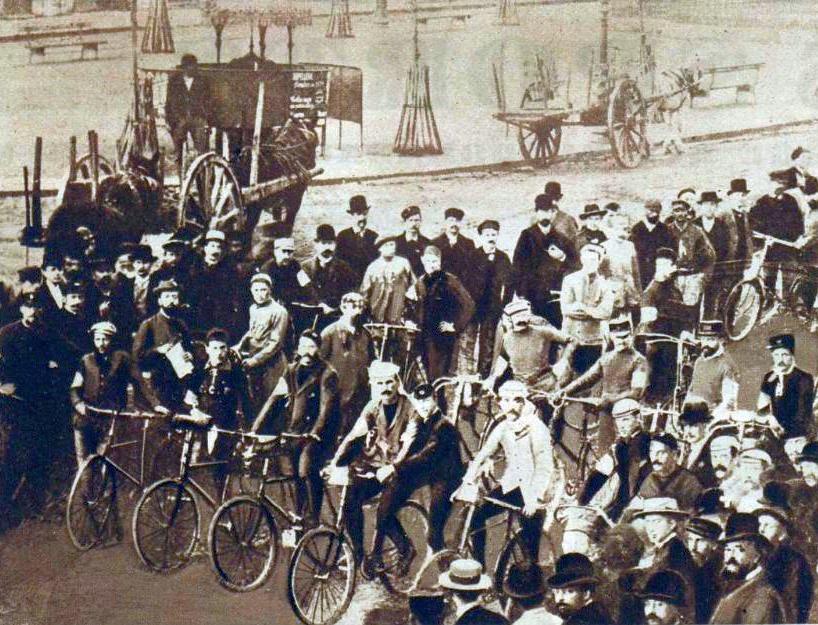
(Photo: Unknown photographer / Public Domain / Source: Le Miroir des sports, 21 May 1929, via Wikimedia Commons, File: Départ de Bordeaux-Paris 1891, devant une foule clairsemée.jpg)
On the morning of 24 May 1891, spectators gathered near the Porte Maillot on the western edge of Paris to await a cyclist who had left Bordeaux the previous day. The rider they were expecting had travelled across much of France, through a night on roads that were often rough, poorly lit and shared with horses, carts and pedestrians. He had already spent more than a day in the saddle, yet the final kilometres were drawing crowds eager to witness an achievement that seemed almost beyond the limits of the new sport.
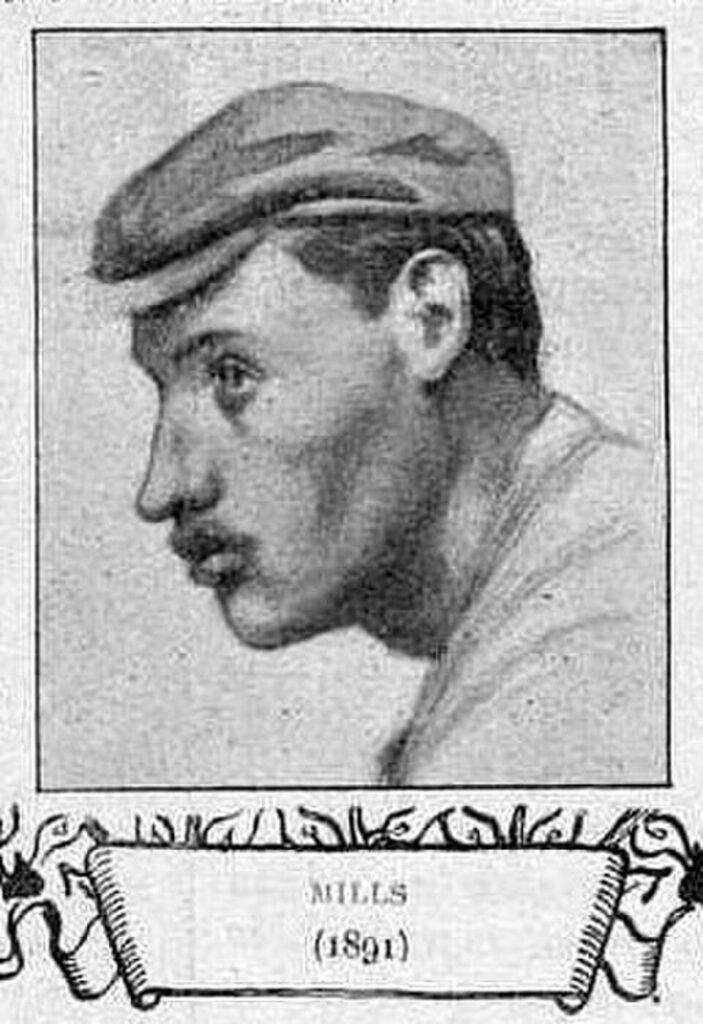
The man who arrived was George Pilkington Mills, a twenty-four-year-old Englishman whose journey had begun approximately 570 kilometres to the southwest. His winning time was about 26 and a half hours. Behind him came other British riders, confirming the strength of a cycling culture that had developed earlier in Britain than in much of continental Europe. For the French spectators, however, the significance extended beyond the nationality of the winner. Mills had demonstrated that a human-powered machine could cross a substantial portion of the country in little more than a day.
The race was Bordeaux–Paris, and its first edition had taken place twelve years before the inaugural Tour de France. Over the following century it would become one of professional cycling’s most unusual competitions, a contest that demanded extraordinary endurance while gradually developing an elaborate system of pacing machines, specialist riders and tactical partnerships. Champions including Louison Bobet, Tom Simpson, Jacques Anquetil and Herman Van Springel would add their names to its history, but the race would never become an ordinary Classic.
Its final professional edition would be held in 1988, after almost a century in which the meaning of endurance racing had changed profoundly.
The Birth of a 570-Kilometre Race
The idea behind Bordeaux–Paris emerged at a moment when cycling was becoming both a popular recreational activity and a public demonstration of technological progress. The safety bicycle, with two similarly sized wheels and a chain-driven rear wheel, had begun replacing the high-wheeled machines of the previous generation. Pneumatic tyres were transforming comfort and speed, while improved roads and expanding cycling clubs encouraged riders to attempt journeys once considered impractical.
Long-distance races provided an ideal spectacle. They could be followed through telegraph reports, newspaper bulletins and accounts from towns along the route, allowing spectators who never saw the riders to participate in the unfolding competition. A successful journey between two major cities also carried a message about the possibilities of modern transport.
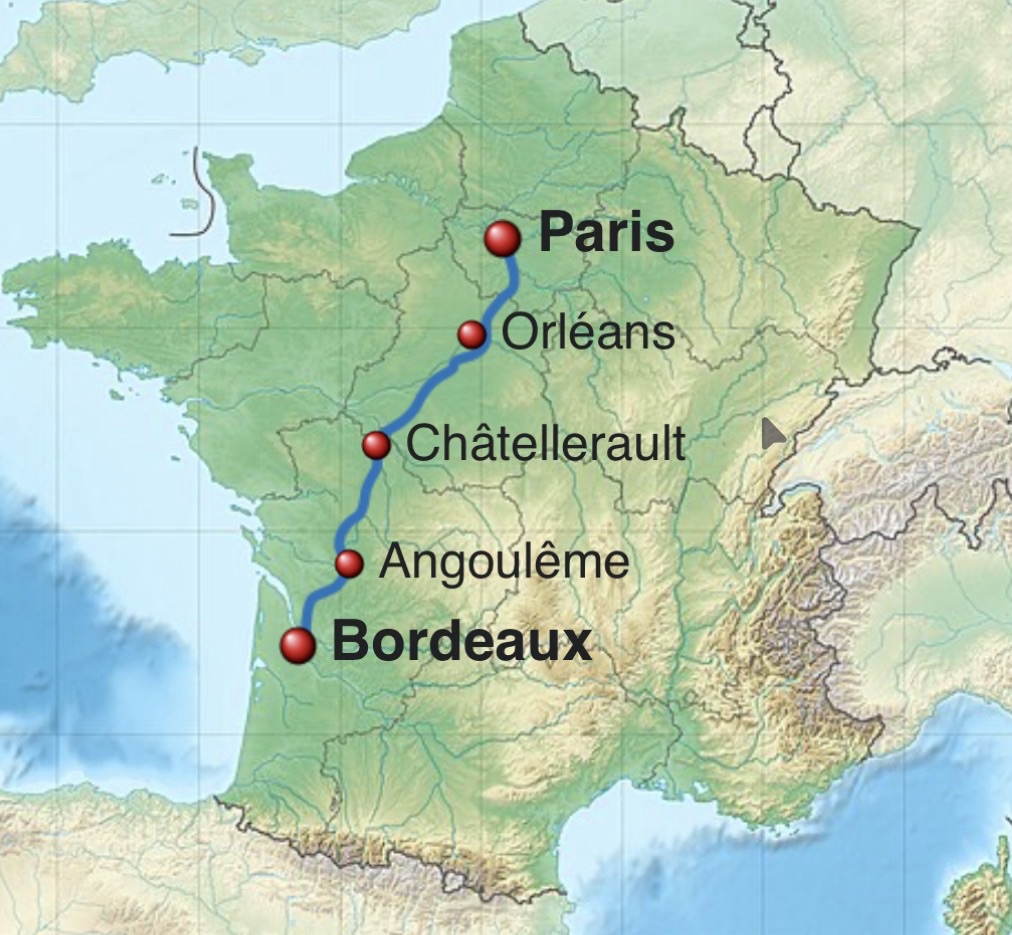
Bordeaux–Paris was organised in this atmosphere of experimentation. Its inaugural edition started on 23 May 1891, sending competitors north from the great port city of Bordeaux towards the French capital. The route passed through western and central France, following roads that connected towns such as Angoulême, Poitiers and Tours before approaching Paris.
There were no team cars following the riders with spare wheels, no radios carrying tactical instructions and no neutral service vehicles operating in the modern sense. Competitors relied on a mixture of personal preparation, assistance arranged along the course and the mechanical reliability of machines that were still undergoing rapid development. Even the simplest mishap could threaten an entire day’s effort.
One account of the inaugural race describes Mills colliding with a dog that ran into the road, damaging his bicycle and forcing him to continue on another machine. The episode, preserved in historical retellings of the event, illustrates the hazards of early road racing. A rider could lose the advantage gained over hundreds of kilometres because of an animal, a broken component or an obstacle barely visible in the darkness.
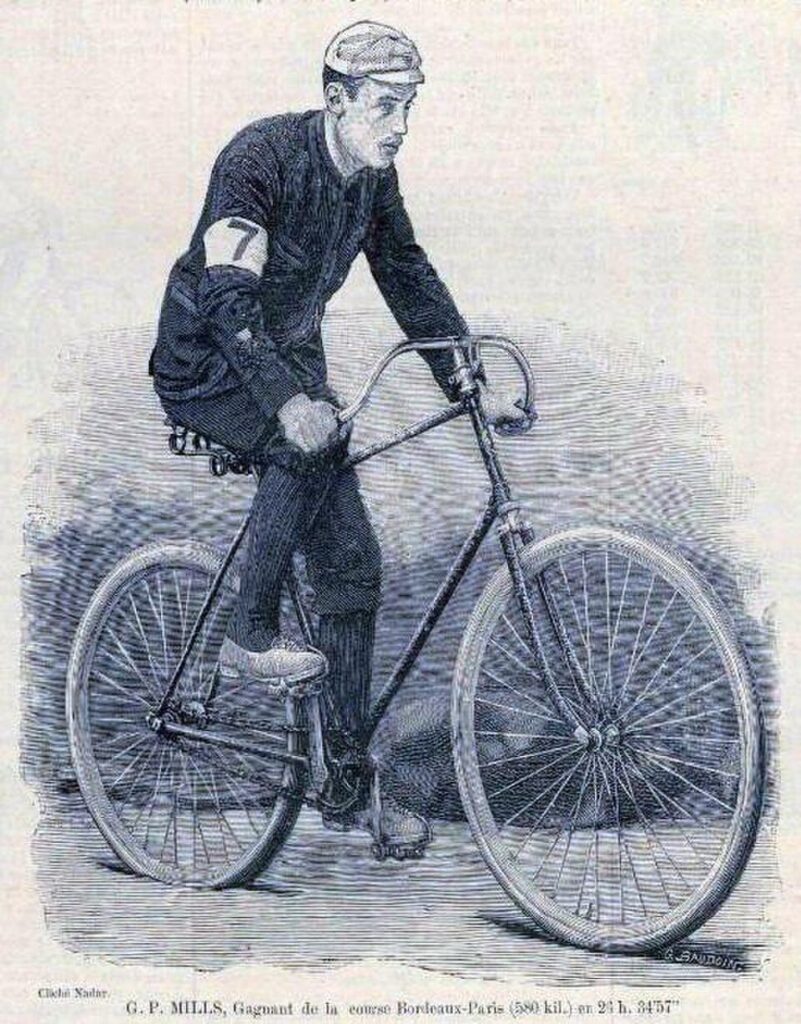
(Photo: Nadar / Public Domain / Source: Wikimedia Commons, File: Georges Pilkington Mills, le premier vainqueur de la course Paris-Bordeaux en 1891.jpg)
Mills nevertheless reached Paris first. His performance immediately attracted attention, and the British riders who occupied the leading positions reinforced the impression that France had witnessed the arrival of a new kind of sporting contest. The distance was intimidating, but it had been conquered at racing speed rather than merely completed as a journey.
The first edition also established a practical challenge for future organisers. Covering such a distance demanded more than the physical strength of individual competitors. Mechanical assistance, supplies, organised pacing and the movement of support personnel along the route could all influence the result. Over the following decades, those arrangements would become increasingly elaborate.
A Road Across France
Bordeaux and Paris were connected by more than a line on a map. Bordeaux was one of France’s principal commercial ports, linked to the Atlantic through the Garonne estuary and to the interior through a network of roads and railways. Paris was the political, financial and cultural centre of the country, a city whose newspapers could turn a sporting achievement into a national event.
The journey between them crossed the agricultural landscapes of southwestern and central France. Leaving Bordeaux, riders travelled through the Gironde and towards the Charente, passing country towns, vineyards, farmland and stretches of open road. Farther north, the route entered the Poitou region before continuing through the Loire valley and towards the Paris basin.
The names along the course became familiar to generations of competitors: Angoulême, Poitiers, Châtellerault, Tours and the towns beyond the Loire. Although the precise itinerary changed over the years, the essential direction remained the same, carrying riders from the Atlantic southwest towards the capital.
The geography mattered because Bordeaux–Paris was not a mountain race. Its difficulties came from accumulation rather than altitude. Short climbs, exposed roads, changes in surface and repeated accelerations became increasingly demanding after ten, fifteen or twenty hours. The absence of a major mountain pass did not make the race easy; it removed the obvious landmarks by which effort could be divided into manageable sections.
For much of its history, the race started in the evening or at night, allowing the leading riders to reach Paris during daylight. The darkness was therefore not an accidental inconvenience but part of the competition’s established rhythm. Riders left Bordeaux while ordinary life continued around them, crossed sleeping towns and arrived in the capital after sunrise, often accompanied by increasing numbers of spectators as the finish approached.
The distance varied considerably. The inaugural edition was approximately 570 kilometres, while later races commonly approached or exceeded 600 kilometres. Changes to the start, finish and intermediate roads altered the total, and the use of different Parisian finishing venues further complicated comparisons between editions.
Riders who succeeded often possessed an unusual combination of patience, physical resilience and tolerance for prolonged discomfort. Yet the fastest competitors were not necessarily those who could sustain the greatest effort entirely alone. Bordeaux–Paris developed a distinctive system in which another person, travelling immediately ahead, could help determine the speed of the race.
The Men Who Made the Wind Disappear
In the earliest editions of Bordeaux–Paris, riders could be accompanied by human-powered pacers. Ordinary bicycles were followed by tandems, triplettes and even quadruplettes, machines carrying two, three or four riders who worked together to maintain a high speed. Teams organised changes of pacing personnel along the route, allowing the competitor to continue while the people providing shelter were replaced.
The advantage came from the air displaced by the machine ahead. Following closely reduced the resistance faced by the racing cyclist, making it possible to maintain a higher speed for the same effort. Over hundreds of kilometres, the saving could become substantial, particularly when competitors were already exhausted.
A successful rider therefore needed an organised network of pacers, carefully planned rendezvous and enough mechanical resources to survive the journey. The best-supported competitors could benefit from a succession of fresh riders, while those with weaker arrangements risked losing time even when their own physical condition remained good.
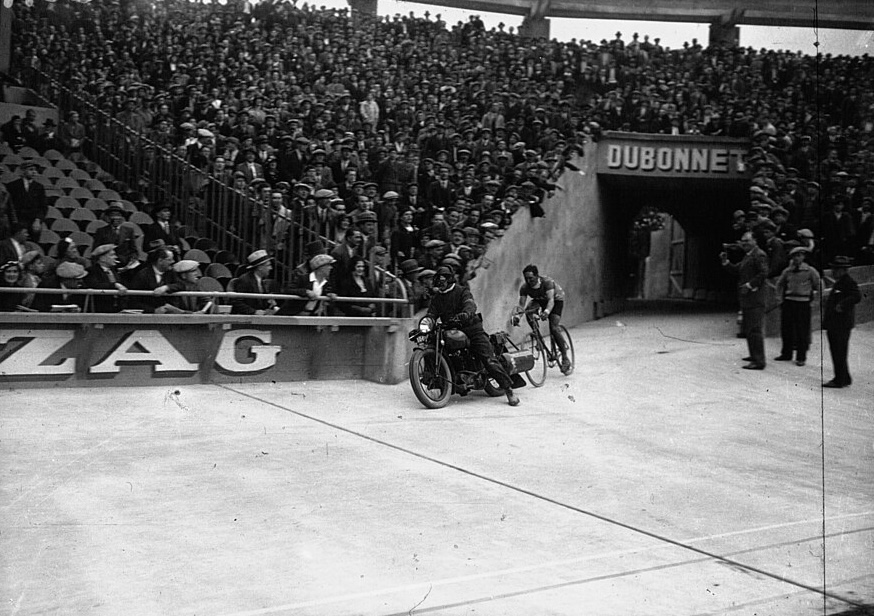
As the nineteenth century gave way to the twentieth, motorised pacing expanded the possibilities. Petroleum-powered machines and automobiles appeared in the event’s changing arrangements before motorcycles became established. From 1931, commercial motorcycles were used to provide shelter over the paced portion of the course.
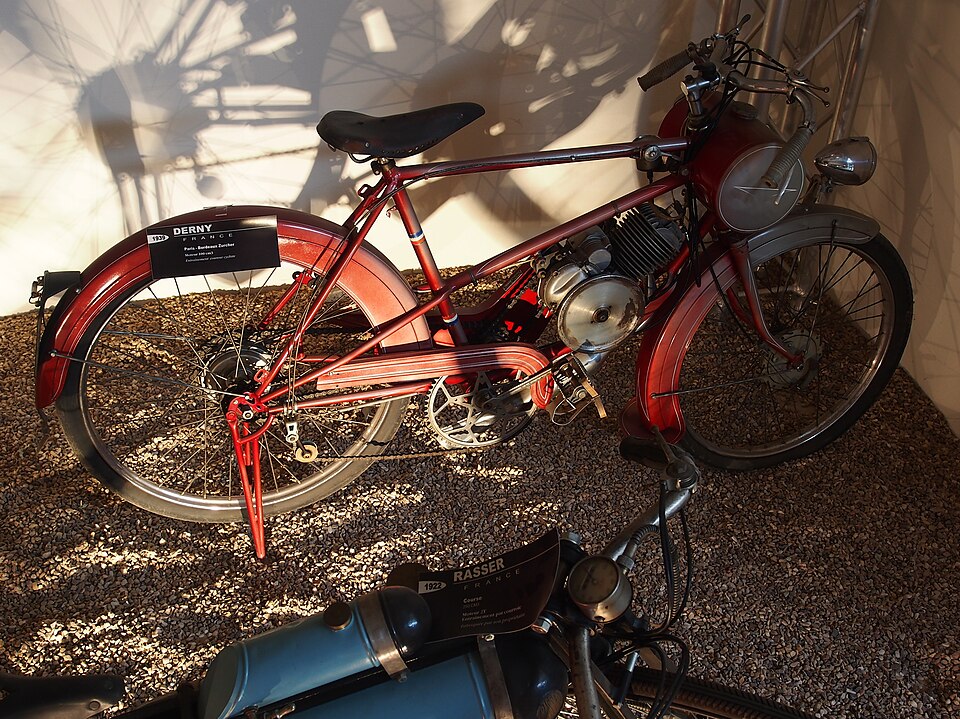
In 1938, Roger Derny and his Paris-based company developed a small motorised pacing bicycle specifically associated with Bordeaux–Paris. The original Derny Entraîneur carried its fuel tank ahead of the handlebars and combined the proportions of a bicycle with a small petrol engine. Its compact design allowed a racing cyclist to follow closely, benefiting from the slipstream without the bulk of a conventional motorcycle.
The Derny eventually became so closely identified with motor-paced cycling that its manufacturer’s name entered the vocabulary of the sport. Later machines produced by other companies, including Burdin, continued the same tradition.
By the postwar period, Bordeaux–Paris generally operated in two distinct phases. Riders covered the opening portion without motor pacing, then met their pacers around Poitiers or Châtellerault, depending on the edition. From that point, the competition changed character. The peloton fragmented into partnerships of cyclists and motorised machines, each trying to establish the fastest sustainable rhythm towards Paris.
The pacer controlled much of the tempo, but the rider still had to produce the power, remain close to the machine and respond immediately to changes in speed. A sudden acceleration could force him beyond his sustainable effort, while an inconsistent rhythm might undo the aerodynamic advantage. On corners and descents, the distance between the two machines demanded constant attention.
Experienced pacers acquired reputations of their own. Fernand Wambst, who would guide Tom Simpson to victory in 1963, belonged to a profession in which understanding a rider’s strength was as important as handling the machine. The best partnerships worked through subtle adjustments in pace, allowing the cyclist to maintain speed without repeatedly exhausting himself.
Champions of the Long Road
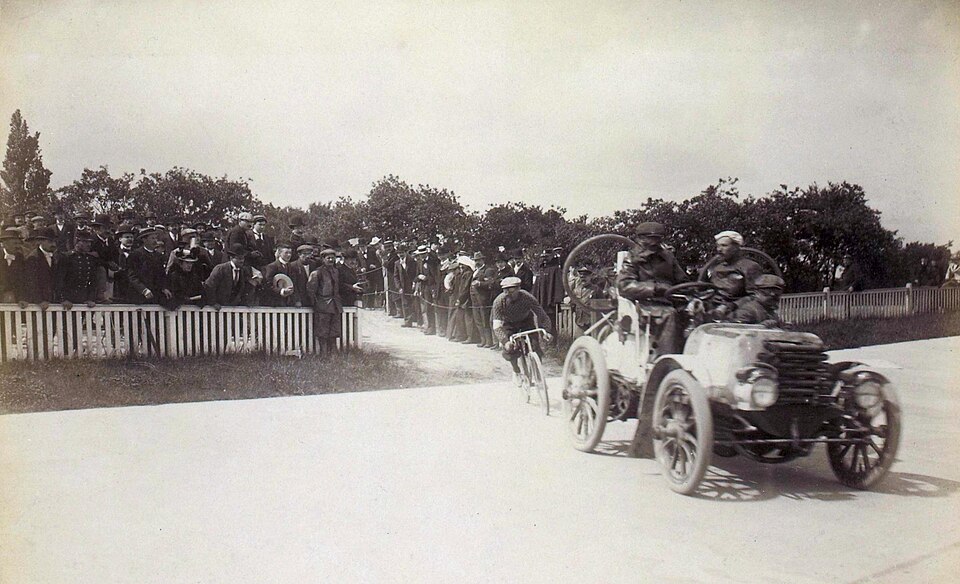
The early winners came from several of the countries where competitive cycling had first taken root. After Mills’s British victory in 1891, the race passed through a period of experimentation in which French, British and other European riders competed for a prize that was becoming increasingly prestigious.
Lucien Lesna won in 1894, while Gaston Rivierre shared victory with the Welsh rider Arthur Linton in 1896 before winning outright in 1897 and 1898. Maurice Garin, who would later win the inaugural Tour de France in 1903, finished second in Bordeaux–Paris in 1898 and 1900 before claiming victory in 1902. The same riders frequently appeared in long-distance road competitions and track events, moving between disciplines before professional cycling developed the specialised calendar familiar today.
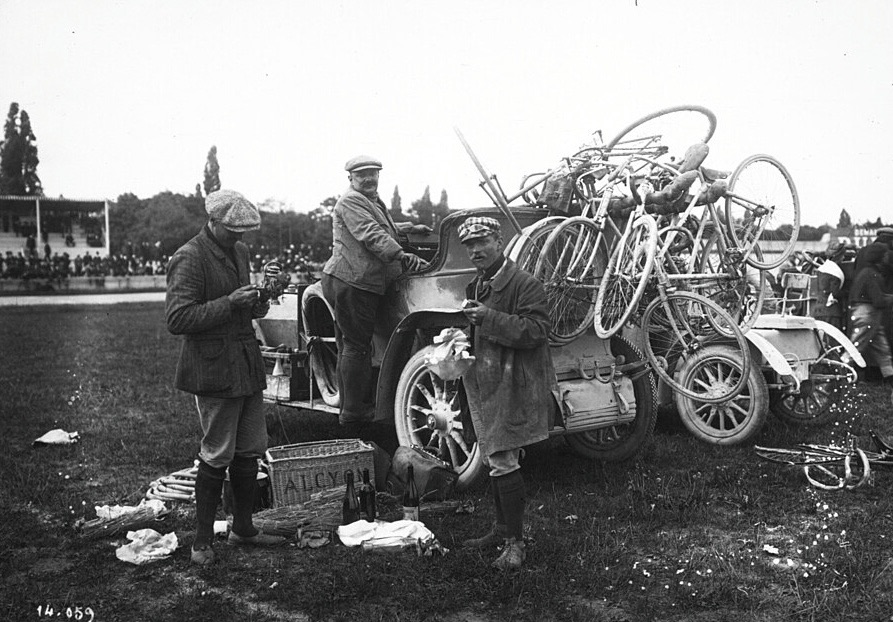
The Tour de France introduced a different kind of endurance challenge in 1903. Its enormous distances were divided into stages, with opportunities for recovery between them. Bordeaux–Paris retained the older principle of a single continuous journey. A competitor who became exhausted after fifteen hours could not stop for the night and resume racing the following morning.
The First World War interrupted the event, as it did much of European sporting life. When racing resumed, Bordeaux–Paris remained prestigious enough to attract established professionals, although its unusual distance and organisational demands continued to distinguish it from other Classics.
Émile Masson won in 1923, and his son Émile Masson junior repeated the family achievement in 1946. Their victories, separated by another world war, linked two generations of Belgian cycling through the same competition. The machines and racing arrangements had changed, but the road from Bordeaux to Paris still demanded a continuous effort lasting much of a day.
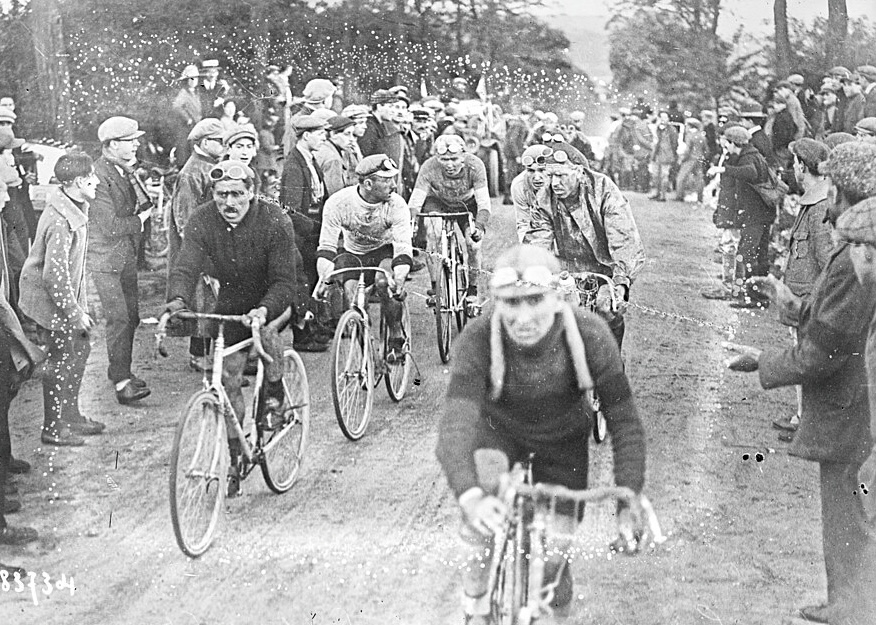
The postwar years brought another period of prominence. Bernard Gauthier became one of the race’s leading specialists, winning four editions during the 1950s. Louison Bobet, already celebrated for his three consecutive Tour de France victories from 1953 to 1955, won Bordeaux–Paris in 1959.
Bobet had established his reputation through stage racing, climbing and tactical intelligence. At Bordeaux–Paris he faced an event requiring a different distribution of effort, with prolonged riding before the motor-paced phase and a final approach to Paris in which maintaining speed behind the pacer was essential.
The presence of champions such as Bobet helped sustain the race’s prestige, but attracting riders of similar standing was becoming difficult. By the middle of the century, professional teams were increasingly selective about the competitions their leaders entered. Bordeaux–Paris required specific preparation for a single event and could leave participants exhausted for days afterwards.
In 1955, the race was cancelled because too few riders were willing to participate. It returned, and the following decade produced some of the most remarkable performances in its history, but the cancellation revealed how vulnerable the event had become to the decisions of a relatively small number of professionals.
Tom Simpson and the Pacer
In 1963, Tom Simpson arrived at Bordeaux–Paris as one of Britain’s most accomplished professional cyclists. He had moved to continental Europe to pursue his career and had already demonstrated his ability in the major Classics, winning the Tour of Flanders in 1961.
Simpson was an aggressive rider, comfortable in long races where endurance and tactical judgement mattered as much as outright speed. Bordeaux–Paris offered him an opportunity to apply those qualities in a competition that remained unfamiliar to much of the British sporting public.
The race was approximately 560 kilometres long, demanding an extended opening effort before the riders could settle behind their motor pacers. Simpson was paired with Wambst, whose task was to maintain a pace that exploited the aerodynamic shelter without exhausting the British rider before the final kilometres.
Once Simpson joined his pacer, his attention shifted towards the machine immediately ahead. He had to remain close enough to benefit from the slipstream while responding to changes in speed and the movements of the road. After hours of riding, even small interruptions in rhythm could become costly.
The partnership worked exceptionally well. Simpson completed the race in approximately 15 hours and 43 minutes, winning by more than five minutes over the Dutch rider Piet Rentmeester. The result was one of the most significant victories of his career and confirmed his ability to compete successfully across very different forms of professional cycling.
Afterwards, Simpson emphasised the understanding he had developed with Wambst. Their cooperation had been an important part of the victory, and the result belonged as much to the careful management of the paced kilometres as to Simpson’s endurance during the opening part of the race.
The British cycling press treated the performance as a major achievement. At a time when British professionals were still relatively uncommon among the leading riders of continental Europe, Simpson’s victory provided another demonstration that they could compete at the highest level.
Two years later, Simpson would become the first British rider to win the men’s professional world road championship. Before that triumph, however, he had already mastered a race whose extreme distance and motor-paced finale demanded a set of skills rarely brought together in other competitions.
In 1965, Bordeaux–Paris produced an even more extraordinary performance, involving a champion who had already won another major race less than a day before arriving at the start.
Anquetil’s Impossible Weekend
On Saturday, 29 May 1965, Jacques Anquetil completed the final stage of the Critérium du Dauphiné Libéré, a 227-kilometre journey from Romans-sur-Isère to Avignon. He had secured overall victory in one of France’s most important stage races, adding another success to a career that already included five Tour de France titles.
For most professional cyclists, the conclusion of such a competition would have been followed by rest. Anquetil instead faced an overnight journey to Bordeaux, where he was expected to start one of the longest races on the calendar.
The plan had been encouraged by his directeur sportif, Raphaël Géminiani, a former professional rider who understood both Anquetil’s exceptional physical abilities and the publicity that an unprecedented double victory could generate. Anquetil would attempt to win the Dauphiné and Bordeaux–Paris on consecutive days, accepting a schedule that left almost no opportunity for recovery.
After the podium ceremony in Avignon, he travelled by car towards Nîmes, boarded a flight to Bordeaux and prepared for another race. The journey consumed much of the time available between the two competitions. He could eat, receive treatment and sleep briefly, but there was no possibility of the normal recovery period following a demanding stage race.
At approximately 2:30 on the morning of 30 May, Anquetil started Bordeaux–Paris. The distance that year was 557 kilometres. Even with motor pacing during the latter portion, the prospect of covering such a distance after the Dauphiné would have been formidable. Anquetil had to survive the unpaced opening hours before joining his motor pacer near Châtellerault, then remain competitive as the race accelerated towards Paris.
The early kilometres offered little opportunity to recover from the previous day’s exertions. Riding through the darkness, Anquetil had to conserve his remaining strength without allowing his rivals to gain an advantage that would prove impossible to recover later.
Once the paced section began, his extraordinary ability to sustain a high speed became increasingly important. Anquetil was one of the finest time trialists in cycling history, renowned for maintaining a demanding rhythm with remarkable precision. Behind the motor, those qualities could be applied to a competition of exceptional duration.
His principal rivals included his Ford France–Gitane teammate Jean Stablinski and Tom Simpson, the winner two years earlier. Both possessed the endurance and experience required for Bordeaux–Paris, and neither was likely to concede the race simply because Anquetil had arrived from another competition.
The decisive move came near Versailles, on the Côte de Picardie. Anquetil attacked and established a small advantage, then defended it through the final approach to the capital. After more than fourteen hours of racing, the outcome remained close enough that the pursuit continued almost to the finish.
Anquetil entered the Parc des Princes after 15 hours, 3 minutes and 3 seconds. Stablinski finished 57 seconds behind, with Simpson third at 59 seconds.
The margins were remarkably small considering the distance. Anquetil had travelled more than 550 kilometres after winning a stage race the previous afternoon, yet his advantage over two accomplished professionals amounted to less than a minute.
His victory entered cycling folklore because of the audacity of the schedule as much as the performance itself. The overnight transfer, the lack of recovery and the final attack near Versailles gave Bordeaux–Paris one of its most memorable stories, at a time when the race could still attract the greatest names in the sport.
Herman Van Springel’s Seventh Victory
On 16 May 1981, Herman Van Springel returned to Bordeaux–Paris with six previous victories to his name. The Belgian was 37 years old and approaching the end of a professional career that had included second place in the 1968 Tour de France and numerous victories in major one-day races.
He had first won Bordeaux–Paris in 1970, followed by further successes in 1974, 1975, 1977, 1978 and 1980. Eleven years separated his first victory from the attempt to claim a seventh. By then, his familiarity with the event was unmatched among the active professionals.
The 1981 course measured approximately 584 kilometres, including 365 kilometres behind motor pacers. The opening part required the riders to conserve enough strength for a paced section that would occupy most of the journey towards Paris. Van Springel understood that balance better than anyone in the field.
Once the motor-paced phase began, he did not immediately attempt to decide the race. The distance remaining was still enormous, and an early acceleration risked wasting energy that might be needed later. His advantage lay in his ability to sustain a high speed without the repeated fluctuations that could exhaust a rider over such a long effort.
Then, with approximately 170 kilometres remaining, Van Springel accelerated decisively. The pace was too demanding for his rivals, and the Belgian established an advantage that continued to grow as the race approached Paris.
He reached Fontenay-sous-Bois alone, with Ferdi Van den Haute finishing second, 9 minutes and 56 seconds behind. Maurice Le Guilloux took third at 10 minutes and 23 seconds.
The scale of the victory was remarkable. In a competition where motor pacing could keep experienced riders travelling at very high speeds, Van Springel had established almost ten minutes over his nearest opponent during the final portion of the race.
Writing in Le Monde, Jacques Augendre described the Belgian’s superiority as so complete that he seemed capable of winning Bordeaux–Paris ten times. The observation reflected Van Springel’s exceptional command of the event and the limited opposition available to challenge him.
Historical accounts credit Van Springel with ten appearances and a podium finish in each. His seven victories remained the record, and the 1981 edition was his final success.
The finish at Fontenay-sous-Bois also illustrated how much the race had changed since Mills reached Paris in 1891. The first winner had spent more than 26 hours travelling between the two cities. Van Springel covered a slightly longer course in considerably less time, benefiting from nearly a century of improvements in bicycles, roads and motor pacing.
The Long Road to Extinction
By the 1980s, the professional calendar offered teams and sponsors numerous opportunities for publicity. The major one-day Classics had developed recognisable identities around cobbled roads, steep climbs and tactical battles between groups of elite riders. Bordeaux–Paris occupied an increasingly awkward position among them.
Its distance required specialised preparation, while its motor-paced format made it unlike ordinary road races. A rider could devote weeks to preparing for the event, then spend much of the following period recovering from the effort. For professionals with contractual obligations across a crowded calendar, participation became difficult to justify.
The race was also expensive and complicated to organise. Motor pacing required suitable machines, experienced drivers and arrangements that could not easily be transferred to other competitions. Coordinating riders and pacers across hundreds of kilometres added logistical demands to an event already difficult to stage because of its length.
The cancellation in 1955 had exposed these weaknesses decades earlier. Although Bordeaux–Paris returned and produced memorable victories through the 1960s and 1970s, the number of professionals prepared to undertake its unusual challenge remained a recurring concern.
By 1986, the organisers decided that the race needed a different audience. That year’s edition opened to amateur riders and cyclotourists alongside professionals. Around 150 riders were entered, including 46 professionals, as the organisers attempted to attract a broader field to a competition traditionally associated with male professional specialists. Two women were among the amateur entrants.
The amateur participants faced approximately 585 kilometres without motor pacing. The professionals also competed without the traditional motor-assisted format, fundamentally changing the character of the race.
For decades, the spectacle had depended on the speed produced by a partnership between cyclist and pacing machine. The revised format returned much of the emphasis to the rider’s ability to complete the distance without that assistance.
Gilbert Glaus won the 1986 edition, ahead of Guy Gallopin and Bernard Vallet. The result belonged to a race that had retained its formidable distance but abandoned the motor-paced system that had defined much of its professional history.
The experiment reflected a wider development in recreational cycling. Long-distance events, brevets and endurance challenges were attracting participants who valued the experience of covering enormous distances even when they had no prospect of competing professionally.
Bordeaux–Paris offered them a name with nearly a century of history and a journey that retained considerable physical demands. The organisers hoped that the participation of amateur cyclists might provide a future for an event whose traditional professional format had become increasingly difficult to sustain.
The revised competition continued in 1987. That year’s race attracted 258 starters, a substantial increase over the participation initially anticipated for the previous edition. Yet the larger field also revealed the difficulties of combining a professional race with a recreational endurance challenge.
Bernard Vallet won after attacking approximately three kilometres from the finish at Fontenay-sous-Bois. After more than 600 kilometres, he still possessed enough strength to accelerate away from his rivals and claim victory ahead of Gilbert Duclos-Lassalle and Guy Gallopin.
The amateur participants faced a different experience. Organisers closed the checkpoints two hours after the professional winner arrived, leaving some recreational cyclists dissatisfied with the time allowed to complete the course. The same event was attempting to accommodate competitors racing for victory and participants whose primary objective was simply to finish.
The experiment continued for one further year, but the professional Classic did not recover its former standing.
On 22 May 1988, Jean-François Rault won the final professional edition, finishing at Fontenay-sous-Bois, east of central Paris. His victory closed a sequence that had begun with George Pilkington Mills almost ninety-seven years earlier, although the two riders had competed under very different conditions. There was no professional edition in 1989.
The Revival of Bordeaux–Paris
In 2014, the French event agency Extra Sports revived Bordeaux–Paris as a cyclosportive endurance challenge. Nearly 1,000 participants entered the event, which covered approximately 610 kilometres from Bordeaux’s Parc aux Angéliques to the Saint-Quentin-en-Yvelines velodrome outside Paris. Instead of racing behind motor pacers, cyclists undertook the journey as an amateur endurance challenge, with different completion-time categories accommodating riders of varying abilities.
The revival did not immediately establish a permanent annual event. Extra Sports returned to Bordeaux–Paris in 2022 with a format increasingly associated with ultra-cycling, in which riders managed their own effort, navigation and equipment over hundreds of kilometres. The event’s identity had shifted away from the motor-paced professional competition, although its geographical challenge remained recognisable.
A further revival followed in 2026 under CLSO by SMH, with former professional Pierre Rolland involved in the initiative. The event offered a 650-kilometre route from Bordeaux to Magny-les-Hameaux, southwest of Paris, alongside a shorter 310-kilometre option beginning at Châteauroux. Rolland participated in the longer challenge, recording a time of 20 hours, 14 minutes and 13 seconds. The former Tour de France stage winner was riding between the same two cities that had once attracted Anquetil, Bobet and Van Springel, but without the pacing machines and professional racing structure that had defined their victories.
The Last Arrival
On 22 May 1988, Jean-François Rault reached Fontenay-sous-Bois after 608.5 kilometres and 18 hours, 5 minutes and 51 seconds of racing. He was the last professional winner of Bordeaux–Paris, although nothing about the finish itself could fully convey the disappearance of a competition that had occupied a place in cycling for almost a century.
When George Pilkington Mills arrived at the Porte Maillot in May 1891, his journey had astonished spectators because of what it suggested about the bicycle’s possibilities. The roads were rough, the machines were still developing, and covering the distance between Bordeaux and Paris in little more than a day seemed an extraordinary achievement. By the time Rault won, the same journey had been transformed by modern bicycles, improved roads and decades of experiments with human and motorised pacing.
Bordeaux–Paris had begun as a demonstration of what cycling might become. It ended as a reminder of what professional cycling had left behind.