
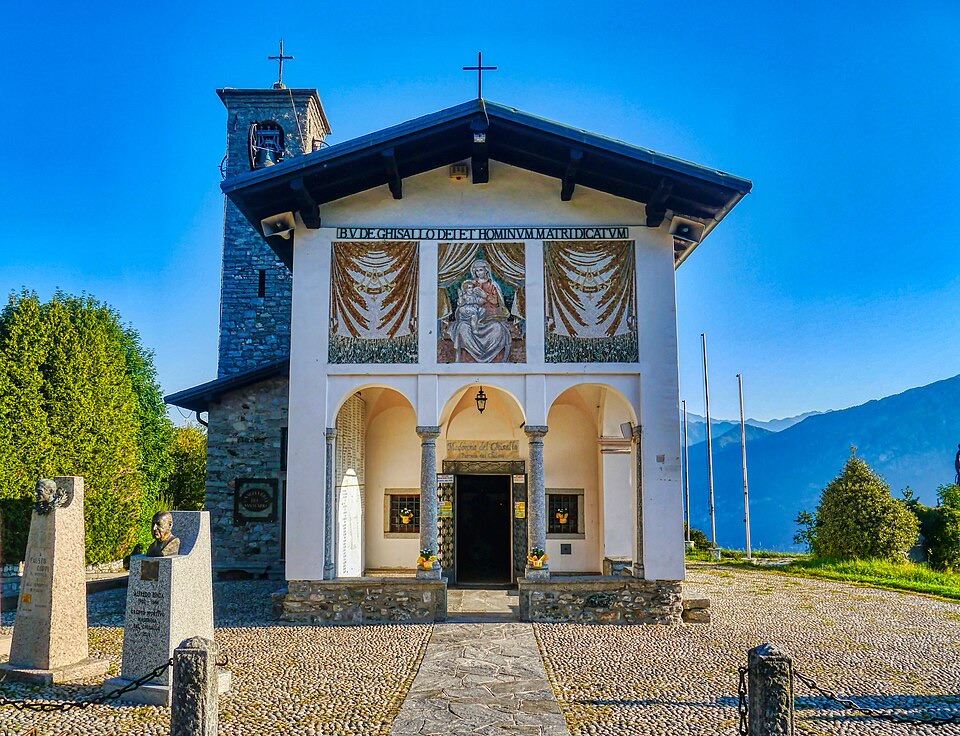
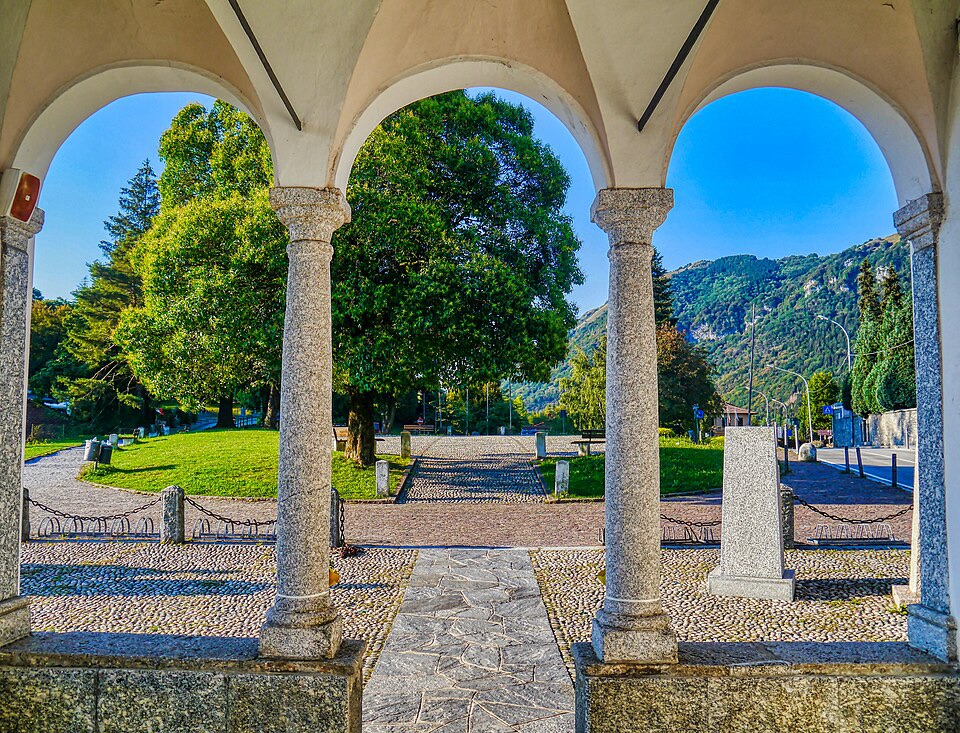
The road from Bellagio begins close to the waters of Lake Como, then turns away from the lake and climbs into the wooded hills of the Triangolo Lariano. The first kilometres are steep, with bends that force cyclists to settle quickly into a climbing rhythm. Beyond Guello, the gradient eases before the road rises again towards Magreglio. At the summit, approximately 754 metres above sea level, stands a small church with a three-arched portico.
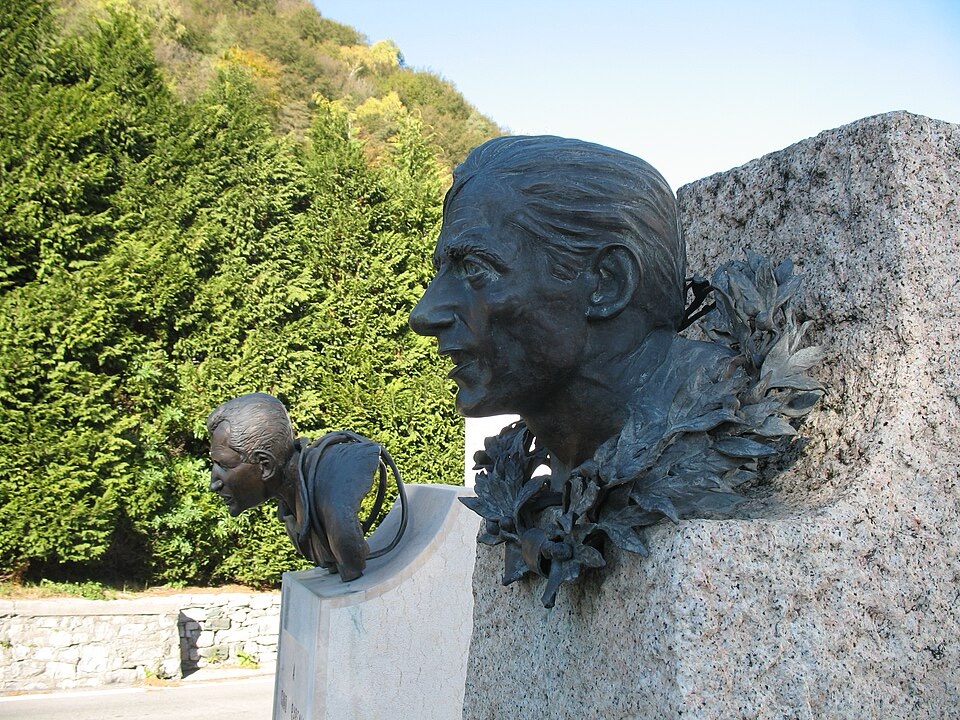
Inside, bicycles hang above the heads of visitors. Racing jerseys, photographs and memorial objects occupy spaces that might otherwise contain conventional religious offerings. A votive lamp recalls a ceremony involving Fausto Coppi, Gino Bartali and Pope Pius XII. Beside the church stands a museum founded through the efforts of Fiorenzo Magni, while a bronze monument outside depicts the contrasting experiences of victory and defeat.
Madonna del Ghisallo is not one of Italy’s highest or longest cycling climbs. The classic ascent from Bellagio measures approximately 8.6 kilometres, gains 532 metres and averages 6.2 percent. Yet its place in cycling history is exceptional. A mountain sanctuary that existed centuries before the bicycle became a landmark of Il Lombardia, the patronal church of Italian racing cyclists and eventually the centre of a collection devoted to the sport’s history.
The Mountain Between the Lakes
Lake Como divides into three branches that meet near Bellagio, the town occupying the promontory between the lake’s two southern arms. The mountainous territory enclosed by those arms is known as the Triangolo Lariano, from Lario, the ancient name of the lake. Its ridges belong to the Lombard Prealps, a landscape of limestone slopes, wooded valleys and settlements connected by roads between the lakeshore and the uplands.
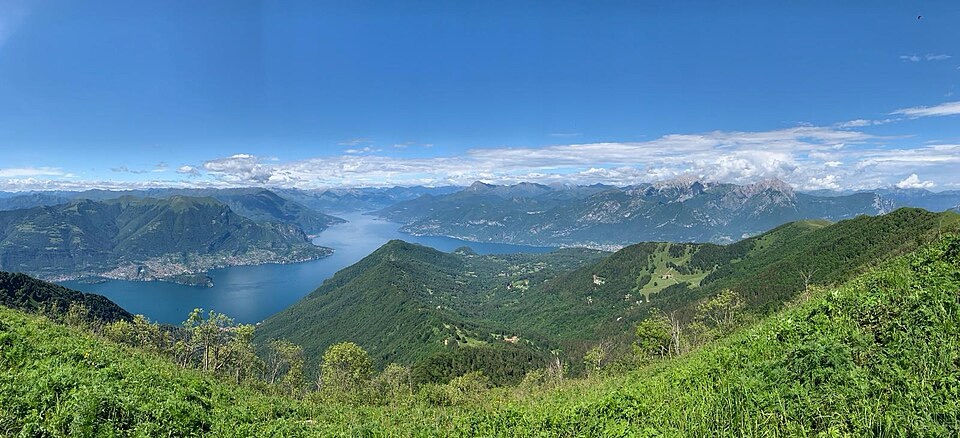
Monte San Primo, reaching 1,682 metres, dominates the peninsula. Below it, smaller ridges and valleys separate communities that historically depended on agriculture, forestry and routes connecting the lake with the interior. Ghisallo lies on one of those connections, between Bellagio and the settlements of Civenna and Magreglio, with the road continuing south towards the Vallassina.
The climb’s character comes from its uneven gradient. Leaving Bellagio, the road rises sharply through a succession of bends, with sections reaching approximately 12 percent. The easier middle kilometres allow riders to recover before the final approach to the sanctuary. Its average gradient conceals those changes, making Ghisallo more demanding than a simple reading of its profile might suggest.
The same geography made it useful to race organisers. Ghisallo could introduce a substantial climbing difficulty into a long-distance competition based around Milan and the Lombard lakes without taking the race into the high Alps. Its summit also provided an unmistakable landmark: a church standing beside the road where spectators could gather and identify the passage of the leading riders.
Long before cyclists began to measure their performances against the ascent, travellers crossing these hills had associated the place with another form of protection.
A Sanctuary Before Cycling
Local tradition traces the sanctuary to the story of Count Ghisallo, a nobleman supposedly attacked by bandits while travelling through the wooded mountains. According to the legend, he appealed to the Virgin Mary and promised to honour her if he survived. His deliverance became associated with an image of the Madonna and the establishment of a place of devotion.
The story resembles many European traditions surrounding roadside chapels, where travellers prayed for protection against the dangers of difficult journeys. Its historical origins, however, cannot be securely dated. A notarial document from 1135 records the locality of Ghisallo, but does not establish the existence of a church.
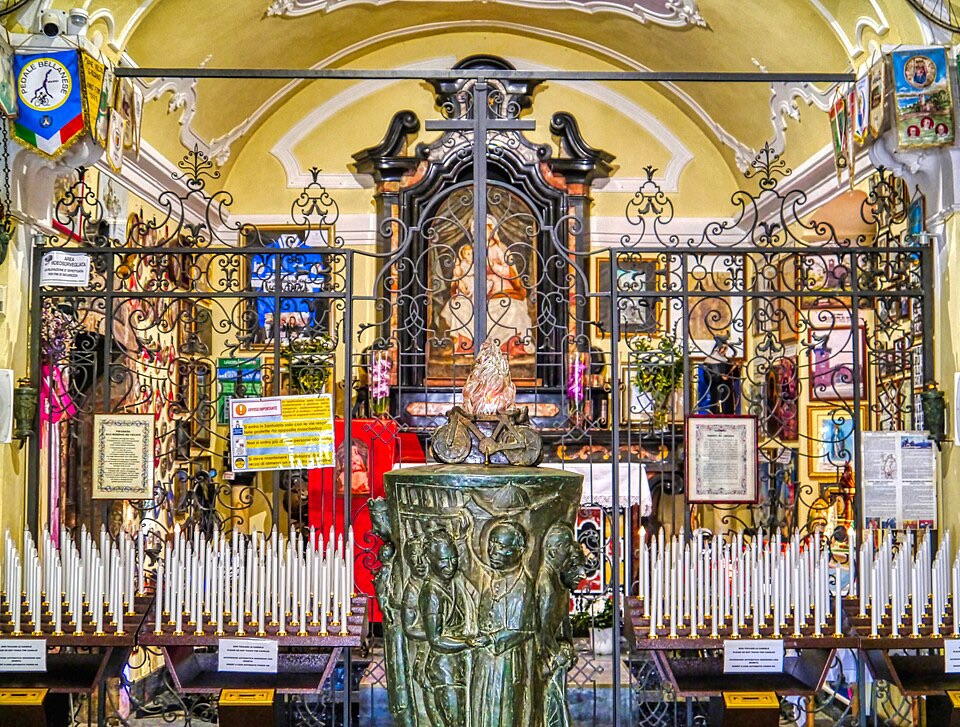
(Photo: Zairon / CC BY-SA 4.0 / Source: Wikimedia Commons, File: Magreglio Santuario di Madonna di Ghisallo Interno Coro.jpg)
The sanctuary enters the documentary record more clearly in July 1623, when the inhabitants of Magreglio received permission to celebrate Mass in a chapel dedicated to the Blessed Virgin Mary that they had rebuilt. The reference to rebuilding suggests an earlier structure, although its original foundation remains uncertain.
The chapel developed gradually. In 1660, the priest Giovanni Battista Bonanome established a provision for the celebration of Masses, and in 1681 the three-arched portico was added to the façade. Inside was an image of the Madonna and Child, associated with the longstanding Catholic tradition of seeking the Virgin Mary’s protection.
For centuries, this was a modest mountain sanctuary serving the religious life of the surrounding communities. Its later fame did not arise from a major pilgrimage movement or the construction of a monumental church. It came from the road passing directly beside it.
The First Champions on Ghisallo
The Giro di Lombardia was established in 1905, at a time when professional cycling was developing into one of Italy’s major spectator sports. Its autumn position on the calendar eventually earned it the name Classica delle Foglie Morte, the Classic of the Falling Leaves.
On 2 November 1919, the race crossed Madonna del Ghisallo for the first time. Costante Girardengo, already among the leading figures of Italian cycling, reached the summit fifteen minutes ahead of Gaetano Belloni and the Swiss rider Henri Suter. Girardengo went on to win the race, adding the mountain to a growing list of places associated with his victories.
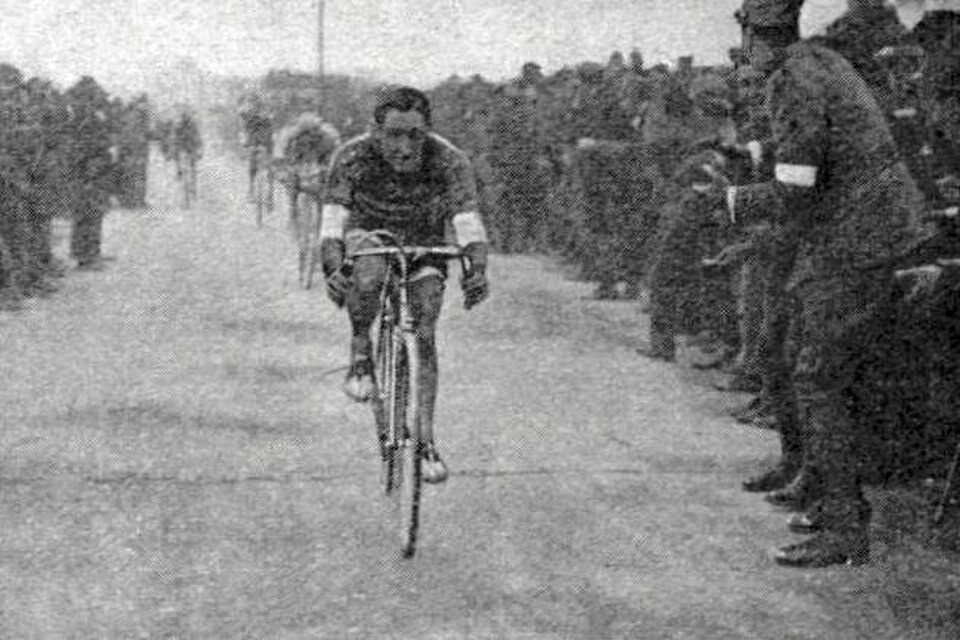
A fifteen-minute advantage at the summit was extraordinary by modern standards, but the road racing of 1919 belonged to a different competitive world. Riders faced long distances, difficult road surfaces, limited mechanical assistance and equipment far removed from today’s lightweight racing machines. The gaps between competitors could become enormous as the kilometres accumulated.
Ghisallo soon acquired its own succession of celebrated names. Ottavio Bottecchia led over the summit in 1923, Alfredo Binda did so in four consecutive editions from 1924 to 1927, and Gino Bartali crossed first in 1936 and 1940. The church bells became part of the race’s local tradition, sounding as riders passed the summit.
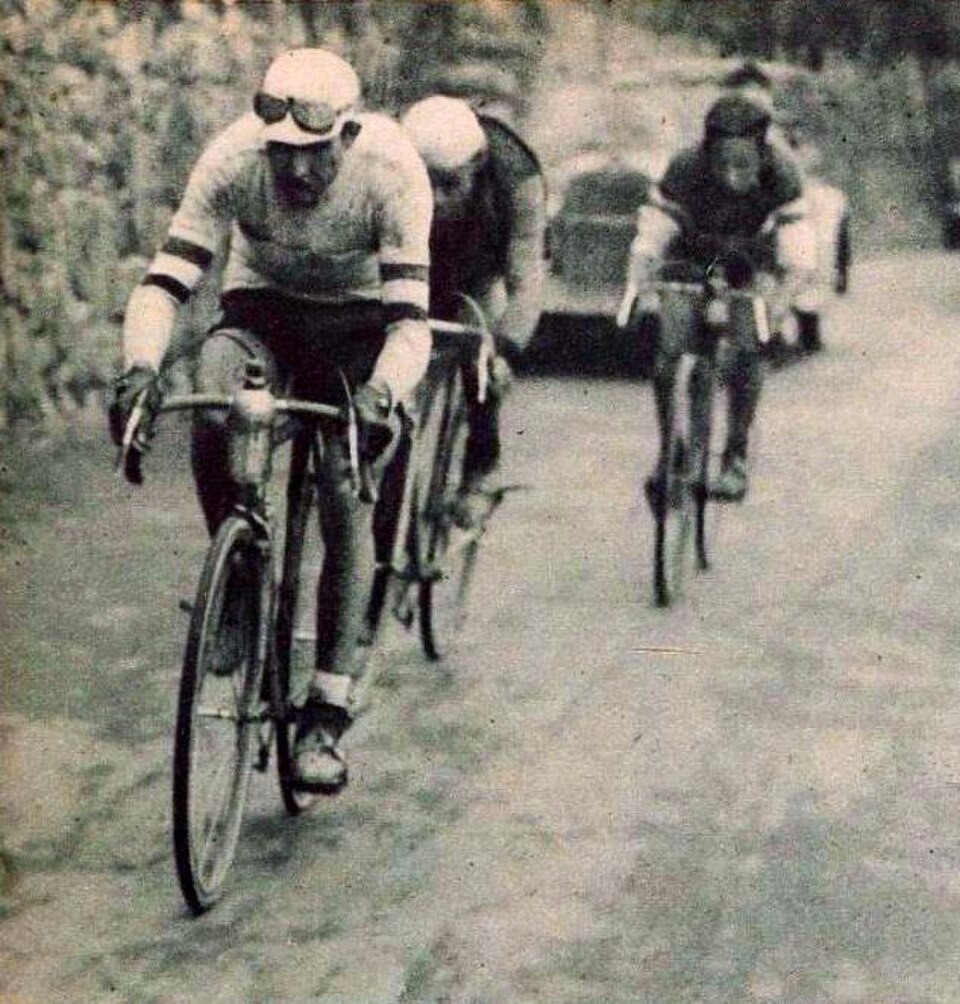
(Photo: Unknown photographer / Public Domain / Source: Le Miroir des sports, 17 November 1936, via Wikimedia Commons, File: Gino Bartali, vainqueur du Tour de Lombardie en novembre 1936.jpg)
For much of the race’s early history, Il Lombardia began and ended in Milan. Ghisallo frequently stood among the final substantial climbing difficulties before the return to the city. A rider who escaped there still faced a considerable journey, but the steep slopes offered an opportunity to separate from rivals before the faster roads approaching the finish.
No rider exploited that possibility more memorably than Fausto Coppi.
Coppi’s Road to Milan
By the autumn of 1948, Coppi had already won two consecutive editions of the Giro di Lombardia. His 1946 victory came after an attack near Milan on the Ghisolfa overpass, while the following year he caught and dropped Fiorenzo Magni near Valbrona before riding alone to the Arena Civica. Bartali finished second in that 1947 edition, 5 minutes and 24 seconds behind.
The 1948 race took place on 24 October. Coppi had almost missed it after receiving a suspension following disputes with Bartali at the World Championships in Valkenburg. The penalty was reduced, allowing him to start the autumn classic as its defending champion.
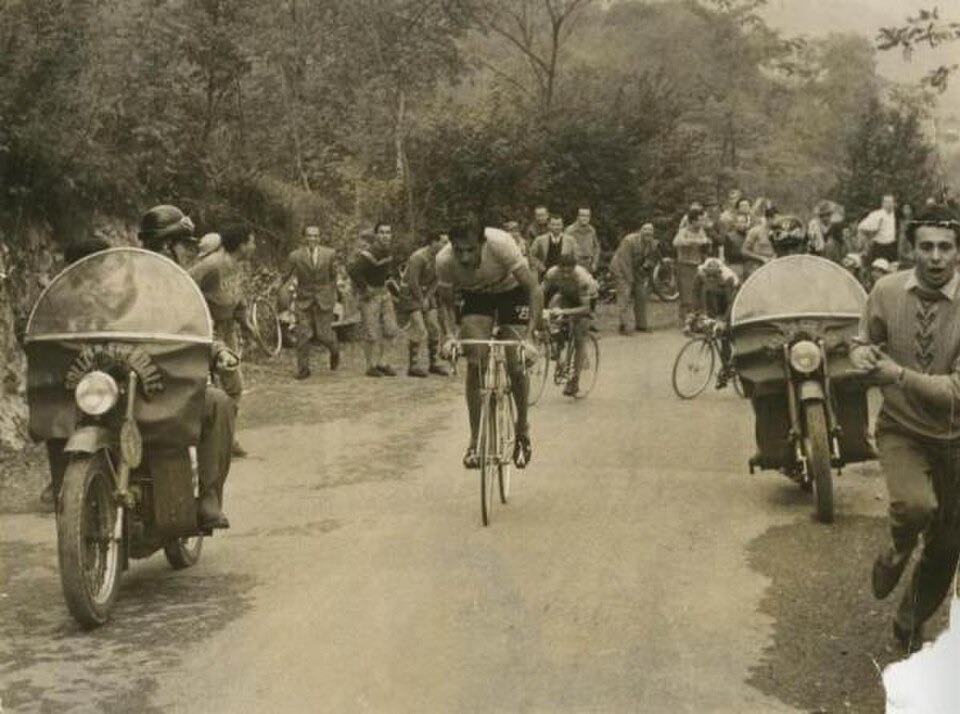
Near Lake Segrino, with 83 kilometres remaining, Coppi attacked the group of favourites. Ahead were three surviving breakaway riders, Rossello, Pinarello and Seghezzi. He caught them and continued alone towards Ghisallo.
The mountain road was still partly gravelled. Coppi climbed its 8.8 kilometres, as measured in the contemporary race account, in 25 minutes and 20 seconds, setting a new recorded time for the ascent. At the summit, Ortelli and Louison Bobet were 2 minutes and 41 seconds behind, with another chasing group following close behind them.
Coppi continued towards Milan without waiting for assistance. He entered the Vigorelli velodrome alone, almost five minutes ahead of Adolfo Leoni, after a solo ride of approximately eighty kilometres.
He won Il Lombardia again in 1949, when Molineris followed him over Ghisallo but lost contact on the descent. Coppi remained alone for the final 56 kilometres. A fifth victory followed in 1954, this time in a sprint against Magni and De Rossi.
The 1948 victory was particularly significant for Ghisallo because Coppi had visited the sanctuary just a week earlier. On that occasion he had not come to race against Bartali. The two champions had arrived together, accompanying a flame carried north from Rome.
Don Ermelindo Viganò and the Cyclists’ Madonna
Don Ermelindo Viganò became parish priest of Magreglio and rector of the sanctuary in 1944, during the final years of the Second World War. Born in Mediglia near Milan in 1906, he had previously served in religious and educational roles, including work associated with the Martinitt, a Milanese institution for boys.
He arrived at a sanctuary already familiar to professional cyclists. For decades, riders had passed its entrance during Il Lombardia, sometimes while racing for victory and sometimes while struggling simply to remain in the competition.
According to the sanctuary’s own history, Viganò noticed something during the 1947 Giro di Lombardia: cyclists making the sign of the cross as they passed the chapel. The gesture suggested that the Madonna already held a place in their private devotional lives, even though no formal ecclesiastical recognition connected the sanctuary with the sport.
Viganò began pursuing that recognition. In September 1947, he approached Cardinal Alfredo Ildefonso Schuster, Archbishop of Milan, seeking support for a proposal to establish the Madonna del Ghisallo as the patroness of cyclists. A gathering involving Pro Magreglio and Don Carlo Gnocchi also helped bring the cycling community into closer contact with the sanctuary.
His project required more than a declaration. It needed the support of church authorities, cycling organisations and the prominent riders whose participation could draw national attention. Viganò cultivated those relationships, and the following year the sanctuary became the destination of a ceremonial journey across Italy.
The Flame of October 1948
On 13 October 1948, Pope Pius XII blessed a votive lamp at Castel Gandolfo, the papal residence southeast of Rome. The bronze lamp, designed by the sculptor Carmelo Cappello, was intended for Madonna del Ghisallo.
Cyclists carried the flame northwards in a relay that passed through major Italian centres, including Florence, Bologna and Milan. The surviving accounts differ over some details of the departure and itinerary, but the final ceremony at the sanctuary is described in the parish publication Fiaccola sul Colle.
On Sunday, 17 October, the procession reached Ghisallo at approximately 10:30 in the morning. Coppi and Bartali led the final arrival. The chapel had been decorated with flowers, and temporary altars and facilities had been prepared for the congregation. An act of consecration was read as the flame reached its destination.
The presence of the two champions gave the ceremony particular resonance. Bartali, whose Catholic devotion was publicly well known, and Coppi, his greatest sporting rival, had become central figures in postwar Italian life. Their participation brought the sanctuary into a national sporting conversation that extended far beyond the mountains above Lake Como.
The lamp was installed inside the chapel. On 13 October 1949, Pope Pius XII issued an apostolic brief formally proclaiming the Madonna del Ghisallo the principal heavenly patroness of Italian racing cyclists.
Viganò remained at Magreglio until 1985. During those decades, the relationship he had helped formalise continued to develop through visits, donations and commemorations. The small church increasingly filled with objects left by the people whose patroness it had become.
The Bicycles Left Behind
Catholic sanctuaries have long received ex votos, offerings made in gratitude for protection, recovery or deliverance from danger. At Ghisallo, cyclists brought objects drawn from their own lives: bicycles, jerseys, trophies, photographs and memorials.
The walls gradually filled with reminders of professional racing and personal loss. Machines associated with Coppi, Bartali and Magni joined objects commemorating riders who were never famous. Racing equipment acquired a place beside religious images, while photographs and memorial plaques preserved the names of people whose lives had ended on the road.
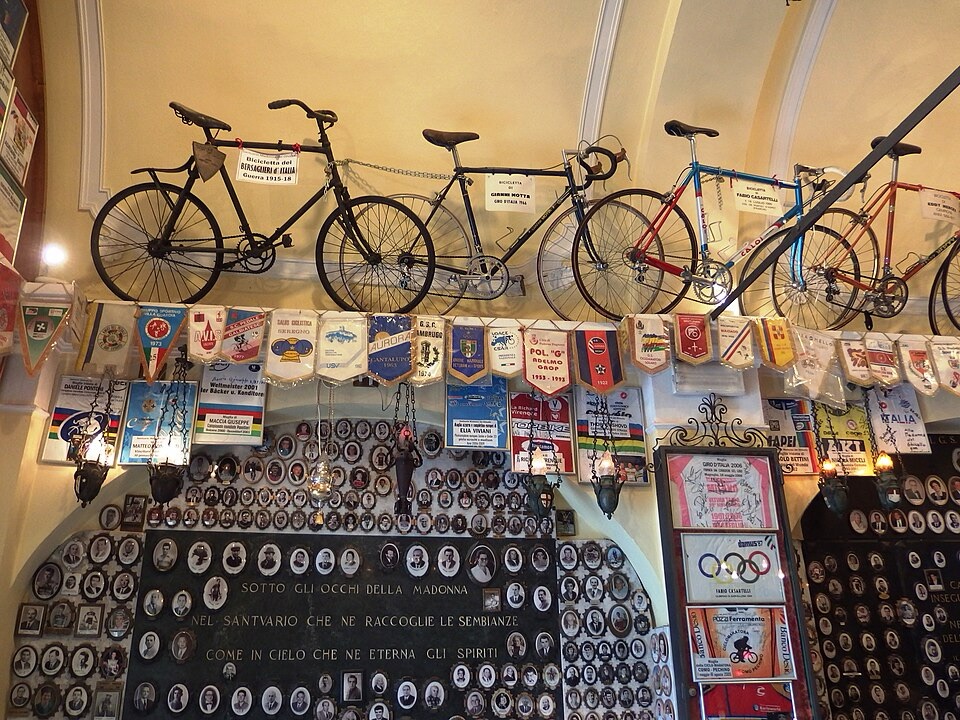
(Photo: Nicola / CC BY-SA 3.0 / Source: Wikimedia Commons, File: Madonna del Ghisallo 2014-02.JPG
The sanctuary’s historical account identifies a bicycle associated with Alfonsina Strada, the woman who competed in the 1924 Giro d’Italia. It also records a Bersaglieri military bicycle and one associated with Evelina Bianchetti, who died in a road accident. Such objects widened the collection beyond the achievements of professional champions, preserving different experiences of cycling within the same small building.
Space became an increasingly serious problem. The sanctuary’s account relates an incident in which a saddle disappeared from one of Magni’s bicycles, after which machines were suspended from the walls. That arrangement protected floor space and created the unusual interior for which the church became famous, but it could not provide the conservation facilities required by a growing historical collection.
The chapel remained a functioning place of worship. Its bicycles and memorials belonged to a devotional tradition, yet many had also become important evidence of cycling history. A separate institution would eventually be needed to preserve them.
Fiorenzo Magni and the Museum
Fiorenzo Magni had spent much of his professional career competing in the shadow of Coppi and Bartali. He nevertheless won three editions of the Giro d’Italia and three consecutive Tours of Flanders between 1949 and 1951, earning the nickname Leone delle Fiandre, the Lion of Flanders.
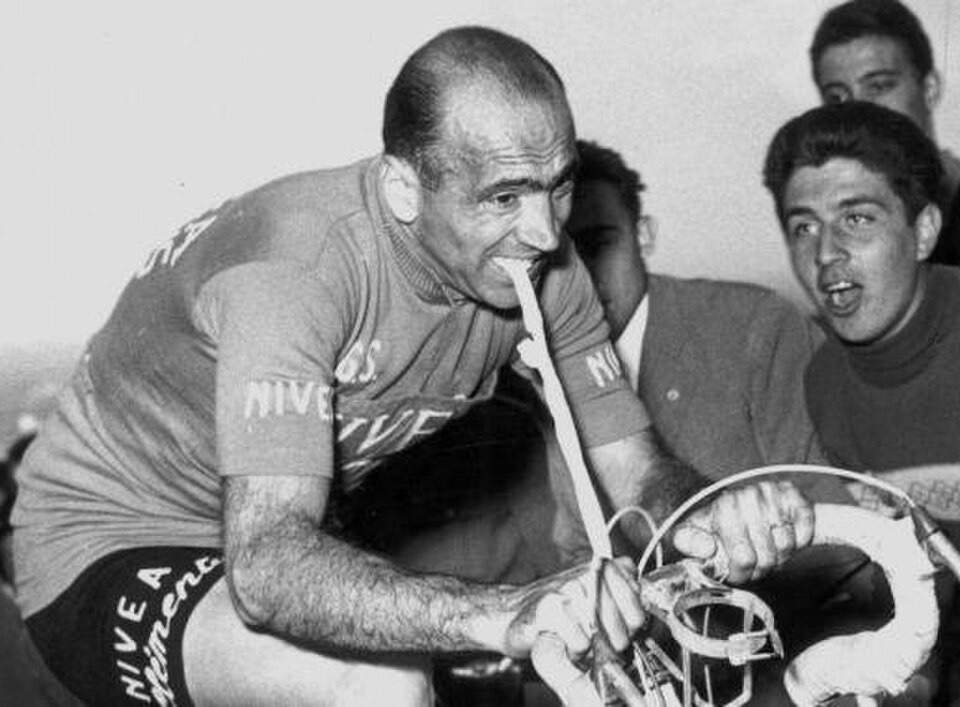
After his racing career, Magni became the driving force behind a museum beside the sanctuary. He wanted the history preserved at Ghisallo to extend beyond the limits of the chapel, with proper space for bicycles, photographs, jerseys, documents and other material associated with the sport.
The Museo del Ciclismo Madonna del Ghisallo opened on 14 October 2006.
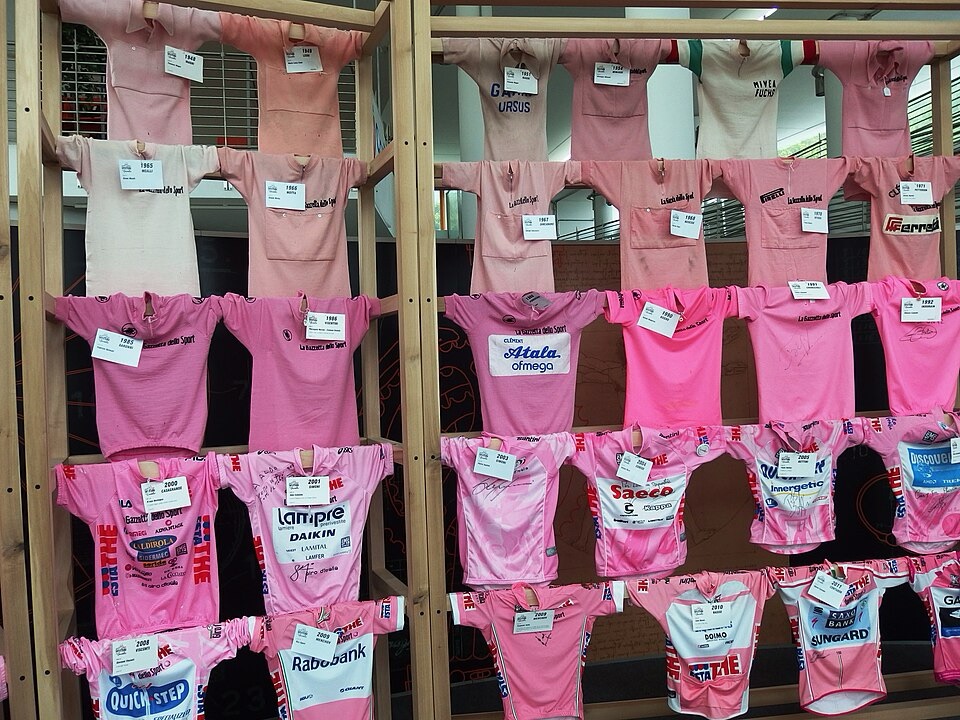
Its collections include bicycles associated with Bartali’s Tour de France victories, equipment connected with Fausto Coppi’s racing career, and machines commemorating Magni’s achievements in the northern Classics. Among them is a bicycle associated with Coppi and Paris–Roubaix, the race he won in 1950. These objects preserve the machines as well as the achievements of the riders who used them.
The museum also preserves material that extends beyond celebrated road racers, including track bicycles, hour-record machines, jerseys and objects commemorating cyclists who died during competition or in other circumstances.
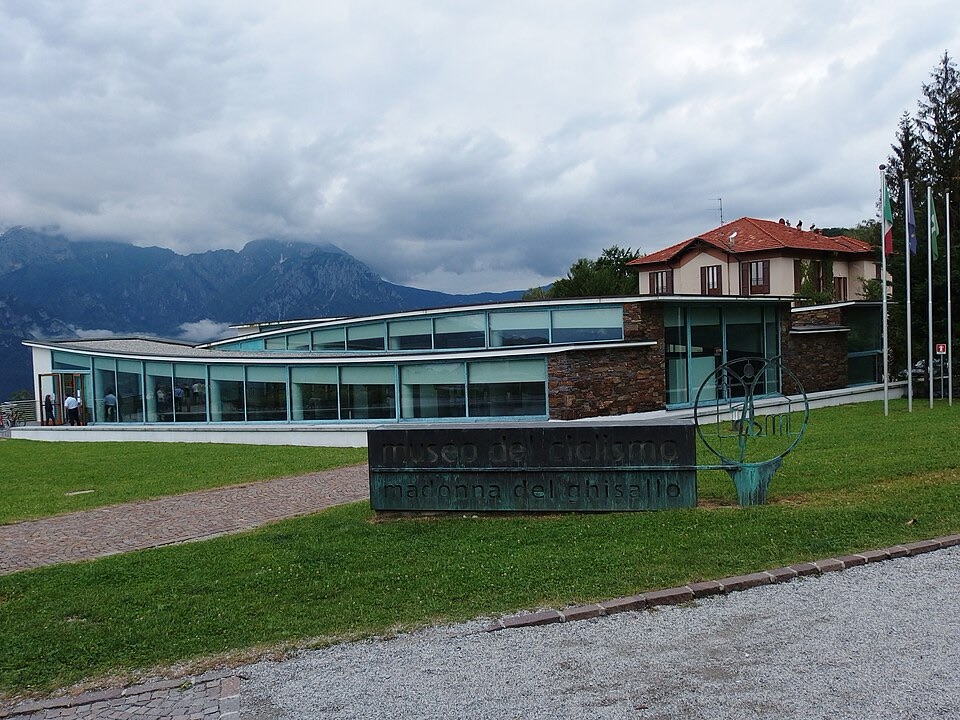
In 2026, the museum marked its twentieth anniversary with Ghisallo 20, an exhibition programme running from 18 April to 1 November. Its central idea was to assemble twenty historically significant bicycles, introduced progressively during the season. A separate retrospective across three rooms revisited the museum’s development through photographs, memorabilia and records of the people involved in its first two decades.
The institution described its holdings at the time as approaching 3,000 objects. Magni’s original ambition had developed into a permanent centre for cycling heritage, situated only a short distance from the church where the collection began.
Ghisallo in Modern Il Lombardia
Il Lombardia’s routes have changed repeatedly since the race left its traditional Milan start-and-finish arrangement after 1960. The climb’s position within the course now depends on whether the race finishes in Como, Bergamo or another location, and whether organisers approach the summit from Bellagio or the gentler Asso side.
The differences are visible in recent editions. In 2024, the riders approached Ghisallo from the Asso side and descended towards Bellagio before continuing to the more demanding Colma di Sormano. The decisive phase came later, with Tadej Pogačar riding away on the Sormano ascent.
In 2025, the race started in Como and finished in Bergamo. Ghisallo appeared early, again approached from Asso, before the route moved east towards Roncola, Berbenno, Zambla Alta and the Passo di Ganda. Pogačar took his fifth consecutive victory, ahead of Remco Evenepoel and Michael Storer, with the decisive racing unfolding well beyond the sanctuary.
The 2026 edition returned to a Bergamo-to-Como course on 10 October. This time the riders followed the eastern shore of Lake Como from Lecco to Bellagio before climbing Ghisallo by its classic approach. The final 22 kilometres included two passages over San Fermo della Battaglia, separated by the steep ascent of Civiglio.
On Civiglio, with approximately 19 kilometres remaining, Paul Seixas launched the decisive attack. The French rider distanced his rivals on the steep gradients and rode alone to Como, finishing 48 seconds ahead of Enric Mas, with Giulio Ciccone third at 1 minute and 5 seconds. At just 20 years and 16 days old, Seixas became the youngest winner in the history of Il Lombardia, achieving the distinction in its 120th edition. More than a century after Girardengo first led the race over Ghisallo, another generation had made history on the roads surrounding Lake Como.
The changing courses have altered the mountain’s tactical function, but the summit continues to occupy a central place in the race’s identity. The riders still pass the sanctuary and museum, crossing a road associated with Girardengo, Binda, Bartali, Coppi and generations of later champions.
The Monument and the Road That Remains
Outside the sanctuary stands the Monument to the Cyclist, a bronze sculpture by Elio Ponti blessed on 15 July 1973. One figure celebrates victory while another is overcome by exhaustion. The composition captures two experiences familiar to competitive cyclists, placing triumph and defeat within the same memorial.
The monument faces a road that remains busy with cyclists travelling between Bellagio and Magreglio. Some climb Ghisallo because of its association with Il Lombardia, others because of the museum or the sanctuary itself. The road continues beyond the summit towards the communities of the Vallassina, retaining its everyday function as a connection through the mountains.
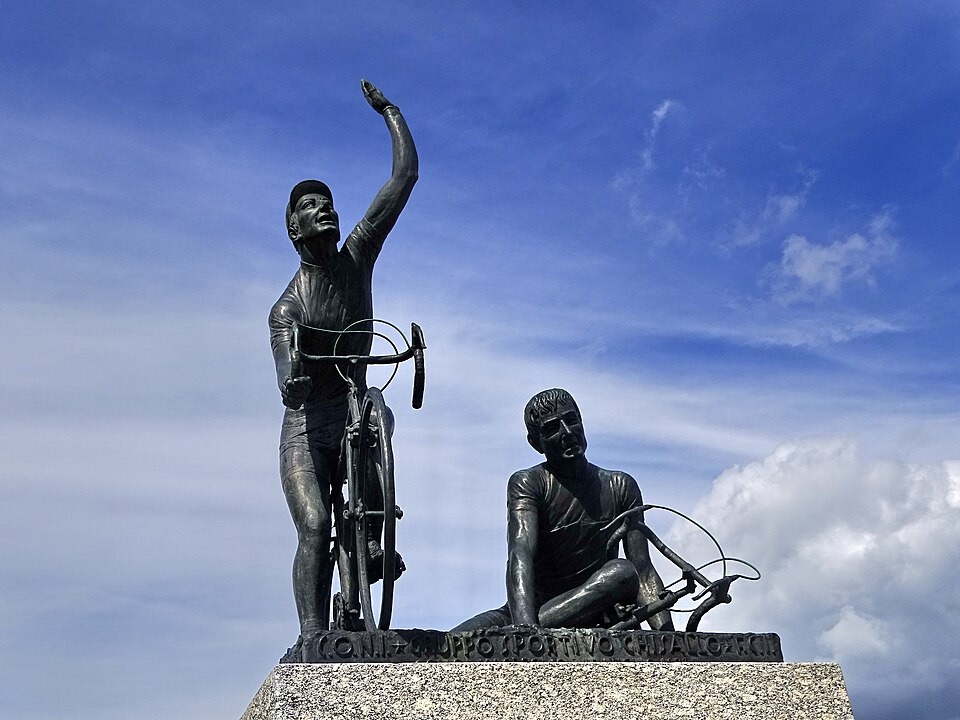
A visitor entering the chapel encounters bicycles and jerseys suspended around the religious image. A few steps away, the museum holds machines that can be studied through their construction, racing history and the lives of their riders. Outside, the monument stands beside the route that brought those riders to Ghisallo in the first place.
The church’s three-arched portico dates from 1681. The Giro di Lombardia first passed in 1919. Viganò’s campaign began in the 1940s, and the museum opened in 2006. Each belongs to a different chapter in the history of the mountain, but all remain visible within a short walk at the summit.
There is no finish line permanently painted across the road. Riders arriving from Bellagio pass the sanctuary and continue towards Magreglio, just as travellers did long before the first bicycle climbed these hills.
Inside the church, however, some of those who came by bicycle left something behind.