

Binche–Chimay–Binche travels through a part of Belgium that looks very different from the country portrayed by the great Flemish spring classics. There are no famous cobbled bergs rising from the fields of East Flanders, no procession of spectators on the Oude Kwaremont and no windswept approach towards the North Sea. This is Wallonia, and more specifically Hainaut: an old borderland of fortified towns, farms, forests and industrial communities stretching south towards France.
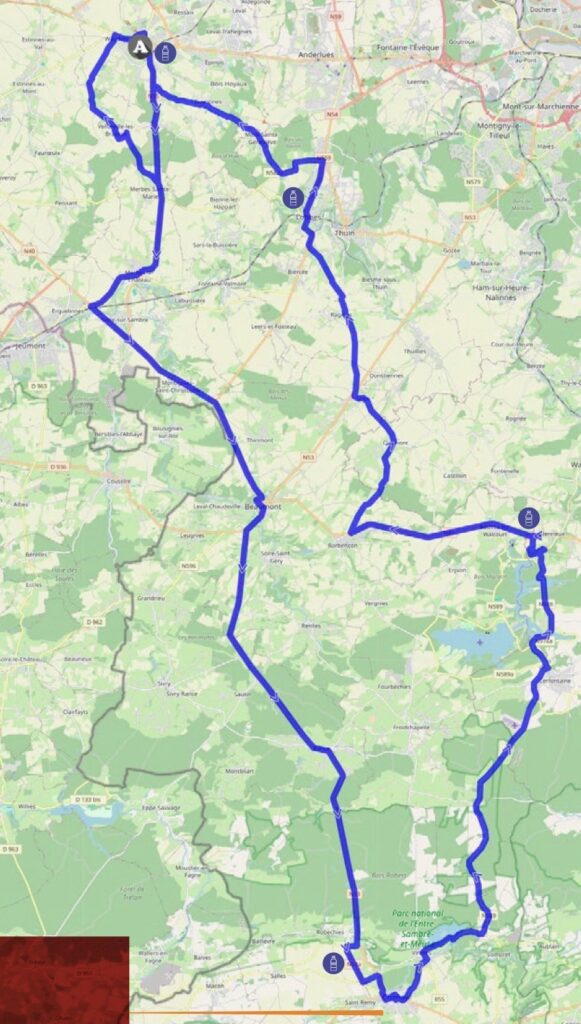
The race follows that geography for 206.8 kilometres. It leaves Binche and travels south towards Chimay before turning north again, completing an initial 111.4-kilometre journey through Hainaut before entering the finishing phase around Binche. From there, five and a half passages of a 16.4-kilometre local circuit accumulate almost another hundred kilometres around the same roads.
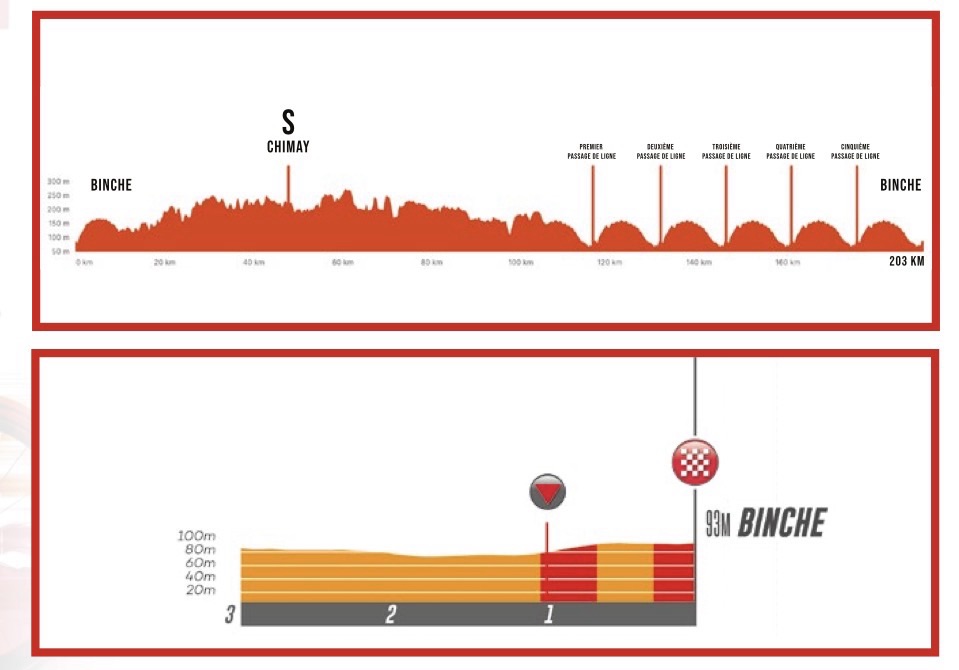
Repetition changes the character of those roads without requiring a major climb. The local circuit contains the cobbled rise of Rue de la Pépinière, the descent towards Waudrez and a long drag back towards Binche. None would define a major classic individually, but repeated after more than a hundred kilometres through southern Hainaut, they become considerably more selective.
There is another presence attached to the race, although he died far from these roads. Frank Vandenbroucke was one of the most gifted and complicated Belgian cyclists of his generation. He won this race in 1996, when it was still Binche–Tournai–Binche, and after his death in 2009 his name became attached to the revived event. The modern title, Binche–Chimay–Binche / Mémorial Frank Vandenbroucke, therefore connects a race whose history reaches back to 1911 with a rider whose career remains one of the most extraordinary stories in modern Belgian cycling.

The journey begins behind the medieval walls of Binche.
–206.8 km | Binche
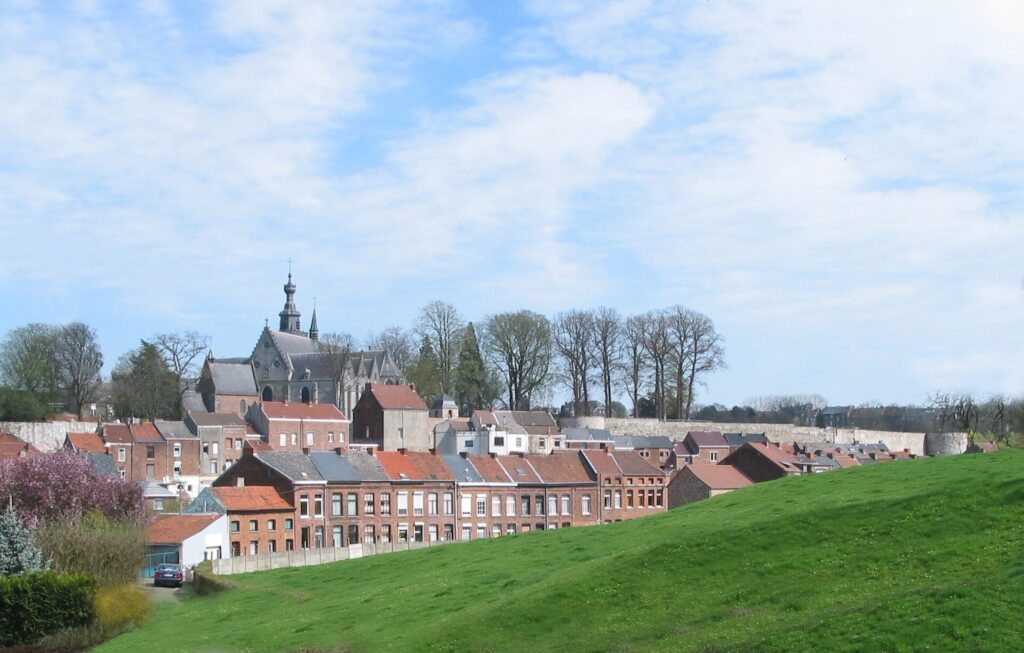
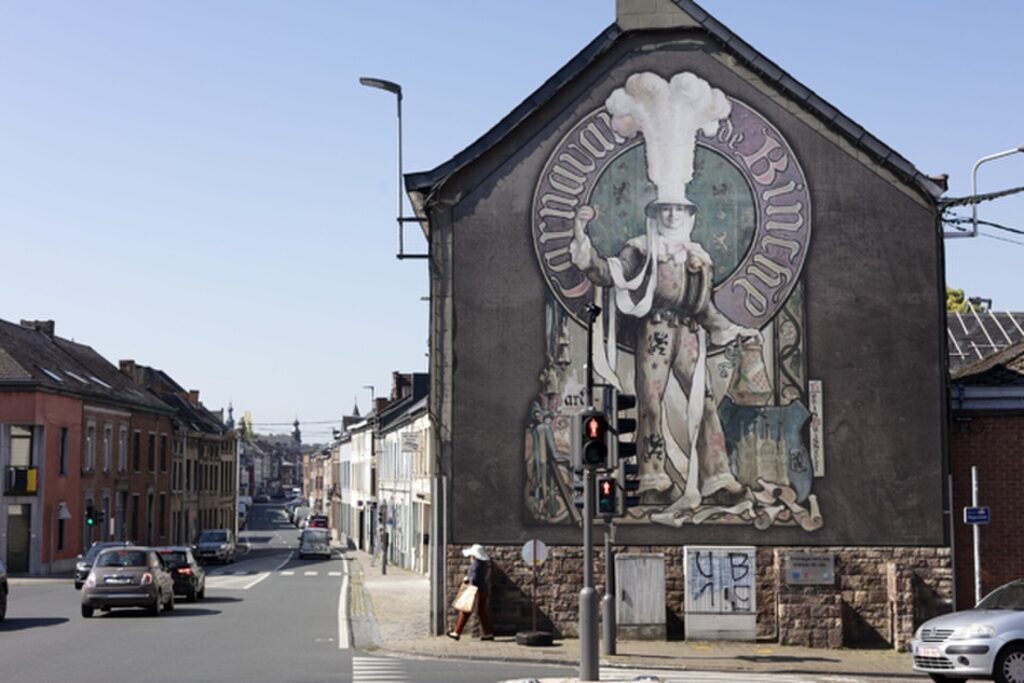
Binche is a small Walloon city with an international cultural reputation entirely disproportionate to its size, largely because its name has become inseparable from Carnival.
For several days before Lent, the streets become the setting for one of Europe’s most distinctive surviving carnival traditions. The central figures are the Gilles de Binche, men wearing elaborate costumes decorated with heraldic motifs, bells and lace. On Shrove Tuesday they appear from early morning, moving through the town to the sound of drums before some later wear enormous hats made from ostrich feathers.
Oranges are distributed and thrown into the crowd, musicians fill the streets, and traditions governing costume and participation are maintained with remarkable seriousness. The Carnival of Binche has been recognised by UNESCO as part of the Intangible Cultural Heritage of Humanity.
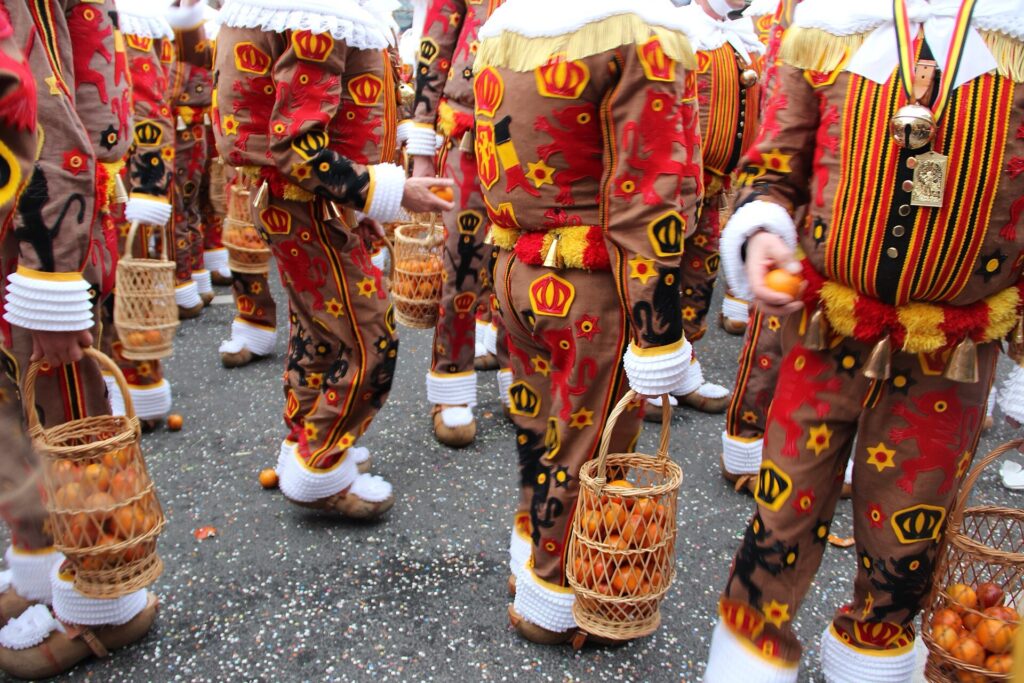
The Gilles are not simply performers assembled for visitors. Participation is embedded in local families and associations, and the ritual belongs specifically to Binche. Similar carnival figures exist elsewhere in Belgium, but the town’s own tradition remains strongly protected as an expression of local identity.
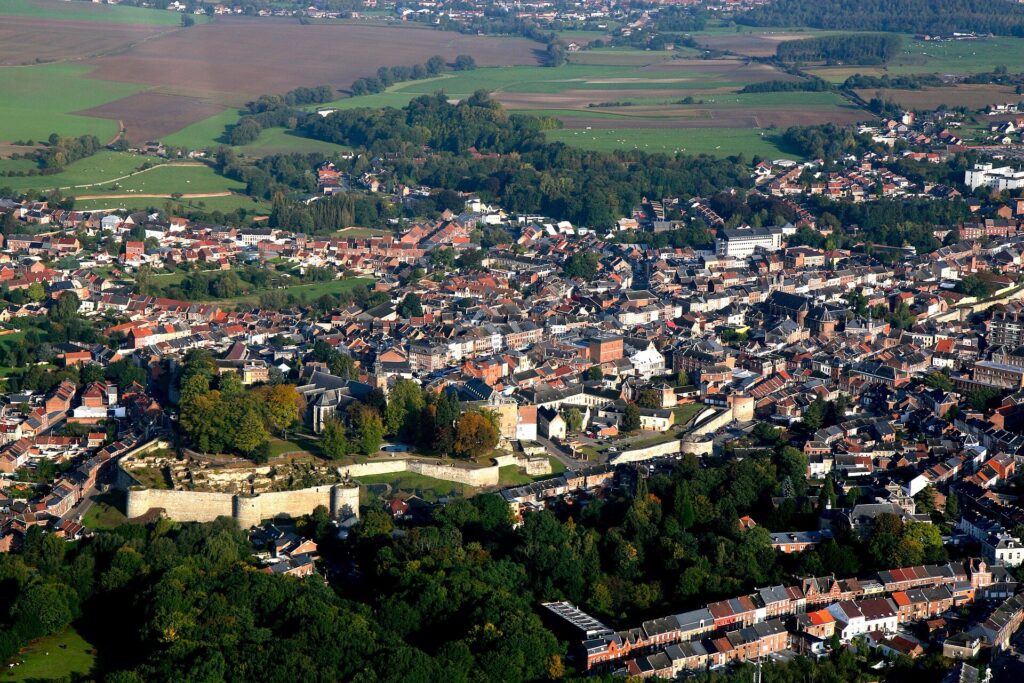
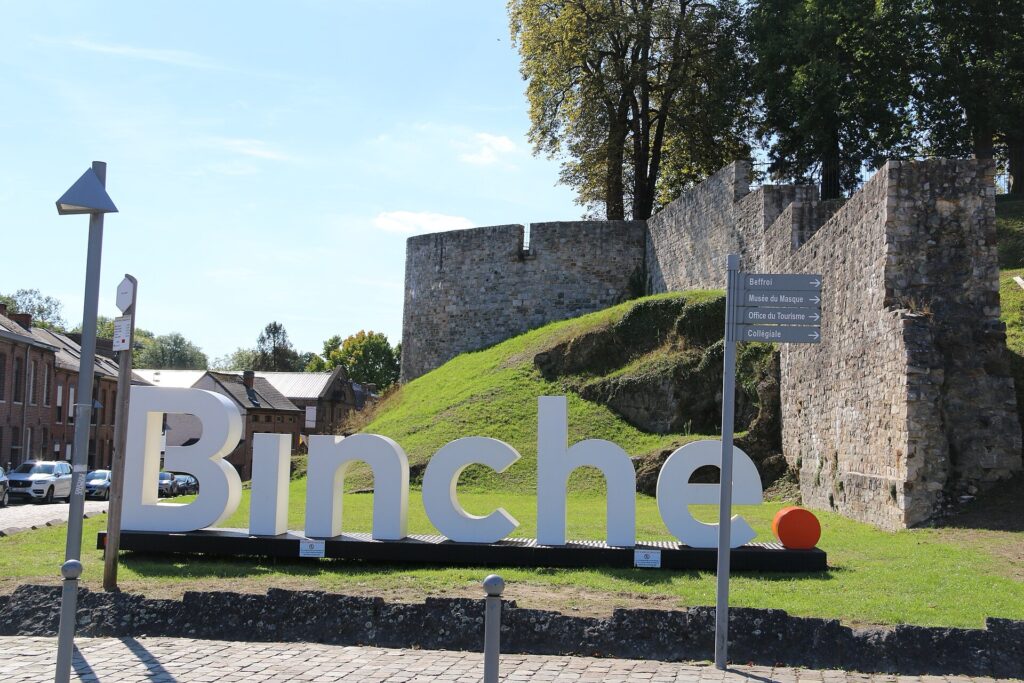
The setting is much older than the modern spectacle surrounding it. Binche developed as a fortified town in medieval Hainaut, and much of its surviving defensive wall dates from the Middle Ages. Towers and long stretches of masonry still enclose the historic centre and reveal the strategic importance once attached to this relatively small settlement.
Its most extraordinary architectural episode came during the sixteenth century, when Mary of Hungary, sister of Emperor Charles V and governor of the Habsburg Netherlands, maintained a residence at Binche and commissioned a magnificent Renaissance palace beside the medieval town. Designed to express Habsburg power and courtly sophistication, the palace became famous for elaborate festivities held in 1549 in honour of Charles V and his son, the future Philip II of Spain.
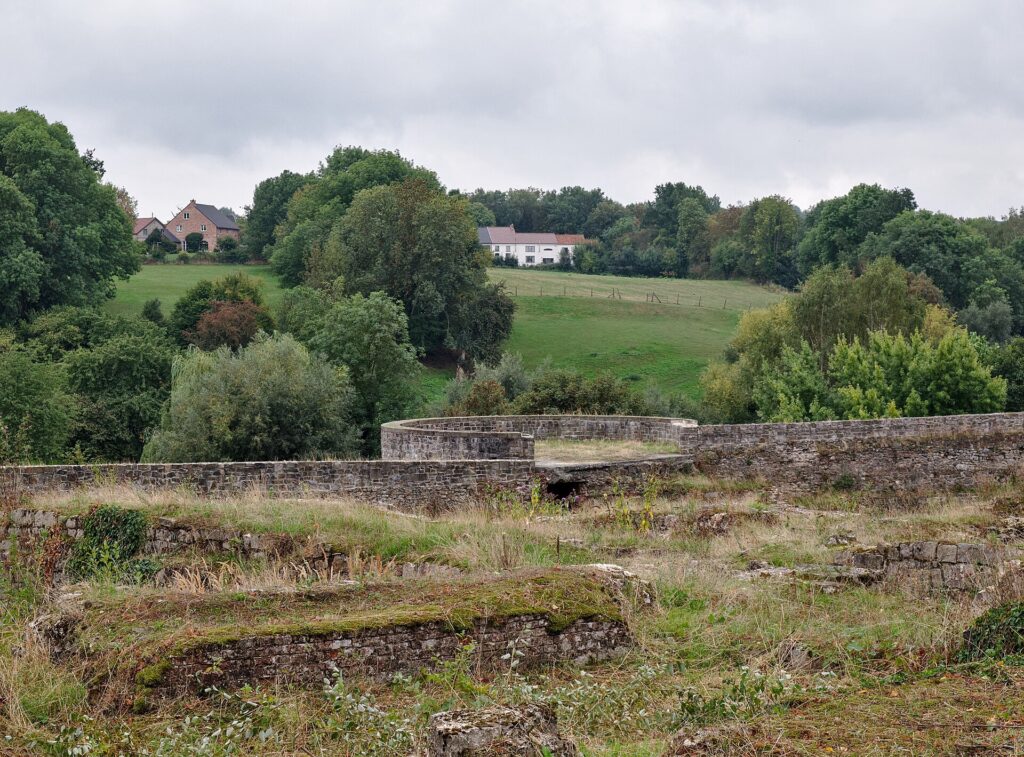
The splendour did not last. French forces destroyed the palace only a few years later during the wars between France and the Habsburgs. Archaeological remains now occupy the site where one of the most ambitious Renaissance residences in the Low Countries once stood.
Binche therefore carries two very different forms of historical continuity. Its medieval walls remain physically present, while the palace survives principally through archaeology and written memory. Both belong to a town that spent centuries close to the political and military fault lines separating France from the Low Countries.
The peloton leaves those walls and turns south into Hainaut.
Southern Hainaut | From the Industrial Belt to Open Country
The landscape south of Binche belongs to a region shaped by two histories that can appear incompatible at first sight: agriculture and heavy industry.
Northern Hainaut formed part of the great coal and industrial belt that extended across Wallonia during the nineteenth and twentieth centuries. Coal mining, steelmaking, glass production and engineering transformed communities around Mons, La Louvière and Charleroi and helped make Belgium one of continental Europe’s earliest industrial powers.
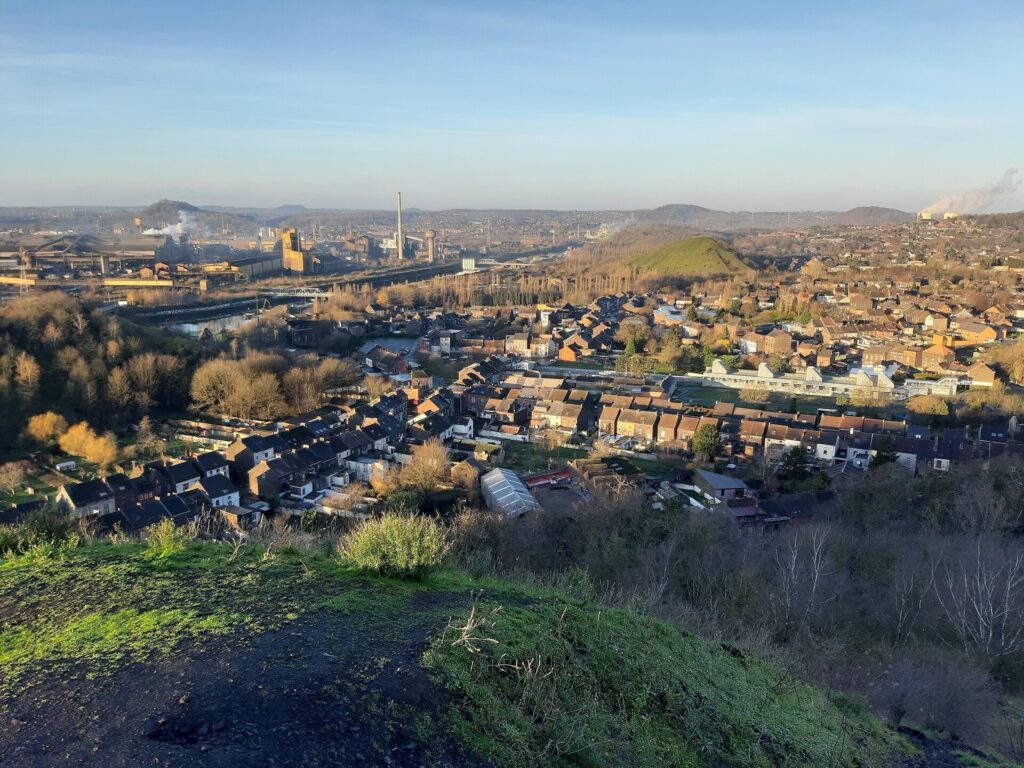
Mining altered the landscape physically. Terrils, the enormous spoil heaps created from material brought out of coal mines, rose beside towns and pits, while railways, canals and workers’ settlements connected industrial sites that had previously been separated by farmland.
The contraction of Wallonia’s heavy industries during the second half of the twentieth century left another layer behind. Collieries closed, industrial employment fell dramatically and many former mining landscapes were gradually reclaimed, preserved or given new uses. The result is a region where the industrial past remains visible even when the industries themselves have disappeared.
Only a short distance farther south, however, the country begins to loosen. Fields widen around smaller villages, woodland becomes more frequent and settlement grows less continuous. The dense industrial geography of central Hainaut gives way to the quieter country approaching Beaumont, Froidchapelle and Chimay near the French frontier.
Binche–Chimay–Binche crosses that transition rather than remaining within a single Walloon landscape, and the farther south the race travels, the more rural Hainaut becomes.
Towards Chimay | The Southern Borderlands
Southern Hainaut presses against France across a landscape that long predates the modern frontier. Villages, farms and roads developed through centuries in which political control changed repeatedly, leaving a territory whose strategic importance came largely from its position between northern France and the Low Countries.
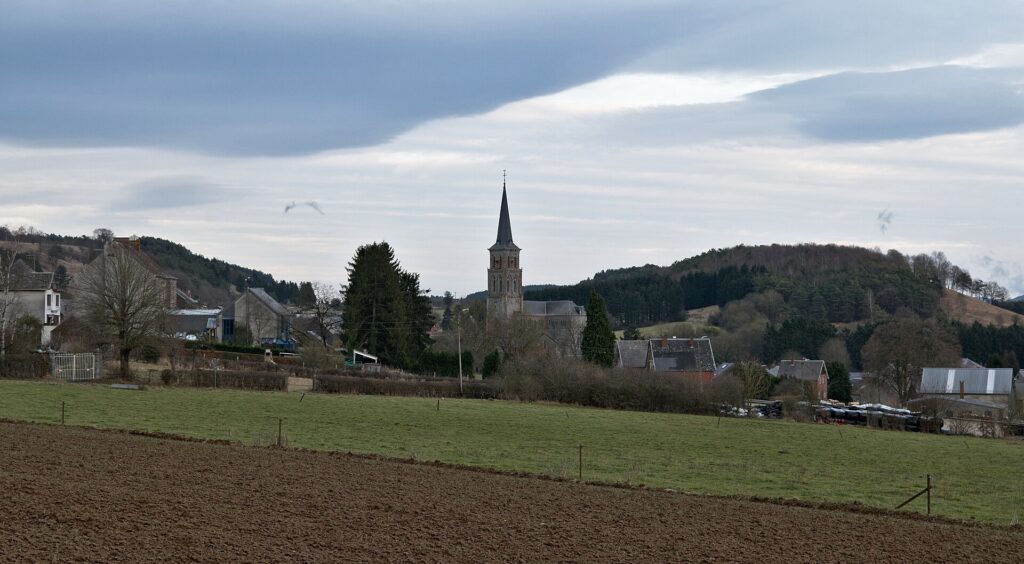
The density of old fortified towns across the wider region reflects that history. Roads through Hainaut carried merchants and agricultural goods, but they also carried armies, making settlements capable of controlling those routes valuable to successive rulers.
For the modern peloton, very little announces this historical borderland physically. French-speaking communities extend across both sides of the frontier, while fields and forests continue through a landscape whose natural geography pays little attention to the political line.
The race remains inside Belgium as the woodland thickens and the terrain around Chimay approaches. What awaits there is a place whose name has travelled far beyond Hainaut, although usually on the label of a bottle.
Chimay | Princes, Trappists and an Abbey in the Forests
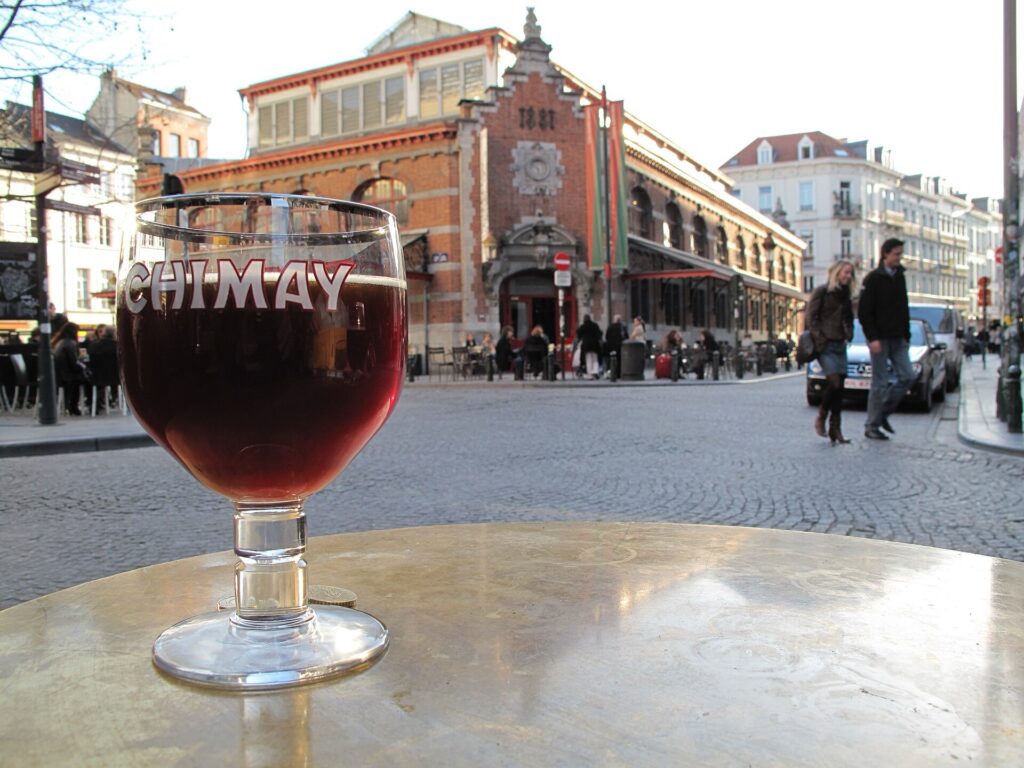
For an international audience, Chimay is probably better known from a beer label than from a map of Belgium.
The town itself is small, standing within the wooded country of southern Hainaut close to France. Its history, however, connects aristocratic power with one of Belgium’s most recognisable monastic traditions.
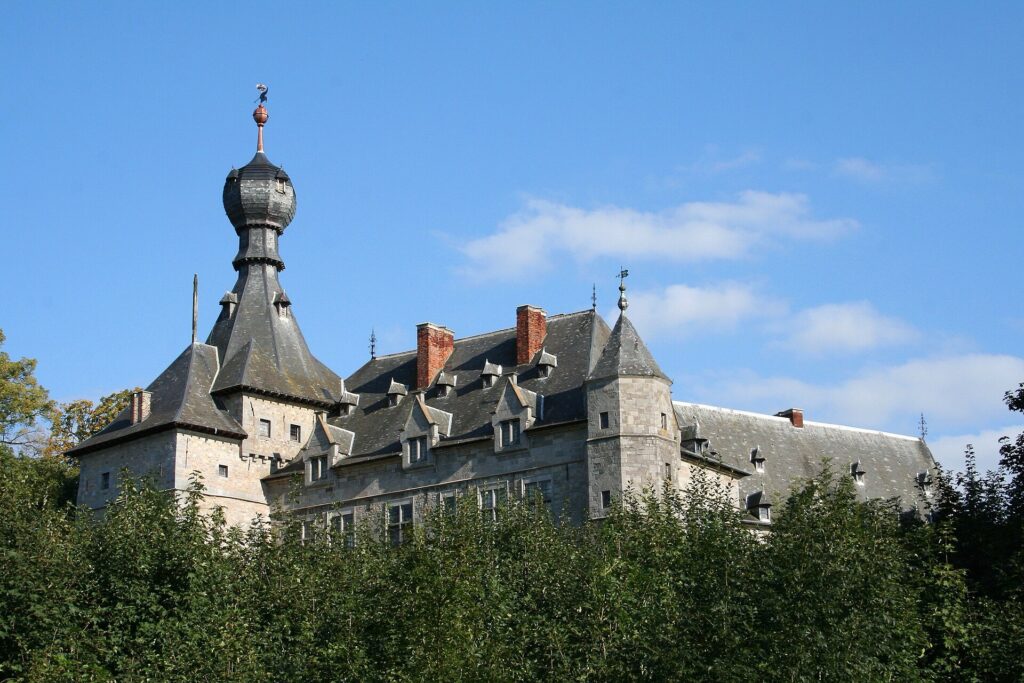
Chimay developed around a medieval lordship that eventually became a principality. The Château de Chimay, overlooking the Eau Blanche valley, remains the principal monument to that history. Its origins reach into the Middle Ages, although repeated destruction, rebuilding and alteration changed the structure substantially over the centuries.
The title Prince of Chimay emerged from the complex aristocratic politics of the Burgundian and Habsburg Netherlands, when local noble families could occupy important positions within much larger European political networks.
Several kilometres away, the name acquired another identity.
In 1850, a group of monks from Westvleteren established a monastery at Scourmont, on relatively isolated land near Chimay. The community belonged to the Order of Cistercians of the Strict Observance, commonly known as the Trappists.
Their abbey developed around prayer, manual work and a deliberately austere interpretation of monastic life. Agriculture became essential to the community, and the monks eventually began producing cheese and beer. Those products travelled far beyond the forests surrounding Scourmont.
Chimay became one of the names most closely associated internationally with Trappist brewing. The designation traditionally carried a specific meaning: production took place within or near a Trappist monastery under the supervision of the monastic community, with revenues supporting the monastery and charitable purposes rather than ordinary private profit.
The beers developed at Scourmont became known for bottle conditioning and complex fermentation character, while Chimay cheese emerged from the same agricultural economy surrounding the abbey. This was not simply a commercial brewery occupying an old religious building. Economic activity existed in support of a monastic community whose central purpose remained religious life.
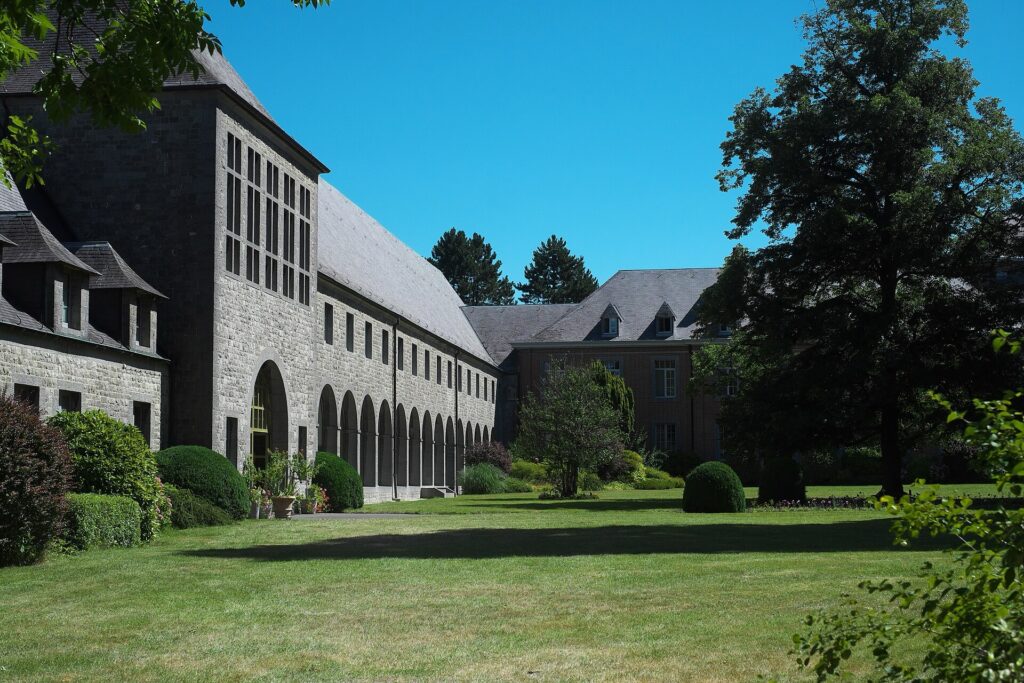
That distinction helps explain why Chimay now means several things simultaneously. It identifies a Walloon town, an aristocratic title, a château, an abbey, a cheese and one of the world’s most recognisable traditions of monastic brewing.
Having reached the wooded southern end of the course, Binche–Chimay–Binche begins turning north again.
The Return Through Hainaut
The return from Chimay gradually reverses the transformation of the journey south. Forests and open farmland give way to denser settlement as the race moves towards central Hainaut, passing back into country increasingly shaped by the industrial development that transformed Wallonia during the nineteenth century.
The roads rarely provide a single obvious point at which the race should be decided. The terrain rolls rather than climbs dramatically, and exposure to wind can matter as much as elevation. Fatigue accumulates through smaller gradients, narrow roads, changes of direction and the constant need to maintain position rather than through one defining ascent.
That characteristic is easy to underestimate on a profile. Hainaut belongs to the broader Belgian cycling landscape in which weather, road width and repeated acceleration can shape a race as decisively as measured climbing.
When Binche finally reappears, the peloton has travelled south to the forests around Chimay and returned towards the industrial and agricultural country surrounding its starting city. Yet almost one hundred kilometres still remain.
The geography is about to contract from a journey across Hainaut into a single repeated loop.
–95.4 km | The Binche Circuit
After 111.4 kilometres on the road, the race enters its 16.4-kilometre finishing circuit around Binche.
From this point, the peloton completes five and a half passages of the local loop. The roads therefore repeat, but there is little value in treating each lap as a separate geographical journey. The places remain the same while the physical state of the race changes around them.
The circuit takes the riders through the countryside immediately surrounding Binche, including the approach around the Bois de Pincemaille and Ferme Bel-Air before the descent towards Waudrez.
Waudrez occupies a site whose history extends far beyond medieval Binche. During the Roman period this area was occupied by Vodgoriacum, a settlement positioned on the important road between Bavay and Tongeren. Roman roads were not merely local connections but part of an infrastructure linking military centres, towns, agricultural estates and administrative territories across the northern provinces of the empire.
Bavay, now in France, was the Roman Bagacum and an important road junction. Tongeren, in modern Belgium, developed as Atuatuca Tungrorum. The route between them crossed Hainaut, placing the countryside around modern Binche within a transport network that existed almost two thousand years before bicycles arrived.
Archaeological discoveries around Waudrez preserve evidence of that settlement, adding another historical layer beneath a circuit that otherwise appears thoroughly modern.
From this countryside, the road begins returning towards Binche. Rue de Merbes provides a long rising section, climbing gradually for several kilometres rather than confronting the peloton with a single steep wall. Gradients around three to four percent are modest, but repeated passages change their effect as attacks and positioning push the effort beyond what the gradient itself would normally demand.
Rue de la Pépinière then introduces the road most closely associated with the finish, rising for approximately 500 metres over pavé. It is not one of Belgium’s celebrated cobbled climbs, and neither its gradient nor its mythology can be compared with the famous hellingen of Flanders. Its importance belongs specifically to this race and to the fact that the riders keep returning to it.
Every passage across the pavé disturbs the rhythm established during the preceding kilometres of the circuit. By the final lap, more than two hundred kilometres of racing have transformed a short cobbled rise into something considerably more consequential than its dimensions suggest.
The finish continues the same logic. The approach through Binche rises gently and includes pavé, favouring riders who retain both positioning and acceleration after a race that has steadily removed freshness rather than confronting the field with one overwhelming obstacle.
In 2025, Jordi Meeus demonstrated precisely that combination, surviving the repeated circuit before winning the sprint in Binche. The roads remain unchanged when the riders return in 2026, but the accumulated fatigue ensures that no two passages through them are quite equivalent.
Frank Vandenbroucke | The Name Beside the Race
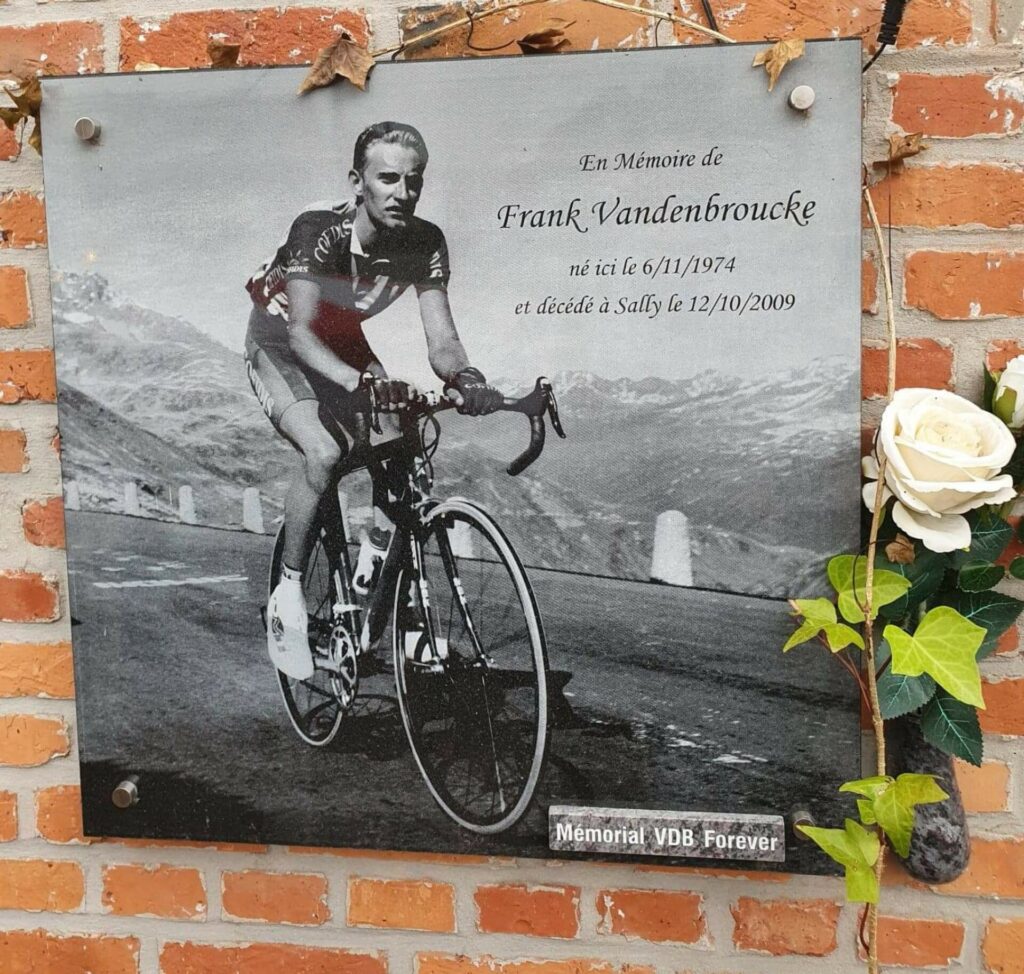
The memorial attached to Binche–Chimay–Binche is not incidental.
Frank Vandenbroucke won here in 1996, when the race still followed its older Binche–Tournai–Binche format. He was twenty-one years old, riding for Mapei-GB, and already emerging as one of the most remarkable talents in Belgian cycling.
That victory came during a season in which his potential was becoming impossible to ignore. He also won Scheldeprijs and the GP Ouest-France at Plouay that year, and over the next several seasons the promise developed into something much larger.
Vandenbroucke could sprint, climb short hills, attack alone and read rapidly changing races. That versatility made him particularly suited to the classics, where success often depends less on one physiological speciality than on the ability to recognise and exploit brief moments when a race breaks apart.
In 1998 he won Gent-Wevelgem and Paris-Nice. The following season produced the performances for which he is still most vividly remembered.
At Liège–Bastogne–Liège in 1999, Vandenbroucke won on terrain almost perfectly suited to his explosive ability. During the same season he finished second in the Tour of Flanders and seventh at Paris-Roubaix, then later won two stages and the points classification at the Vuelta a España. For a period, his range made it difficult to define exactly what kind of rider he was because so many different races appeared within his reach.
His career did not follow the trajectory those performances suggested. Personal difficulties, legal problems, doping controversies and repeated attempts to return to professional cycling became intertwined with his sporting story. His later years were marked by instability that cannot honestly be separated from the extraordinary ability displayed earlier in his career.
Vandenbroucke died in Senegal in October 2009 at the age of thirty-four, just a day after arriving in the resort town of Saly for a holiday with former teammate Fabio Polazzi. He was found dead in a hotel room after suffering a pulmonary embolism.
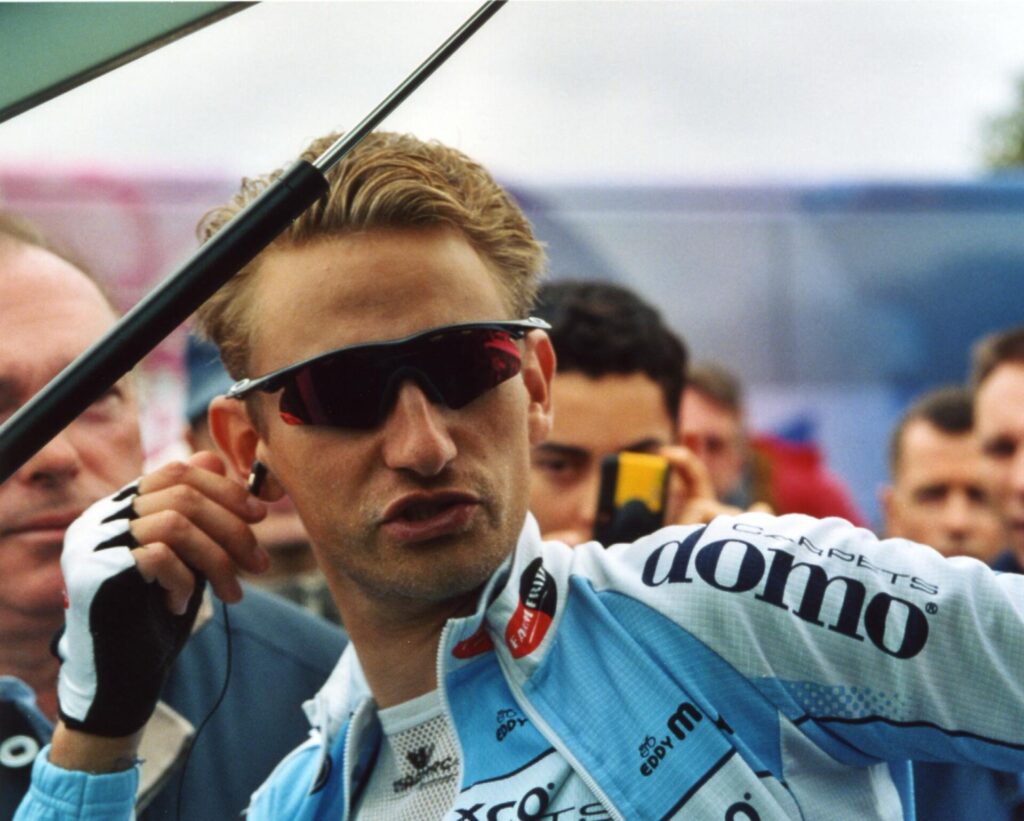
Remembering him through cycling inevitably involves holding those parts of his life together rather than forcing them into a simpler story. The romantic image of a destroyed genius captures only part of what happened, just as reducing his career to its controversies ignores why his racing generated such fascination in the first place.
The results explain much of that fascination. Winning Liège at twenty-four, finishing second in Flanders, performing at Paris-Roubaix and taking stages in the Vuelta revealed an unusually complete one-day racer, while the confidence with which he sometimes announced attacks before delivering them strengthened the sense that his talent operated outside ordinary limits.
Binche occupies a small but meaningful place within that larger story because he actually won here. The memorial therefore connects the modern race not merely with a famous Belgian name, but with a specific afternoon in 1996 when Vandenbroucke was still near the beginning of everything that would follow.
That edition was also the last before the race disappeared from the calendar for more than a decade. When racing returned to Binche in 2010, Vandenbroucke had died less than a year earlier, and his name became attached to the revived event.
Binche–Chimay–Binche | From an Old Race to a Modern Route
The event’s history is considerably less continuous than its early foundation date might suggest.
The first edition was held in 1911, and for much of its existence the race was known as Binche–Tournai–Binche, connecting two historic Walloon cities across Hainaut. Its calendar presence was irregular, with editions appearing and disappearing during different periods of the twentieth century, before the race vanished again following Vandenbroucke’s victory in 1996.
The modern revival began in 2010. Initially centred strongly on the memorial to Vandenbroucke, the event subsequently experimented with its route before adopting the Binche–Chimay–Binche identity. That change shifted the geographical axis away from western Hainaut towards the wooded south and the French frontier, creating the basic structure of the modern race: a long outward journey followed by repeated local roads around Binche.
Its recent winners have generally been riders who combine speed with an ability to survive harder terrain than a conventional flat sprint would demand. Danny van Poppel won twice, while Christophe Laporte, Luca Mozzato, Arnaud De Lie and Jordi Meeus have also succeeded in Binche during the race’s recent period.
Their victories reflect the balance built into the course. The race does not require a decisive mountain or famous cobbled wall because its local circuit gradually changes the condition in which a sprint can occur. By the time the final approach arrives, speed remains valuable, but freshness has become scarce.
The last kilometres return once more towards the medieval city.
FINISH · Binche
By the final approach, the same walls that surrounded the start have acquired a different relationship with the race. The route has stretched south through Hainaut to the forests around Chimay and then folded back upon itself, reducing a journey across the province to repeated passages through the roads immediately outside Binche.
The final pavé brings the riders into a city accustomed to repetition of another kind. Every year Carnival returns according to rituals maintained across generations: drums sound through the streets, the Gilles appear in costumes governed by tradition, and familiar movements acquire meaning precisely because the town performs them again.
The cycling circuit is obviously younger and culturally far less significant, but its repeated departures and returns create an unusual correspondence with its setting. Waudrez, Rue de Merbes and Rue de la Pépinière remain physically unchanged each time the peloton reaches them, while the riders passing through become progressively less capable of treating them in the same way.
Frank Vandenbroucke’s name belongs quietly within that landscape. It does not turn the race into a monument to one rider, nor does it simplify a life that became much more complicated than his early victories suggested. It preserves a connection with a race he won when he was twenty-one and with a period when Belgian cycling was beginning to understand the scale of the talent it had encountered.
There is no mountain above Binche and no celebrated Flemish berg waiting before the line. The final difficulty is more modest: a rising road, pavé beneath the wheels and the accumulated weight of 206.8 kilometres through Wallonia.
Beyond the finish, the medieval walls remain where they were that morning. The difference lies in everything the race has placed between the first sight of them and the last.