
The Trofeo Matteotti is one of those races whose name only becomes meaningful once the history behind it is understood. It is not named after a sponsor, a mountain, a town or a former cyclist. It carries the name of Giacomo Matteotti, the socialist deputy murdered by Fascist attackers in 1924 after publicly denouncing electoral violence and intimidation. When a group of cycling enthusiasts in Pescara created the race in 1945, only weeks after the war had ended in Italy, that choice was deliberate. Pescara itself had been devastated by bombing two years earlier, Fascism had collapsed, and organising a public sporting event dedicated to Matteotti carried a political meaning that went far beyond cycling.
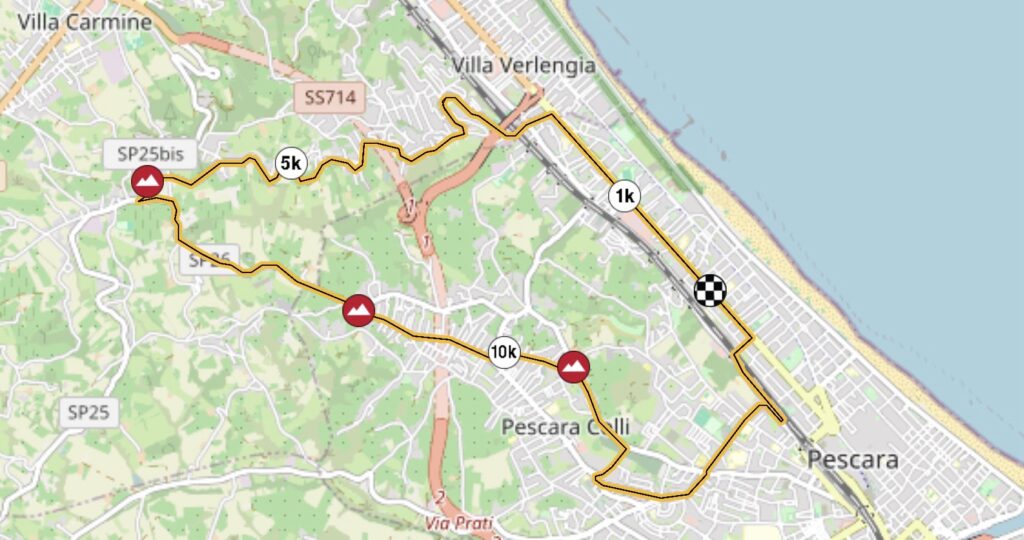
More than eighty years later, the race remains attached to the same city but has become geographically compact. The 2026 edition covers 195 kilometres, arranged as 13 laps of a 15-kilometre circuit between Pescara and Montesilvano. Each lap leaves the flat Adriatic coast, climbs into the low hills immediately behind the city through the zone of the Madonna dei Sette Dolori, Colle Scorrano and Montesilvano Colle, then drops back towards the sea. The final ascent towards Montesilvano Colle comes with only about six kilometres remaining, giving the course enough difficulty to reward aggression while still leaving fast riders with a chance if they survive the repeated climbing.
Those fifteen kilometres contain more history than their size suggests. Pescara is a modern city created administratively only in 1927 from two older communities divided by the river. The hills behind it preserve sanctuaries, former agricultural districts and roads laid out long before the modern city expanded around them. Montesilvano is similarly divided between a densely developed coastal settlement and an older hilltop village whose medieval church still stands above the Adriatic. Beyond the roofs of the urban plain, the massifs of Gran Sasso and Maiella rise inland, reminding us that this is a race held between sea and mountain even though the course itself never reaches high altitude.
Cycling has been circulating through those contrasts since 1945. Gino Bartali won the second edition. Francesco Moser won three times. Felice Gimondi, Roger De Vlaeminck, Gianni Bugno and generations of Italian professionals passed through its history, while three editions also served as the Italian professional road championship. The race may now carry a modest UCI classification, but its name, landscape and palmarès connect it to a much deeper history of Italian cycling.
START · Pescara, a City Reassembled Around a River
Modern Pescara is younger than its urban scale suggests. Until 1927, the city we know today did not exist as a single municipality. South of the river stood Pescara, whose historic core had developed around the crossing and the old fortified settlement. North of the river lay Castellammare Adriatico, which expanded rapidly during the railway and seaside development of the late 19th and early 20th centuries. Their union created the modern city and accompanied the establishment of the new Province of Pescara.
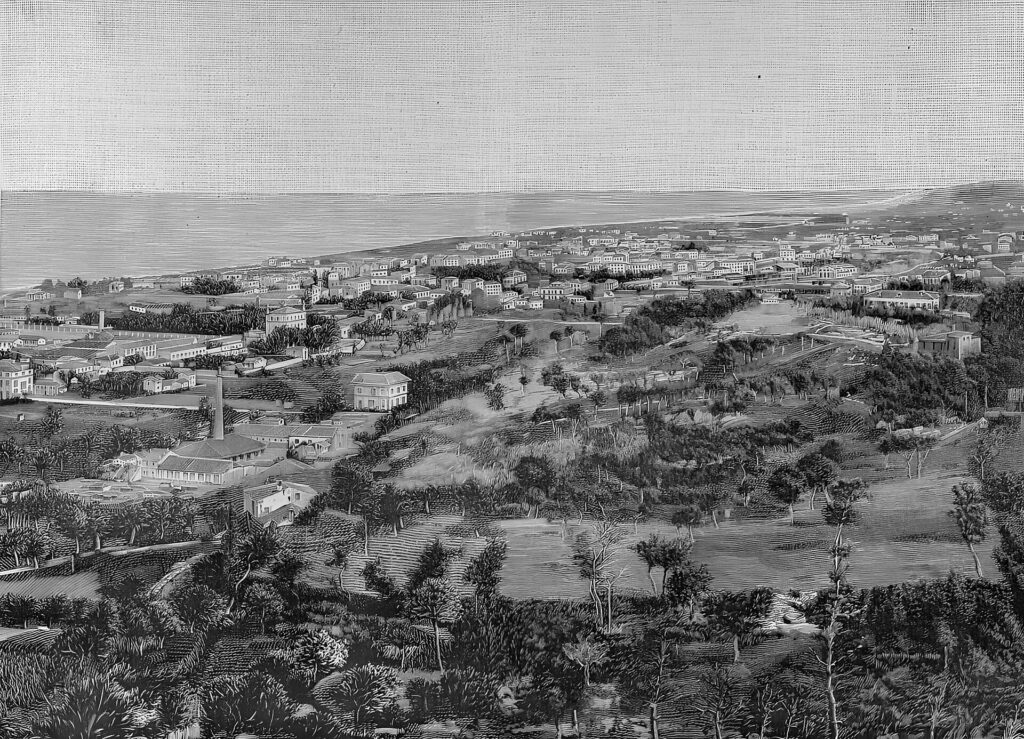
The river had already been the organising feature of the landscape for centuries. Roman Aternum occupied the area around its mouth, where movement between the Adriatic coast and the interior could be controlled and goods transferred between river, sea and land routes. Long before the modern city expanded across both banks, the river had provided the reason for settlement.
The northern side developed differently. Castellammare Adriatico acquired villas, hotels and residential architecture connected with the growth of seaside tourism and the railway. After the creation of the enlarged city, new public buildings appeared alongside older Liberty-style villas and the increasingly modern urban fabric of the Fascist period. Much of what gives central Pescara its appearance today belongs to a remarkably compressed period of growth.
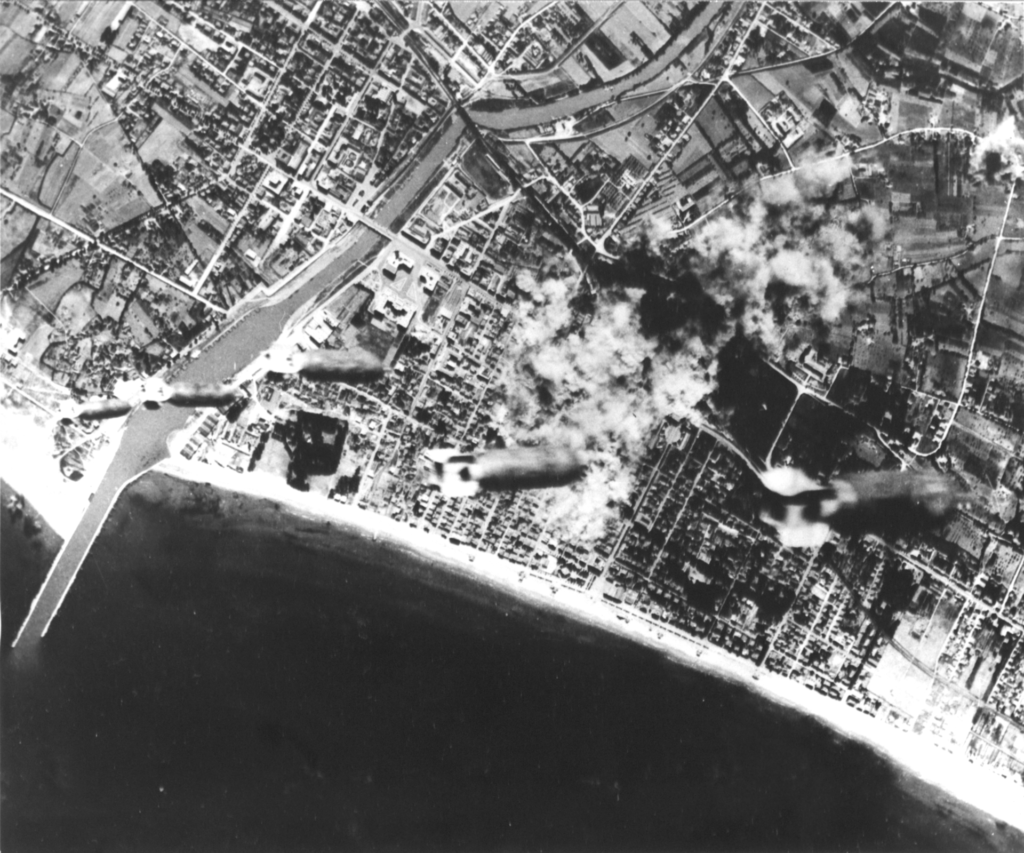
That growth also made the city strategically important during the Second World War. Railway infrastructure, bridges and the Adriatic transport corridor turned Pescara into a target, and Allied air raids on 31 August and 14 September 1943 devastated large parts of the urban area. Thousands of civilians were killed, whole districts were destroyed and much of the population fled.
When the Trofeo Matteotti was created two years later, Pescara was still rebuilding both physically and socially. Roads had to become streets again rather than military infrastructure. Public spaces had to fill with ordinary life. Shops reopened, families returned and the city began reconstructing itself around the same river that had always divided and connected it.
The first Matteotti was therefore organised in a city where recovery was not an abstraction. It was visible in damaged buildings, missing neighbours and streets that had only recently emerged from war.
GIACOMO MATTEOTTI · Why the Race Carries His Name
The name attached to the race reaches back to one of the defining political crimes of Fascist Italy.
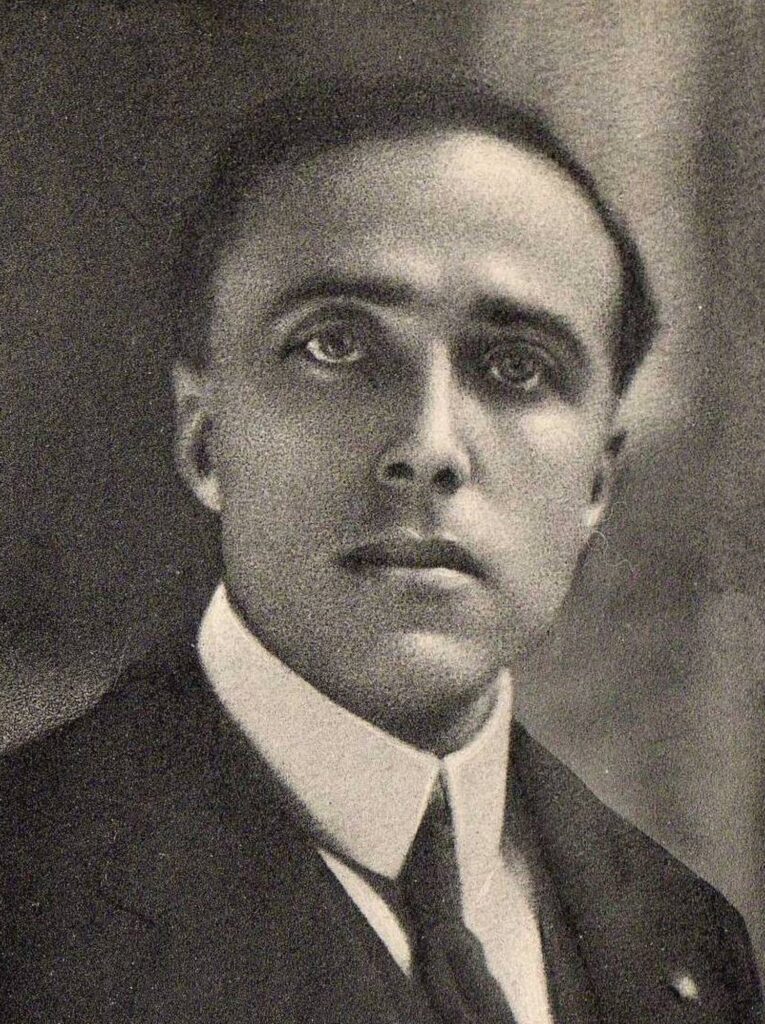
Giacomo Matteotti, born in 1885, was a socialist politician, lawyer and member of parliament who became one of the most persistent critics of Fascist violence. By 1924, Benito Mussolini had already been prime minister for more than a year, but the regime had not yet completed its transformation into full dictatorship. Elections held in April took place amid intimidation, assaults and interference by Fascist squads.
On 30 May 1924, Matteotti rose in the Chamber of Deputies and openly challenged the legitimacy of those elections. He described violence and irregularities and demanded that the results be annulled.
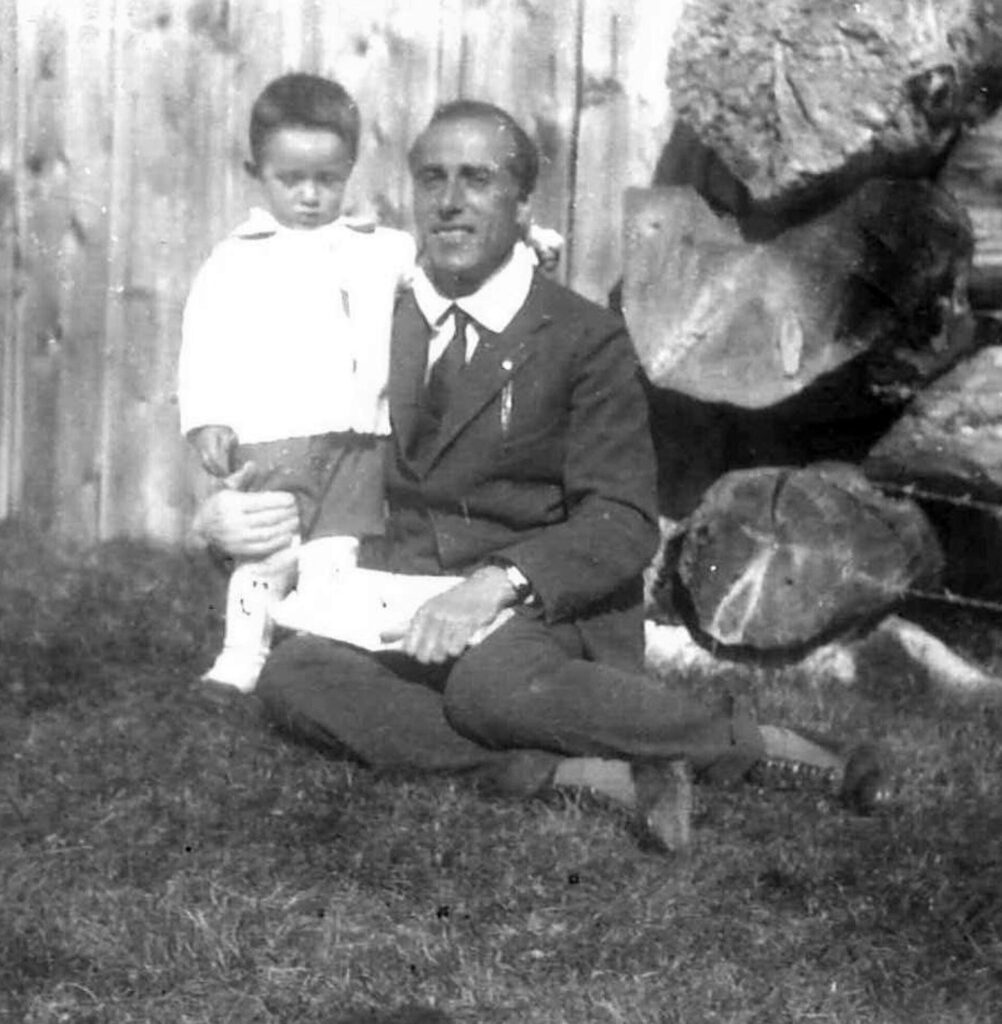
Eleven days later, on 10 June, he was attacked and abducted in Rome by Fascist assailants. He was murdered, and his body was hidden outside the capital until it was discovered in August.
The killing created a political crisis that briefly threatened Mussolini’s government. Opposition deputies withdrew from parliament in what became known as the Aventine Secession, public outrage spread across the country and Matteotti became one of the clearest symbols of resistance to Fascist political violence. The regime survived and subsequently hardened into open dictatorship.
Twenty-one years later, Fascism had collapsed and Italy was emerging from war. In Pescara, cycling organisers led by local enthusiasts created a new race and chose Matteotti’s name for it. In a city still carrying the scars of bombing and occupation, the gesture connected a sporting event with a political memory that the dictatorship had tried to suppress.
Mario Ricci won the first edition in 1945. The following year, Gino Bartali arrived and immediately gave the new race national sporting prestige.
The Trofeo Matteotti would eventually become a familiar fixture of Italian cycling, but its name continued to preserve the circumstances of its birth. It remains a race created after dictatorship, in a damaged city, and dedicated to a man murdered for openly confronting political violence.
EVERY LAP · Madonna dei Sette Dolori, Where Pescara Begins to Rise
From the flat coastal streets, the circuit begins climbing into the northern hills through the district around the Basilica della Madonna dei Sette Dolori. The transition is short enough to make the older geography of Pescara unexpectedly visible. Within a few kilometres, broad urban avenues give way to roads that follow ridges and slopes inherited from a period when this was countryside rather than suburb.
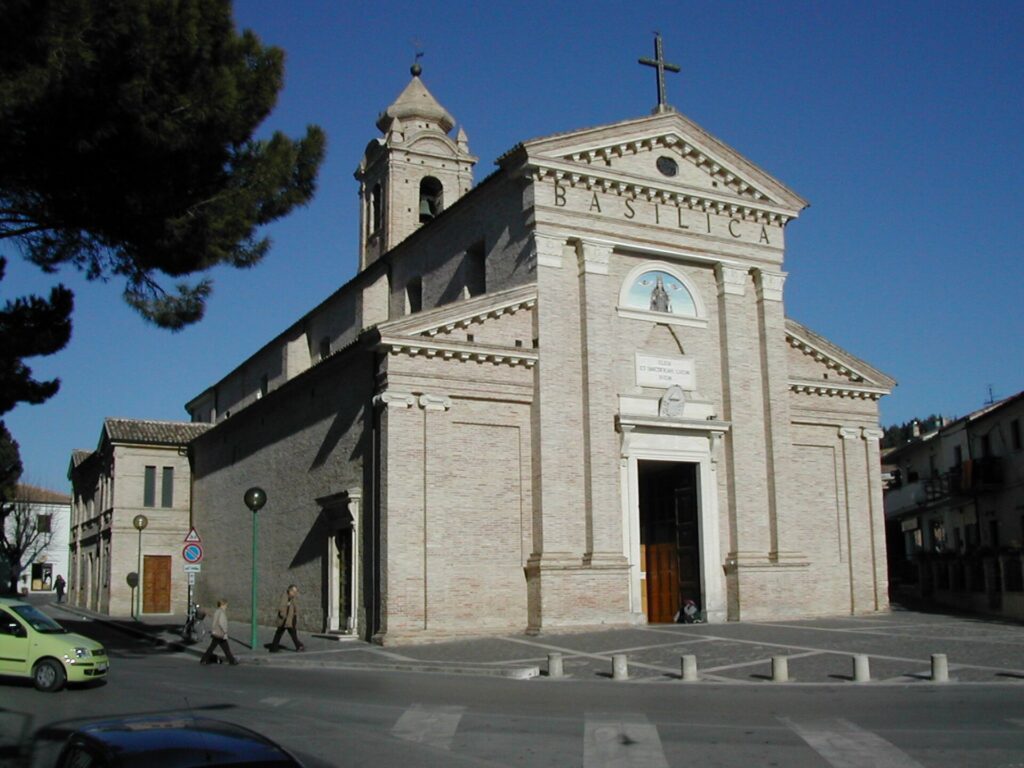
The sanctuary belongs to that older landscape. Its origins are tied to local religious traditions that developed during the early modern period around devotion to the Madonna dei Sette Dolori. Stories of apparition, drought and miraculous intervention became associated with the site, and over time the rural shrine grew into a substantial church serving communities scattered through the hills north of the river.
The setting mattered. Before the modern expansion of Pescara, these slopes were marked by vineyards, olive trees, small agricultural holdings and isolated settlements. A sanctuary here served people whose daily lives were organised around the countryside rather than the coastal city below.
Urban growth gradually surrounded the old hill roads. Houses climbed the ridges, new streets appeared and once-separated districts became absorbed into the continuous fabric of Pescara. The sanctuary survived that transformation, and the race now uses the same topography thirteen times.
The climb is modest in isolation. Repetition changes its meaning. By the final laps, roads that began as a brief transition out of the city have accumulated into one of the physical structures of the race.
EVERY LAP · Colle Scorrano and the Rural Pescara Hidden Inside the City
From the sanctuary the circuit continues through Colle Scorrano, one of several hill districts whose names preserve the geography that existed before modern Pescara expanded across the slopes.
Colle Scorrano, Colle Marino, Colle di Mezzo and Colle del Telegrafo once formed part of a looser rural landscape of farms, small roads and scattered settlement. They are now threaded through suburban development, but the ridges remain, and so do roads that were shaped by contours rather than by the rectilinear logic of modern planning.
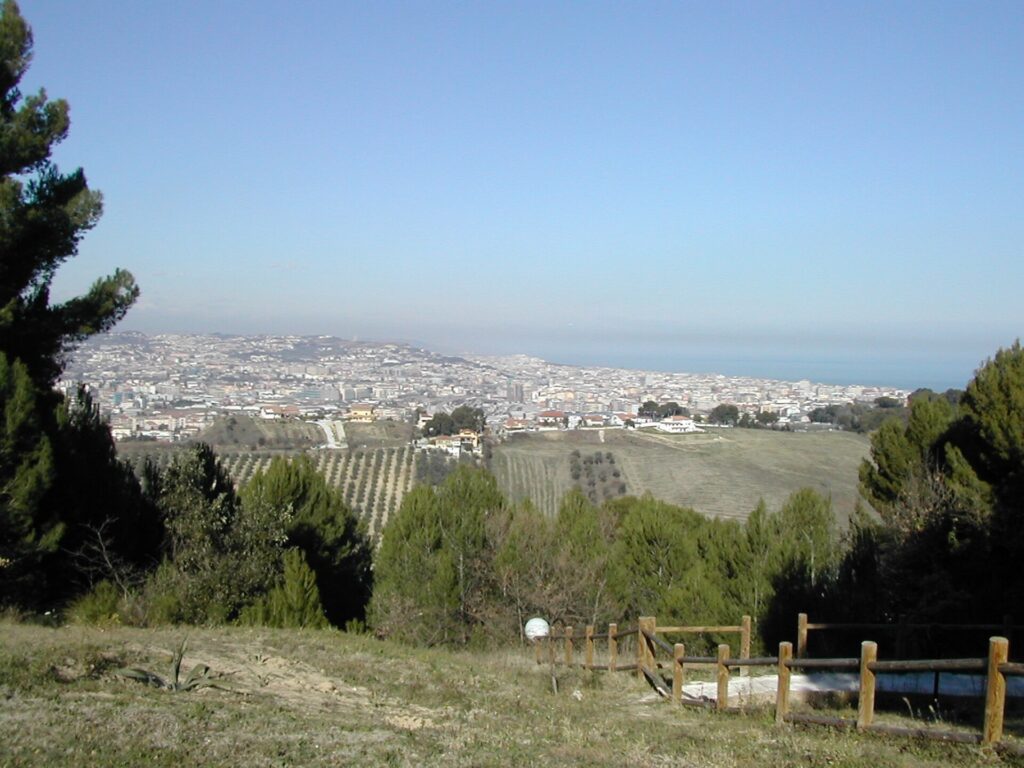
The deeper history of these hills extends much further back. Archaeological material from the Pescara Colli area points to occupation before Roman rule, within territory associated with the Vestini, one of the Italic peoples of central Italy. Their settlements occupied a region stretched between the Adriatic and the Apennine interior, long before Pescara became an urban centre at the river mouth.
Later agriculture adapted to the same terrain. Slopes supported vines and olives, ridges offered drier settlement and the road network connected small communities to the plain below. Much of that countryside has disappeared beneath houses and apartment blocks, but the shape of the land could not be urbanised away.
The race reveals it lap after lap. The peloton leaves the flat city, rises through old rural contours and then descends towards the coast again, following a physical geography older than most of the buildings around it.
EVERY LAP · Abruzzo Between the Adriatic and the Apennines
From the higher sections of the circuit, the broader geography of Abruzzo begins to open.
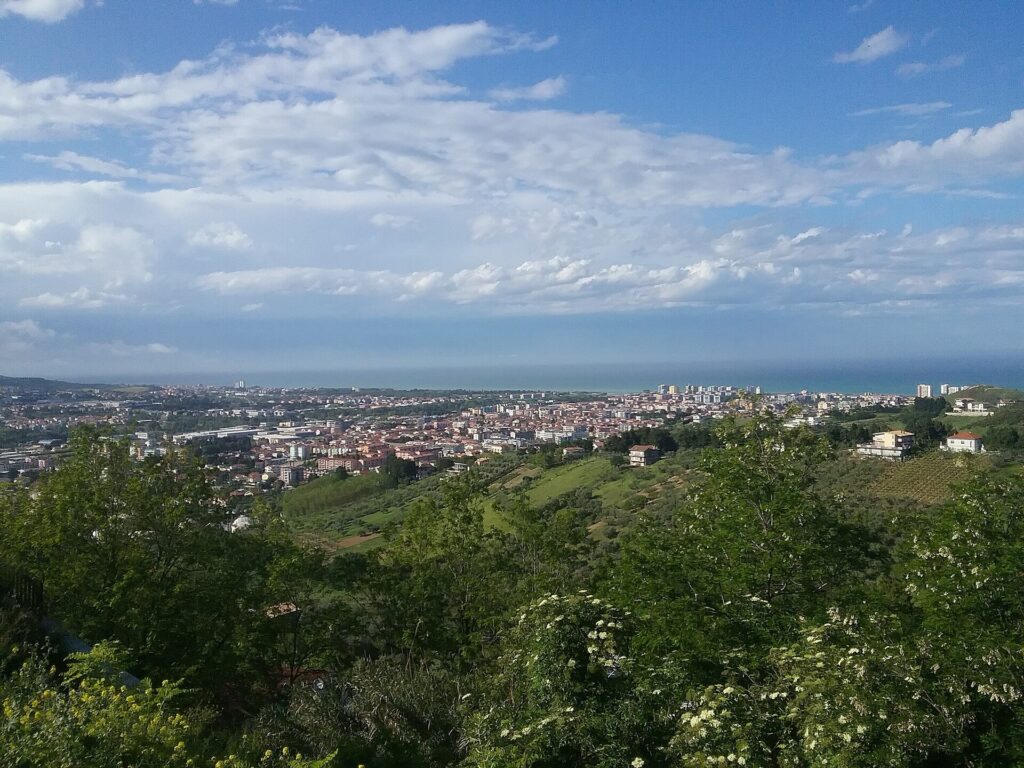
Pescara sits directly on the Adriatic, yet the great massifs of Gran Sasso and Maiella rise surprisingly close inland. Their highest summits approach three thousand metres, giving the region an unusual compression of sea, hills and high mountain within a relatively short distance.
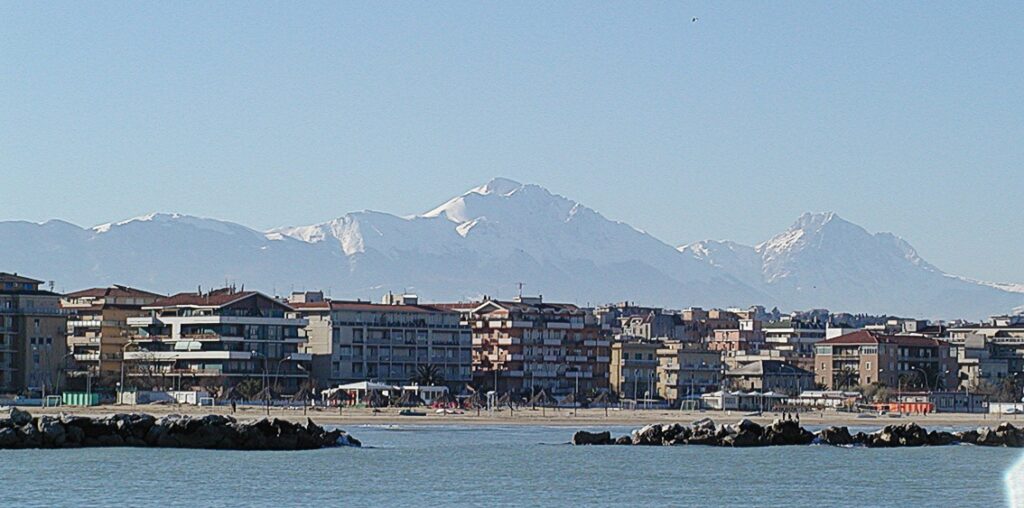
That relationship shaped settlement long before the growth of modern Pescara. Rivers descending from the Apennines cut routes towards the Adriatic, villages occupied ridges between valleys, and agriculture adapted to rapid changes of altitude, exposure and climate. The Pescara river itself belongs to that movement from mountain interior to coast.
The geology behind the view is older still. Much of the limestone making up the Abruzzese Apennines originated as marine sediment deposited in ancient seas. Tectonic forces connected with the formation of the Apennines later uplifted and folded those deposits into the mountain chains visible today, while erosion and faulting shaped the valleys between them.
The Trofeo Matteotti never needs to enter those high mountains to feel their presence. The race occupies the first folds of land behind the coast, low hills that belong to the same eastward descent of the Apennines towards the Adriatic.
The riders can therefore look towards a landscape far more severe than anything they actually climb. The race is decided on the first ridges between mountain and sea, where the Apennines are already shaping the roads even though their great summits remain on the horizon.
EVERY LAP · Montesilvano, One Place in Two Landscapes
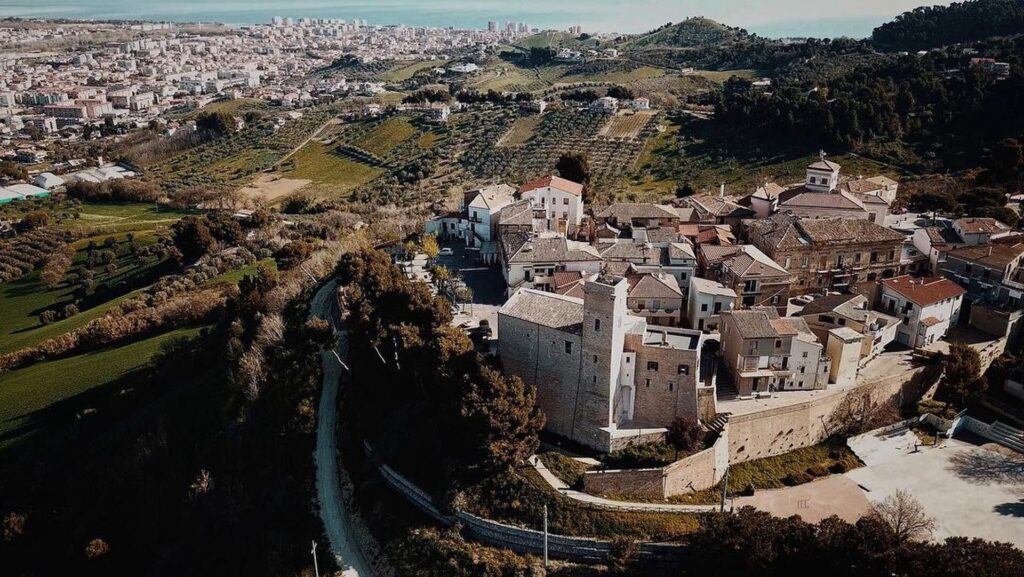
The northern side of the circuit enters Montesilvano, where the relationship between old settlement and modern coastal growth becomes particularly clear.
The municipality effectively exists on two levels. Along the Adriatic lies Montesilvano Marina, a dense coastal city of apartment blocks, hotels, beaches and broad roads that has expanded until it almost merges with Pescara. Several kilometres inland and higher above the sea stands Montesilvano Colle, the older settlement from which the modern town developed.
That separation between hill village and coastal expansion is common along the Adriatic. For centuries, elevated settlements offered greater security and distance from marshy ground, flooding and the vulnerability of an exposed shoreline. The coast became more attractive only as roads, railways, sanitation, tourism and modern urban development changed the relationship between communities and the sea.
Montesilvano consequently shifted its centre of gravity downward. The old hilltop remained while the majority of modern growth spread across the plain below.
The race moves between the two on every lap. Riders climb towards a settlement whose position reflects medieval and early-modern priorities, then descend into a coastal city produced largely by the 20th century. Few kilometres separate them, but the change in elevation carries the peloton between two very different phases of Abruzzo’s history.
EVERY LAP · Montesilvano Colle and San Michele Above the Coast
The old settlement of Montesilvano Colle remains the most historically legible point on the circuit. Its ridge overlooks the modern city and Adriatic, while inland views extend towards the mountains.
At the edge of the historic centre stands the Church of San Michele Arcangelo, whose heavy brick exterior retains the austere character of medieval Abruzzese architecture. The present structure dates principally from around the early 13th century and probably replaced an older church dedicated to San Quirico.
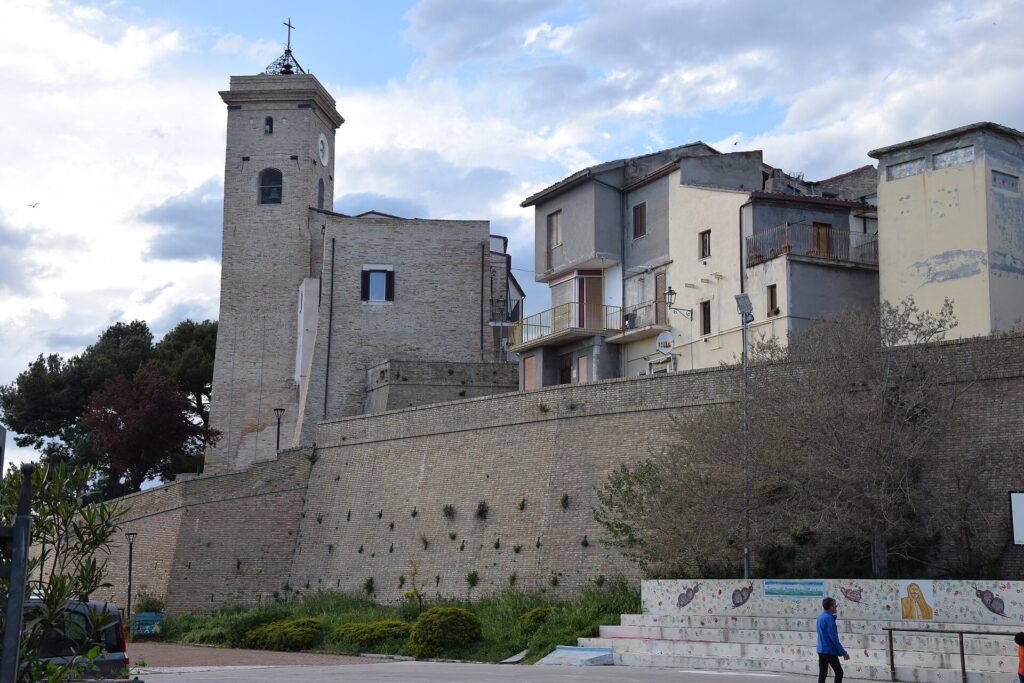
Its position made sense in a world very different from the one spread below it today. The hilltop offered visibility, defensibility and distance from the low coastal plain. Houses gathered around the ridge, while the church became part of the organising structure of a community whose life faced inland as much as towards the sea.
Later centuries altered the interior and added devotional works, but the building retained its relationship with the old settlement. Standing above the modern coastal expansion, San Michele allows the historical development of Montesilvano to be read almost vertically: medieval community above, 20th-century city below.
For the race, the same geography becomes decisive. The repeated climb towards Montesilvano Colle is one of the main sources of attrition on the circuit. On the final lap, the summit arrives with only about six kilometres remaining, leaving a fast descent and flat run back towards Pescara.
Thirteen times, the race approaches a hilltop built for a much older way of life and then falls back towards the modern Adriatic city.
THIRTEEN LAPS · How Repetition Changes the Road
A single 15-kilometre lap of the Trofeo Matteotti does not appear especially severe. There is no long mountain, no famous pass and no section of road designed to overwhelm the peloton by itself.
The race becomes difficult because the same terrain returns thirteen times.
The riders repeatedly leave the flat coast, climb through the northern districts of Pescara, cross the ridges towards Montesilvano Colle and descend back towards the Adriatic. A gradient that barely registers during the opening laps becomes something different after 150 kilometres. The road has not changed, but the rider arriving there has.
This repeated structure explains much of the Matteotti’s sporting history. The course is selective enough for attacking riders and strong climbers to create gaps, but the final kilometres remain fast enough that a powerful finisher can survive the hills and still contest the race.
That balance also made the Matteotti useful as a late-season measure of form. Italian riders and selectors watched the race closely in periods when the World Championships followed soon afterwards, and strong performances in Pescara could confirm that a rider was ready for international selection.
On three occasions the race carried even greater weight by serving as the Italian professional road championship. Michele Dancelli won the tricolore here in 1965, Francesco Moser did the same in 1975 and Gianni Bugno followed in 1995.
The same compact circuit that can look repetitive on a map therefore became, at different moments, a national championship course, a test of World Championship condition and a race difficult enough to produce winners from very different types of rider.
CYCLING HISTORY · Bartali, Gimondi, Moser and the Generations After 1945
The first winner, Mario Ricci, belonged to the generation that had raced before the war and returned to competition once Italy began reconstructing its sporting life.
The arrival of Gino Bartali in 1946 immediately changed the stature of the event. Bartali was already one of the most important cyclists in Italy, and later that year he won the first post-war Giro d’Italia. His victory in Pescara connected a race barely a year old with the highest level of national cycling.
The palmarès grew quickly in stature. Ercole Baldini, Vito Taccone, Felice Gimondi, Roger De Vlaeminck, Franco Bitossi, Francesco Moser, Moreno Argentin and Gianni Bugno all became part of the race’s history, representing several different generations of European cycling.
Moser developed one of the strongest individual relationships with the Matteotti. He won in 1975, 1976 and 1978, with the first victory also earning him the Italian championship. His later returns to Pescara therefore connect the modern event directly with a period when the race occupied a more prominent place in the Italian professional calendar.
Its status changed as cycling changed. UCI categories were reorganised, television exposure shifted towards larger events and many traditional one-day races struggled with financing and calendar pressure. The Matteotti survived those transformations even as its formal classification declined relative to WorldTour races.
The classification tells us where the event sits in the current hierarchy. The names on the palmarès tell us what kind of history it carries.
PESCARA · The Bombed City Behind the 1945 Race
The circumstances of the race’s creation become clearer when we return to Pescara in 1943.
The Allied raids of August and September struck a city whose railway station, bridges and transport connections made it strategically important during the campaign through central Italy. The destruction spread far beyond those targets. Residential districts were hit heavily, civilians died in very large numbers and much of the surviving population fled.
When people returned, reconstruction involved much more than repairing buildings. Families searched for homes, businesses reopened, public services had to function again and neighbourhood life re-formed around places where streets and communities had been shattered.
The first Trofeo Matteotti took place inside that environment only two years later.
A bicycle race could appear trivial beside such destruction, but that is precisely why it mattered. Roads filled with spectators rather than troops. People gathered in public without an air-raid warning. A city still rebuilding itself organised something whose purpose was competition, celebration and ordinary civilian life.
Choosing Matteotti as the name prevented that return to normality from becoming politically neutral. The man being commemorated had been murdered by Fascists, and the race was being created after the collapse of Fascism itself.
The event was therefore born from several forms of reconstruction at once: physical rebuilding, the restoration of public life, the revival of sport and the recovery of political memory.
Later generations would come to Pescara primarily to race bicycles. The name kept the circumstances of 1945 attached to them.
FOUR LAPS TO GO · 60 km
With four laps remaining, there are 60 kilometres left. The riders have already completed the circuit nine times, and there is no road ahead that they have not seen repeatedly.
The climb through the Madonna dei Sette Dolori returns, followed by the ridges around Colle Scorrano and the approach towards Montesilvano Colle. Earlier in the race these roads introduced the shape of the course. Now they begin to expose the riders who can no longer absorb another repetition.
The city has also become familiar in a different way. The same sanctuary, suburban ridges, old hilltop and coastal plain pass again, but the sporting context changes around them. Groups are smaller, teammates fewer and the effort needed to close a gap much greater than it was several laps earlier.
The final hour of the Matteotti begins not by discovering new terrain but by revealing how differently familiar terrain behaves after nearly two hundred kilometres of repetition.
THREE LAPS TO GO · 45 km
At 45 kilometres remaining, three laps remain.
The circuit is now fully understood by everyone in the race. Riders know exactly where the gradient begins, where positioning matters and how quickly the descent returns them to the flat roads near the coast.
Knowledge does not make the problem easier. The repeated climbing has reduced the number of riders capable of controlling attacks, while every acceleration on the uphill roads forces teams to decide whether to react immediately or trust the remaining kilometres.
The short final run from Montesilvano Colle gives those decisions additional weight. An attacker cresting the last climb with a small advantage does not have to defend it across a long transition. The finish is already close enough to shape every tactical decision.
The race becomes more aggressive precisely because nothing ahead is unknown.
TWO LAPS TO GO · 30 km
With 30 kilometres remaining, the peloton begins the penultimate circuit.
The hills have not become steeper, but they have accumulated eleven earlier passages of effort. Riders who intend to wait for a sprint must still survive the same roads that attackers will use to prevent one.
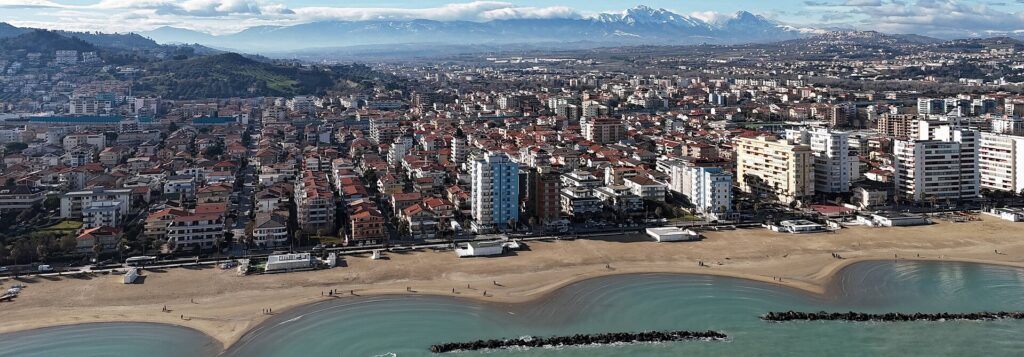
The contrast between the course and the surrounding landscape is particularly striking here. Offshore lies the Adriatic. Inland, the high Abruzzo massifs remain on the horizon, immense compared with the modest hills actually deciding the race. Between those two landscapes, the Matteotti continues to use the first ridges behind the coast as though they were enough.
After nearly two hundred kilometres, they are.
FINAL LAP · 15 km Around Pescara and Montesilvano
The bell leaves 15 kilometres.
For the thirteenth and final time, the riders leave the finish area and turn back into the hills. The road rises towards the Madonna dei Sette Dolori, through a district that still carries the memory of Pescara’s rural outskirts beneath modern urban growth. Colle Scorrano follows the inherited contours of old agricultural ridges before the route reaches Montesilvano Colle one final time.
The medieval settlement above the coast has appeared on every lap, but now its climb becomes the decisive point of the race. Any rider hoping to escape must make the difference here. Anyone waiting for the finish has to survive without losing contact.
At the summit, approximately six kilometres remain.
The road drops rapidly towards the coastal plain, and the terrain changes almost as soon as the climb is finished. The final kilometres are flatter, wider and faster, favouring an organised pursuit if enough riders and teammates remain.
Behind them, the old hilltop disappears once more. Ahead lies Pescara, the river, the Adriatic and the road where this race has been returning since 1945.
FINISH · Pescara, a Race Created in 1945 Still Carrying the Same Name
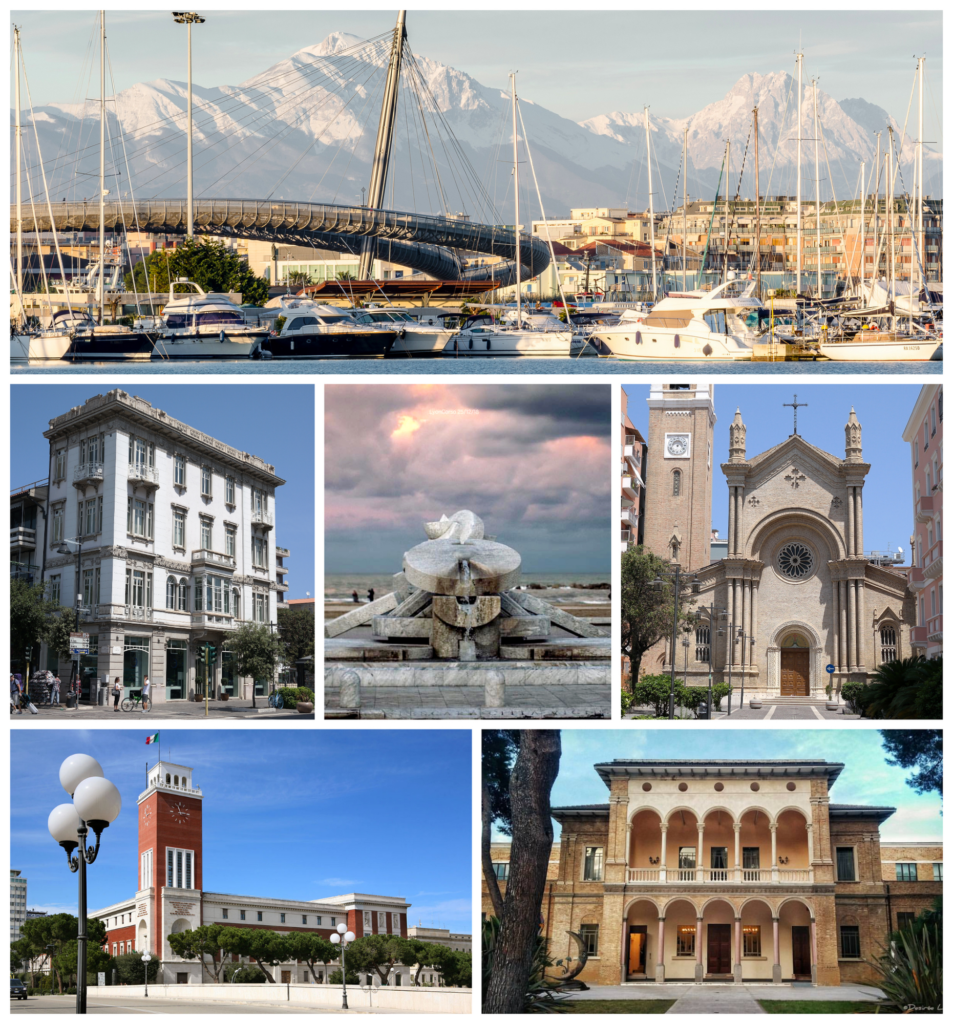
The Trofeo Matteotti finishes in Pescara after 195 kilometres and thirteen laps, more than eighty years after local organisers created a bicycle race in a city still surrounded by the physical consequences of war.
The territory crossed by the riders is compact, but its history is layered densely within it. The route begins in a city formed by the union of two older municipalities, climbs into ridges where traces of agricultural Pescara remain embedded inside modern neighbourhoods, passes a sanctuary shaped by centuries of local devotion and reaches a medieval settlement overlooking a coastal city that barely existed when its hilltop church was first built.
The cycling history developed on top of those older layers. Bartali came during the first years of post-war reconstruction. Gimondi, De Vlaeminck, Moser and Bugno followed. Three editions decided the Italian professional championship. For generations, riders arrived in Pescara during the final weeks of the season to test whether their form would carry them towards the World Championships.
The oldest connection, however, remains the name itself. Giacomo Matteotti was murdered in 1924 after openly confronting Fascist violence and electoral intimidation. Twenty-one years later, in a bomb-damaged city emerging from dictatorship and war, his name was given to a new bicycle race.
Pescara rebuilt. The city expanded into the hills, its coastal districts merged with neighbouring settlements, the railway corridor changed and the ruins of war disappeared beneath new streets and buildings. Professional cycling changed just as radically. The teams, bicycles, calendar, governing structures and commercial world surrounding the sport bear little resemblance to those of 1945.
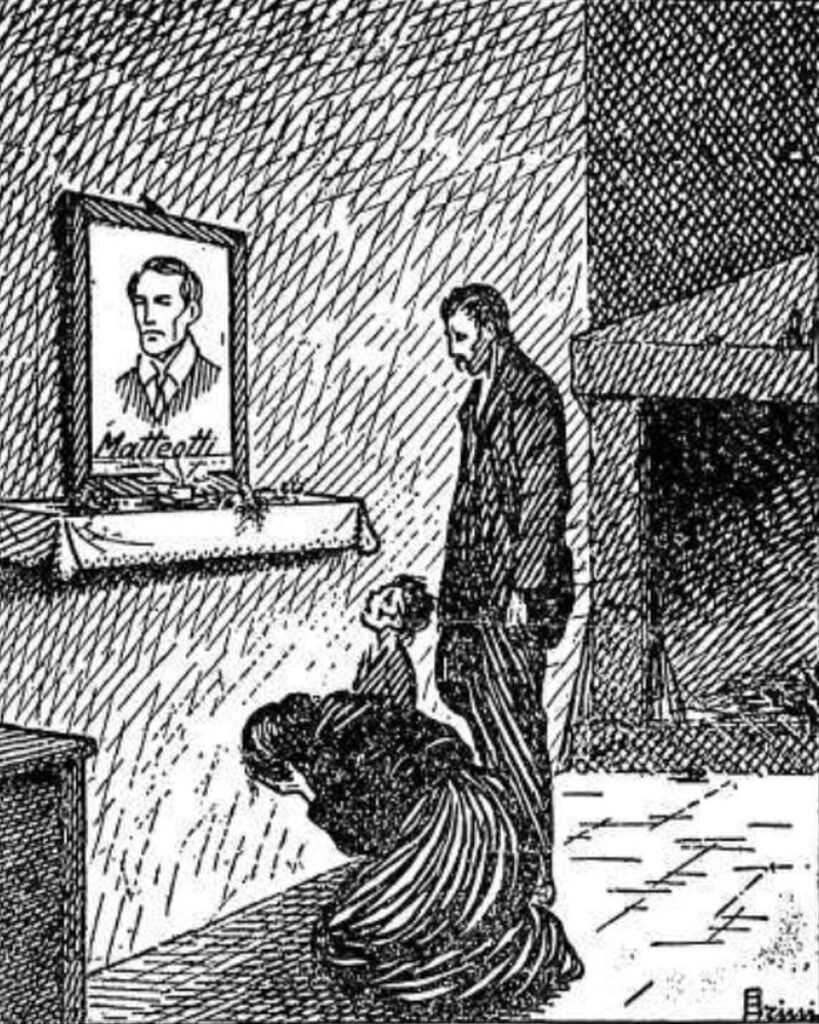
The Trofeo Matteotti survived those changes imperfectly. Its prestige rose and fell, the course evolved, editions were interrupted and its place within professional cycling shifted. What remained constant was the decision made at the beginning: every rider entering the race would compete beneath the name of a man whose murder had become one of the defining symbols of the dictatorship Italy had just escaped.
That matters particularly in Pescara because the city did not experience the end of Fascism as a distant political transition. It had been bombed, emptied and rebuilt. The first editions of the race took place while reconstruction was still visible in everyday life, and spectators standing beside those roads belonged to a generation for whom war, dictatorship and liberation were recent experiences rather than chapters in a history book.
Today the atmosphere is entirely different. The peloton circles through suburbs, sanctuaries and hilltop streets before descending towards a modern Adriatic city. Spectators wait behind barriers rather than beneath air-raid sirens. The final kilometres are measured through attacks, gaps and sprint trains rather than military movements along the coast.
Yet when the winner crosses the line, the name above the race still reaches back to 1924 and to the political violence that eventually shaped the circumstances in which the event was born.
The city changed. Italy changed. Cycling changed. The race still finishes in Pescara as the Trofeo Matteotti.