
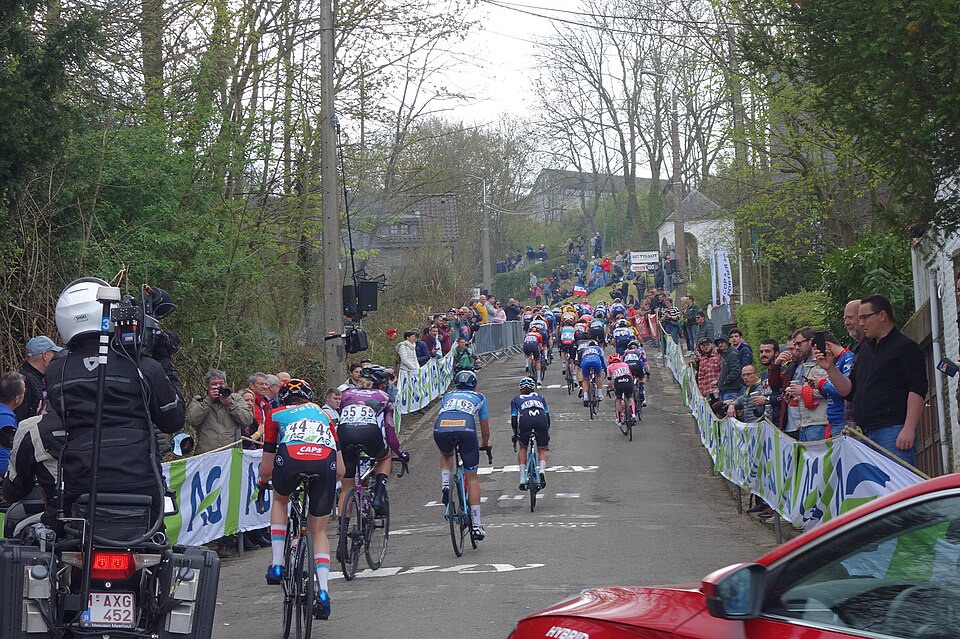
The Mur de Huy begins among the streets of a town built along the River Meuse. From the valley floor, the road climbs towards the wooded heights above Huy, passing old stone walls and religious buildings before bending sharply through the Virage Claudy Criquielion, named after Walloon cycling champion Claude “Claudy” Criquielion. The gradient becomes severe enough to reduce the strongest professional cyclists to a slow, swaying struggle, with the inside of the famous bend reaching a reported 26 percent.
Every spring, the riders of La Flèche Wallonne approach this road after hours of racing through southern Belgium. Teams fight for position in the narrow streets below, knowing that a cyclist who enters the Mur too far back may never reach the front. On the steepest section, the peloton breaks apart. Riders who have spent the afternoon sheltered behind teammates suddenly find themselves exposed, their success dependent on how much strength remains for the final few hundred metres.
The finish is barely more than a kilometre from the foot of the climb, yet it belongs to a much larger landscape. Huy stands in the Meuse valley, a corridor historically associated with industry, transport and commerce. Beyond the river, roads climb into a countryside of wooded slopes, villages and agricultural plateaus. The same contrasts appear across Wallonia, Belgium’s predominantly French-speaking southern region, where former mining towns and industrial cities lie close to some of the country’s most demanding cycling terrain.
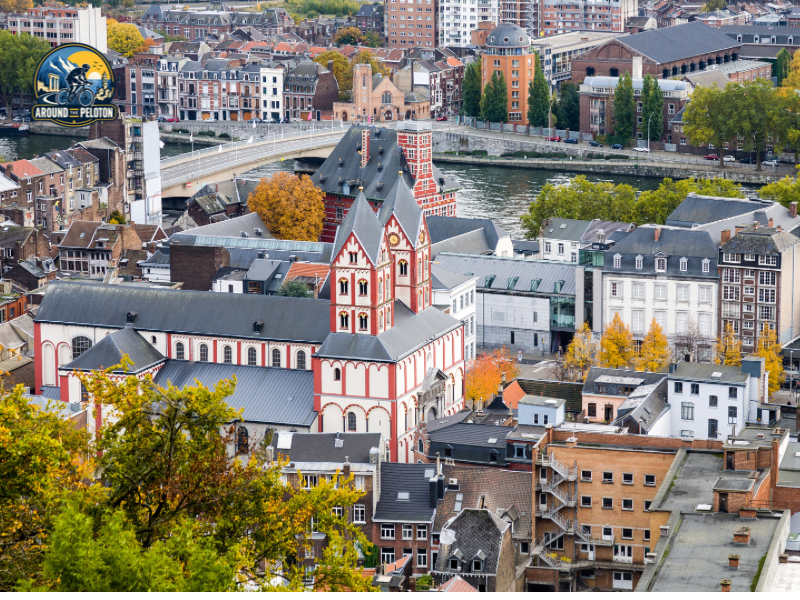
Wallonia’s reputation was built through this combination of landscape and human history. The coalfields and steelworks of the Sambre and Meuse valleys helped create a densely settled industrial society, while the hills to the south and east provided roads suited to long, unpredictable competitions. Cycling clubs, newspapers, local organisers and generations of riders transformed those roads into sporting landmarks.
Few places illustrate the relationship more clearly than Liège, where one of the world’s oldest cycling races begins in a city whose industrial history is inseparable from the development of modern Belgium. Yet the story extends beyond the famous Classics, into mining districts, bicycle factories, immigrant communities and the changing economy of southern Belgium.
The Geography Behind the Racing
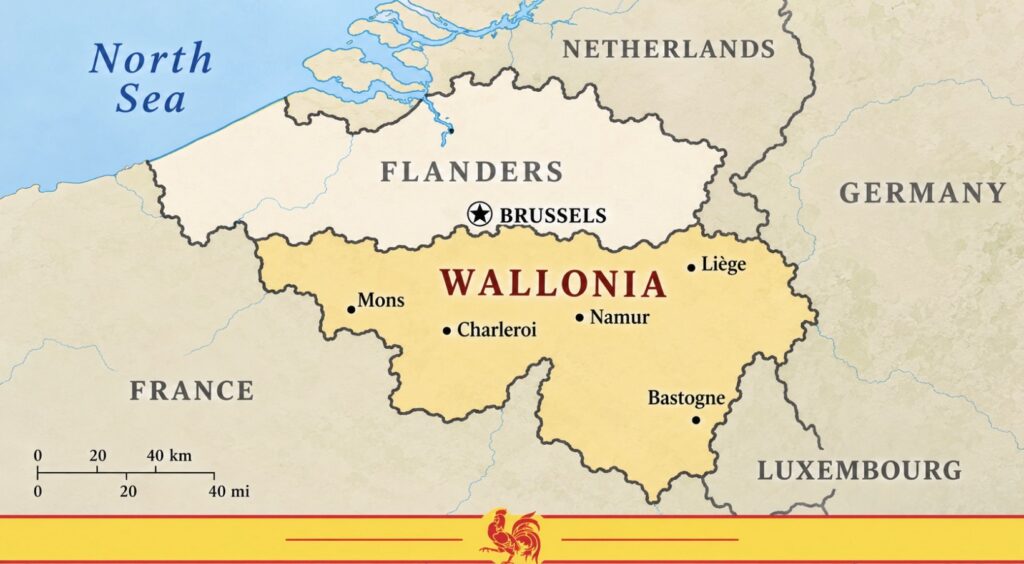
Wallonia stretches across southern Belgium, from the French border towards Germany and Luxembourg. Its landscape is far more varied than the familiar image of the Ardennes might suggest. The region contains broad agricultural plateaus, heavily urbanised river valleys, limestone ridges, forests and some of Belgium’s highest ground.
Two rivers provide an important geographical framework. The Sambre flows through Charleroi before joining the Meuse at Namur, while the Meuse continues eastwards through Huy and Liège. Together, these valleys formed the principal industrial corridor of southern Belgium, concentrating factories, mining communities, railways and commercial activity.
To the north lie relatively open agricultural districts, including the fertile lands of Hainaut and Hesbaye. South of the Meuse, the Condroz forms a landscape of elongated ridges and valleys, with roads repeatedly climbing and descending between settlements. Farther south, the Famenne occupies a lower belt between the Condroz and the Ardennes, while the limestone landscapes of the Calestienne mark another transition towards the wooded uplands.
The Ardennes proper cover much of southeastern Wallonia and extend into neighbouring countries. Their forests, plateaus and deeply incised river valleys create the terrain most closely associated with Liège–Bastogne–Liège. The High Fens, or Hautes Fagnes, form a neighbouring upland area where Signal de Botrange reaches 694 metres, Belgium’s highest point.
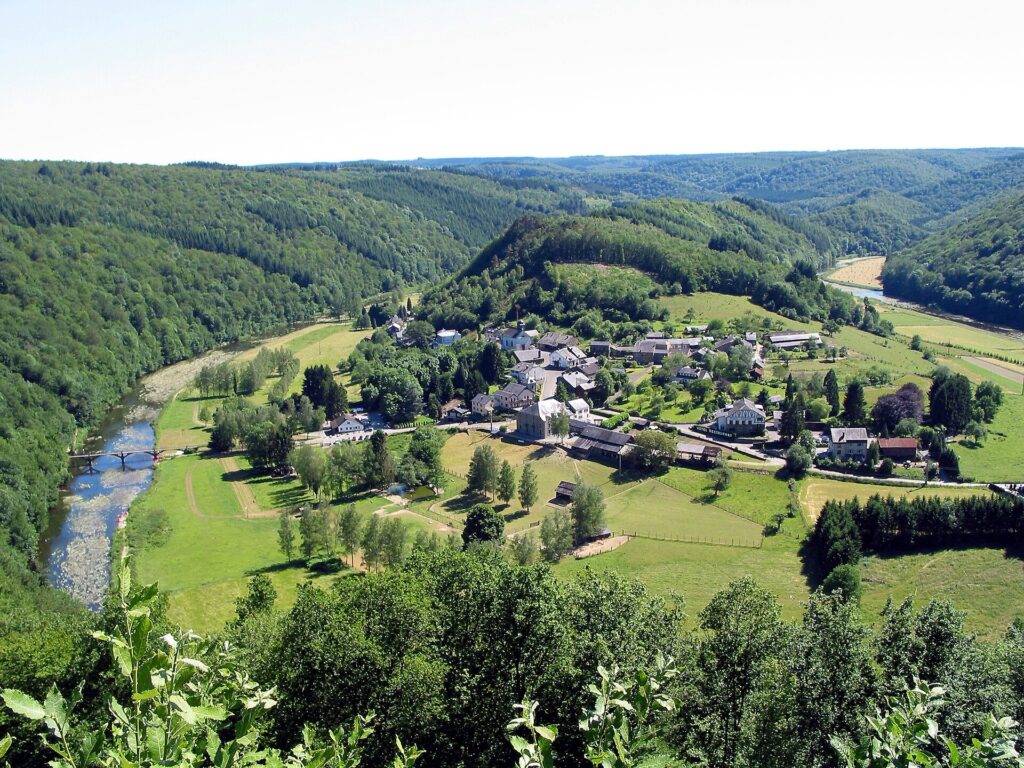
These are modest elevations compared with the Alps or Pyrenees, but altitude alone does not determine the difficulty of a cycling race. Roads around the Ourthe, Amblève and Vesdre rivers repeatedly climb out of valleys before descending towards the next village. A race can accumulate thousands of metres of climbing without ever approaching the height of an Alpine pass.
The gradients also tend to arrive abruptly. A rider may leave a relatively flat river road and encounter a steep ascent almost immediately, with little opportunity to settle into a consistent rhythm. Narrow approaches make positioning important, while successive climbs force repeated accelerations after several hours of racing.
This distinguishes the Ardennes Classics from the great cobbled races of Flanders. Northern Belgium’s most famous competitions are associated with exposed farmland, cobblestones and short, sometimes brutally steep hills. Wallonia’s principal Classics depend more heavily on repeated asphalt climbs, wooded valleys and the accumulated fatigue of an undulating route.
The distinction is not absolute, but it helps explain why different riders and tactics flourish in the two landscapes.
Coal, Steel and the Bicycle Factories of Liège
Long before cycling became an organised sport, Wallonia was undergoing an economic transformation that would make it one of continental Europe’s principal industrial regions. Coal had been extracted around Liège for centuries, but production expanded dramatically with the Industrial Revolution. The availability of fuel, established metalworking traditions and access to waterways encouraged the growth of ironworks, steelmaking, glass production and mechanical engineering.
Industrial development followed several interconnected districts. The Borinage, west of Mons, became closely associated with coal mining. The Centre region around La Louvière developed mines and heavy industry, while Charleroi grew into a major centre of coal, glass and metal production. Farther east, Liège became internationally important for iron, steel and engineering.
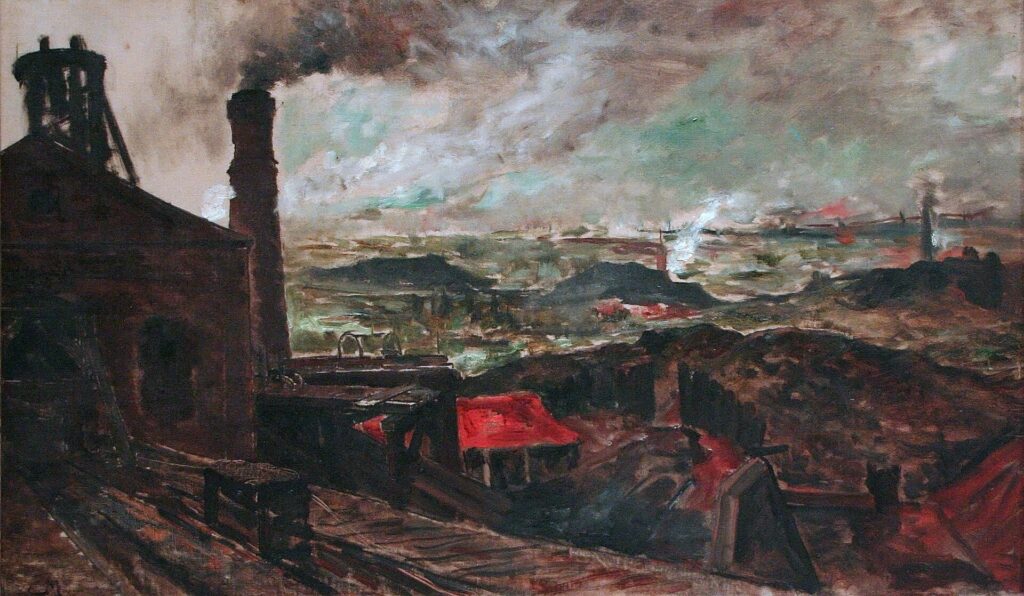
These industries transformed the physical landscape. Mining villages expanded into dense settlements, workers’ housing appeared beside collieries, and railways and canals connected factories with markets. Spoil heaps rose above the towns as waste rock accumulated from underground extraction.
In Herstal, immediately north of Liège, the relationship between industry and cycling was particularly direct. The town’s metalworking and arms-manufacturing businesses possessed the workshops, machinery and skilled labour needed to manufacture bicycles. As cycling expanded during the late nineteenth century, several local manufacturers diversified into the new industry.
The Légia workshops were established around 1890. Saroléa, originally an arms manufacturer founded in 1850, began producing bicycles in 1892 under the Royale Saroléa name. The Fabrique Nationale d’Armes de Guerre, better known as FN, entered bicycle manufacturing later in the decade. Other businesses, including rubber manufacturer Englebert, supplied products needed by the expanding cycling market.
These were not distant industries supplying an unrelated sport. The factories belonged to the same industrial environment in which cycling clubs, velodromes and races were emerging. On 12 July 1891, a velodrome opened in Liège’s Parc de la Boverie. Robert Protin, who raced there, became the first professional world sprint champion in 1895. The first Liège–Bastogne–Liège followed in May 1892.
The sport was initially less accessible than its later working-class reputation might suggest. At the end of the nineteenth century, a bicycle could cost the equivalent of seven or eight months of an industrial worker’s wages. Many early champions consequently came from relatively prosperous families, while the development of more affordable bicycles gradually broadened participation.

As road racing expanded during the following decades, the social background of competitors changed. Riders from agricultural and industrial communities increasingly entered the sport, bringing with them experiences far removed from the relatively privileged world of its earliest enthusiasts.
Wallonia’s industrial contribution to cycling was therefore both material and social. Its factories manufactured bicycles and components, while its towns supplied clubs, spectators and eventually competitors. The same industrial region that produced machinery, steel and manufactured goods helped establish the infrastructure of a developing sport.
Liège–Bastogne–Liège: From the Industrial City to the Ardennes
Liège–Bastogne–Liège was first held in 1892, making it the oldest of professional cycling’s five Monuments. Its nickname, La Doyenne, reflects that seniority within the sport.
The race originated in Liège, a city whose economic importance had long been associated with coal, metalworking and manufacturing. During the nineteenth century, the surrounding industrial region became one of the principal centres of Belgian economic development. Liège possessed the population, commercial infrastructure and sporting organisations capable of supporting a major cycling event.
The original concept was geographically straightforward: riders would travel from Liège southwards to Bastogne and return. Bastogne, situated on the Ardennes plateau, served as a turning point that gave the event its name and basic structure.
The first winner, Léon Houa, also won the following two editions, in 1893 and 1894. The race did not immediately establish an uninterrupted annual tradition, but it gradually developed into one of the most prestigious competitions in European road cycling.
Over time, its route evolved from a long-distance challenge into a carefully structured succession of climbs, particularly on the return towards Liège. Roads around the Ourthe and Amblève valleys became central to its character, with ascents such as Stockeu, Wanne, Haute-Levée, La Redoute and Roche-aux-Faucons acquiring international reputations.
Eddy Merckx remains the race’s record holder, with five victories between 1969 and 1975. Born in Meensel-Kiezegem in Flemish Brabant and raised in Brussels, Merckx became one of the defining figures in the history of Liège–Bastogne–Liège, winning on routes that rewarded his extraordinary endurance and attacking ability.
His record illustrates the demands of the event. Liège–Bastogne–Liège is not simply a climbing race. It requires riders to remain competitive after more than 250 kilometres, often in difficult weather, before confronting the final succession of ascents.
Yet one of the race’s most revealing victories came not from the sport’s most celebrated champions, but from the son of an Italian mining migrant who had grown up in Belgium’s industrial heartland.
Carmine Preziosi: From the Industrial Workforce to Liège–Bastogne–Liège
On 2 May 1965, Carmine Preziosi crossed the finish line of Liège–Bastogne–Liège at the Rocourt velodrome, claiming a largely unexpected victory. The 21-year-old Italian rider had grown up in Belgium, where his family had settled as part of the postwar migration that brought thousands of Italian workers into the country’s coalfields and factories.
Preziosi was born in Sant’Angelo all’Esca, in southern Italy, in July 1943. His father emigrated to Belgium after the Second World War, initially finding employment in the mining industry. Carmine eventually joined his family and grew up in the industrial environment around Charleroi, where Italian immigrant communities had become an important part of local society.
Before establishing himself as a professional cyclist, Preziosi also worked in industry. Accounts of his early life describe employment in a foundry, long working weeks and evening industrial education. Racing offered an alternative to a working life that demanded considerable physical effort but provided limited opportunities for advancement.
He proved exceptionally successful in amateur competition before becoming a professional in 1963. By 1964, he had finished second in the Giro di Lombardia, demonstrating that he possessed the endurance and ability needed to compete against established international riders.
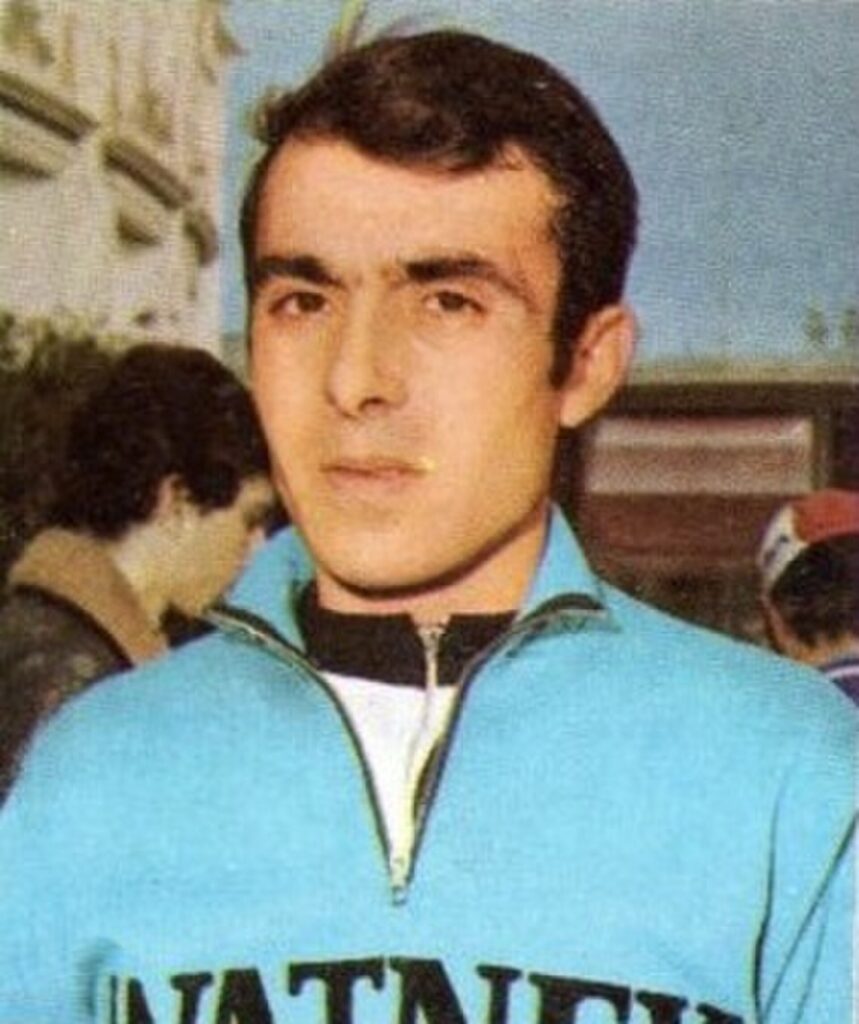
His victory at Liège–Bastogne–Liège the following spring came after a controversial finish. Preziosi caught Vittorio Adorni on the Rocourt track and overtook him in a sprint marked by physical contact between the riders. The race jury penalised Preziosi financially but allowed the result to stand.
For the son of an Italian mining migrant who had worked in Belgium’s industrial economy, victory in one of the country’s most prestigious races carried a significance beyond the sporting result. His career connected three histories that had developed alongside one another in postwar Wallonia: industrial labour, immigration and professional cycling.
Preziosi’s story also belongs to the wider history of Italian migration to Belgium. Following a bilateral labour agreement in 1946, large numbers of Italian workers arrived to support Belgian coal production. Their families established communities in industrial districts, particularly around Charleroi and Liège, where work, language and social identity were often closely connected.
The dangers of that industrial world were demonstrated by the Bois du Cazier disaster near Charleroi in August 1956, when 262 miners died, including 136 Italians. Nine years later, Preziosi’s victory offered a striking example of how the children of immigrant workers could become prominent figures in Belgian public life. His journey from industrial employment to victory in one of cycling’s oldest races provides a direct human connection between Wallonia’s industrial history and its sporting identity.
Neige–Bastogne–Neige: Hinault’s Race Through the Snow
The 1980 Liège–Bastogne–Liège began in conditions that would become legendary. Snow fell across the Ardennes, covering roads and surrounding fields while temperatures remained bitterly cold. Riders faced hours of exposure as the weather turned an already demanding race into an ordeal.
The event became known as Neige–Bastogne–Neige, a play on its name replacing Liège with the French word for snow.
Bernard Hinault, the French champion already established as one of the leading riders of his generation, continued through conditions that forced most of the field to abandon. As the race progressed, the peloton disintegrated, with riders seeking shelter or retiring because of the cold.
Hinault attacked and rode alone towards the finish, eventually winning by more than nine minutes over Hennie Kuiper. Of the 174 riders who started, only 21 finished.
The victory came at a physical cost. Hinault suffered frostbite in two fingers of his right hand, an injury that affected him long after the race.
The images of riders struggling through snow-covered roads became part of cycling’s collective memory. They also reveal something important about the geography of southern Belgium. The Ardennes are not especially high by European mountain standards, but their exposed uplands and changeable spring weather can create severe conditions.
A race that normally depends on repeated accelerations and tactical positioning had become a contest of endurance against the environment itself. Hinault’s victory remains one of the most dramatic examples of how weather can transform the demands of a familiar route.
La Redoute: The Climb That Can Decide a Monument
The Côte de La Redoute rises above Remouchamps, near Aywaille, south of Liège. It is one of the most famous climbs in professional cycling, despite being far shorter than the mountain passes associated with the Grand Tours.
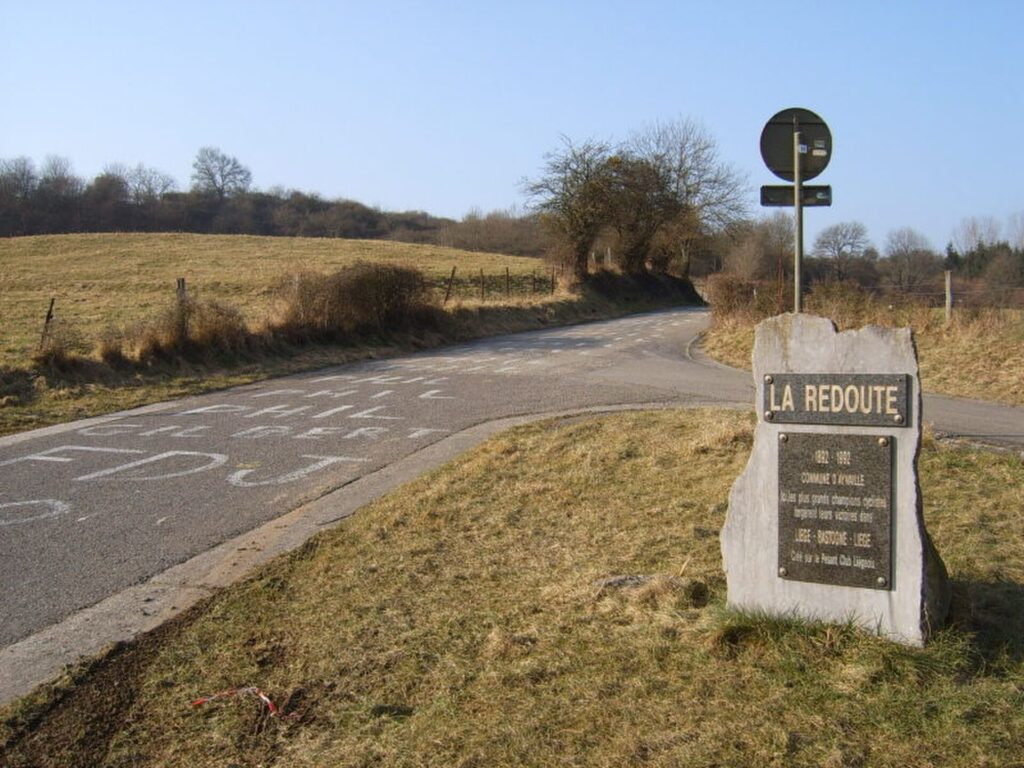
The climb entered Liège–Bastogne–Liège in 1975 and gradually became one of the race’s principal tactical landmarks. Its steep gradients and position late in the route made it an ideal place for attacks, particularly as the course evolved through the closing decades of the twentieth century.
La Redoute’s name is associated with a military redoubt from the French Revolutionary period. The road’s modern sporting reputation is therefore layered onto a landscape with a much older history.
On 21 April 2024, Tadej Pogačar approached La Redoute with UAE Team Emirates controlling the race. The Slovenian had already won Liège–Bastogne–Liège in 2021 and was among the overwhelming favourites for another victory.
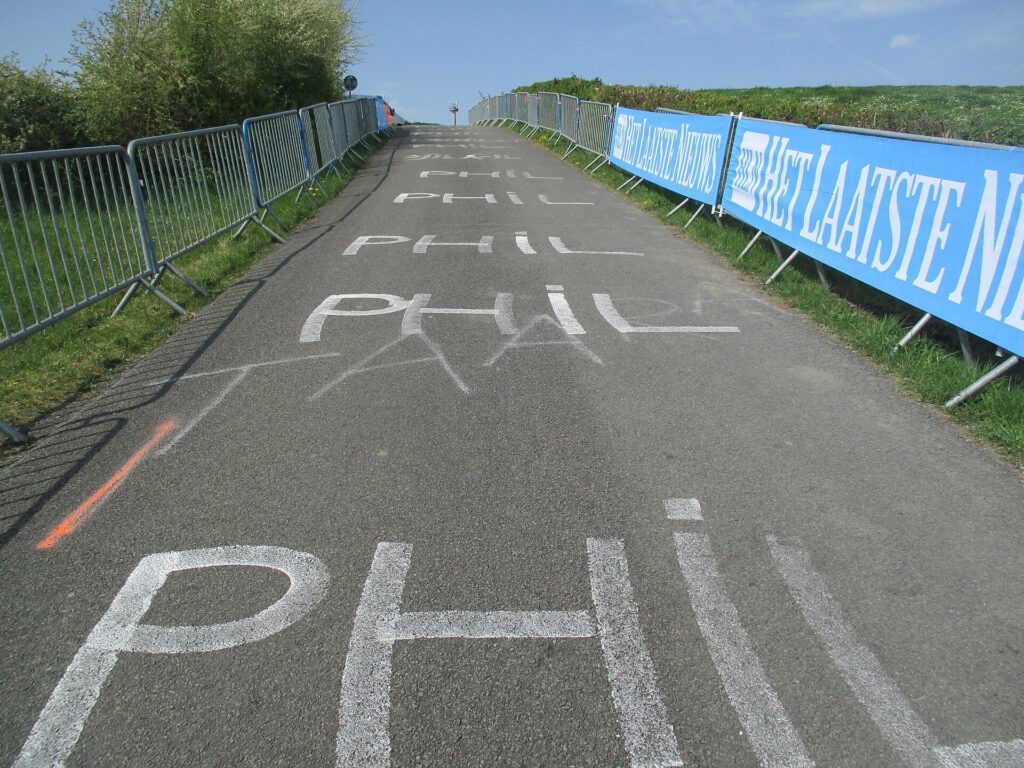
With approximately 34 kilometres remaining, Pogačar accelerated on La Redoute. The attack immediately separated him from his rivals, and nobody could follow. He continued alone across the remaining climbs and roads towards Liège, extending his advantage as the chasing riders struggled to organise an effective pursuit.
Pogačar crossed the finish line one minute and 39 seconds ahead of Romain Bardet, with Mathieu van der Poel taking third. The decisive move had come on a climb that lasts only a few minutes for the strongest professionals, yet it produced a solo effort of more than thirty kilometres.
The attack demonstrated why La Redoute remains so important. Its gradient is demanding, but the decisive factor is often the condition of the riders when they reach it. After hours of racing, an acceleration on the steepest section can expose differences in strength that would have been less obvious earlier in the day.
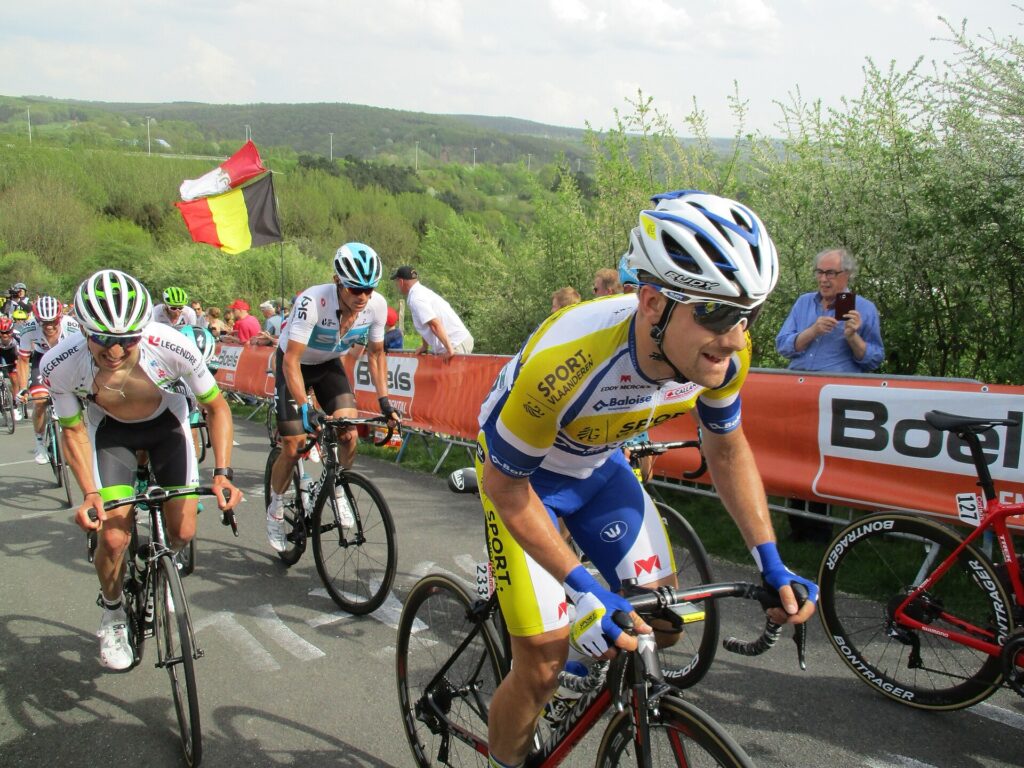
The road itself is not exceptionally long or remote. It climbs above a settled valley, surrounded by houses, wooded slopes and the infrastructure of everyday life. During Liège–Bastogne–Liège, that ordinary connection between the valley and higher ground becomes one of the most closely watched stretches of road in the sport.
The Mur de Huy: A Finish Built on an Impossible Gradient
La Flèche Wallonne, first organised in 1936, has followed several different routes during its history. The Mur de Huy appeared on the course in 1982, but the race did not finish at its summit until 1985. That year, Claudy Criquielion became the first rider to win La Flèche Wallonne with the finish at the top of the climb.
The Mur is approximately 1.3 kilometres long, averaging close to 10 percent, but its most difficult gradients are concentrated around the famous bend named after Criquielion. Figures of approximately 19 percent are commonly associated with the steep section, while the inside line through the bend can reach around 26 percent.

The distinction matters because the road’s difficulty is not constant. Riders enter the climb already fighting for position, then encounter increasingly severe gradients that make it difficult to maintain momentum. Accelerating too early can leave a contender exhausted before the summit, while waiting too long may allow rivals to establish an advantage.
Criquielion won La Flèche Wallonne again in 1989, reinforcing his association with the race. Born in Lessines, he had also become world road champion in 1984 and would win the Tour of Flanders in 1987. His name was later attached to the Mur’s famous bend, where a memorial commemorates his career.
Alejandro Valverde subsequently became the climb’s most successful specialist, winning La Flèche Wallonne five times between 2006 and 2017. His victories demonstrated the importance of pacing and timing on a road where the decisive effort must be sustained across several changes in gradient.
The Mur has also become central to women’s professional cycling. The women’s La Flèche Wallonne was introduced in 1998, with the same formidable finish providing a recurring test for successive generations of riders.
The setting gives the race much of its identity. Huy is a town on the Meuse, and the climb begins among ordinary streets before rising towards the wooded heights above. Unlike a remote mountain pass, the Mur remains part of the urban landscape throughout the year. Its sporting significance comes from the annual transformation of a steep local road into an internationally recognised finish.
Namur, the Citadel and the Wider Walloon Calendar
Wallonia’s cycling identity extends beyond Liège–Bastogne–Liège and La Flèche Wallonne. Other races have developed around the region’s towns, historic landmarks and varied terrain, creating a calendar that connects professional competition with local communities.
The Grand Prix de Wallonie is particularly associated with Namur and its citadel. The city stands at the confluence of the Sambre and Meuse, where the fortified heights overlook the river valleys and historic centre.
The Citadel of Namur developed over centuries as a strategic military position. Its location allowed successive powers to control an important meeting point of waterways and transport routes. In cycling, the ascent towards the citadel became a distinctive finish, demanding a final climbing effort after a long day of racing.
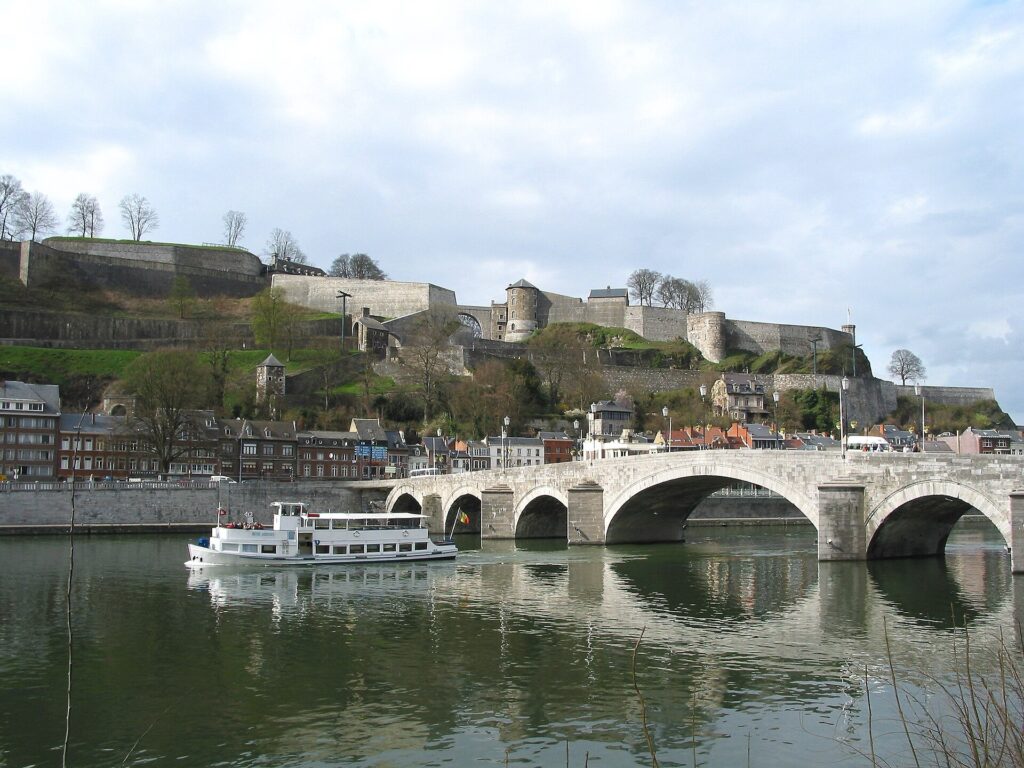
The approach is quite different from the Mur de Huy. Rather than confronting one exceptionally steep urban wall, riders negotiate a longer rise towards the fortified heights, where the gradient and accumulated fatigue can favour attackers or small groups.
On 17 September 2014, the Grand Prix de Wallonie approached Namur after nearly 200 kilometres of racing. A late group containing Greg Van Avermaet, Jan Bakelants and other contenders had formed following attacks in the final twenty kilometres. Tony Gallopin subsequently bridged across, setting up a contest on the climb towards the citadel.
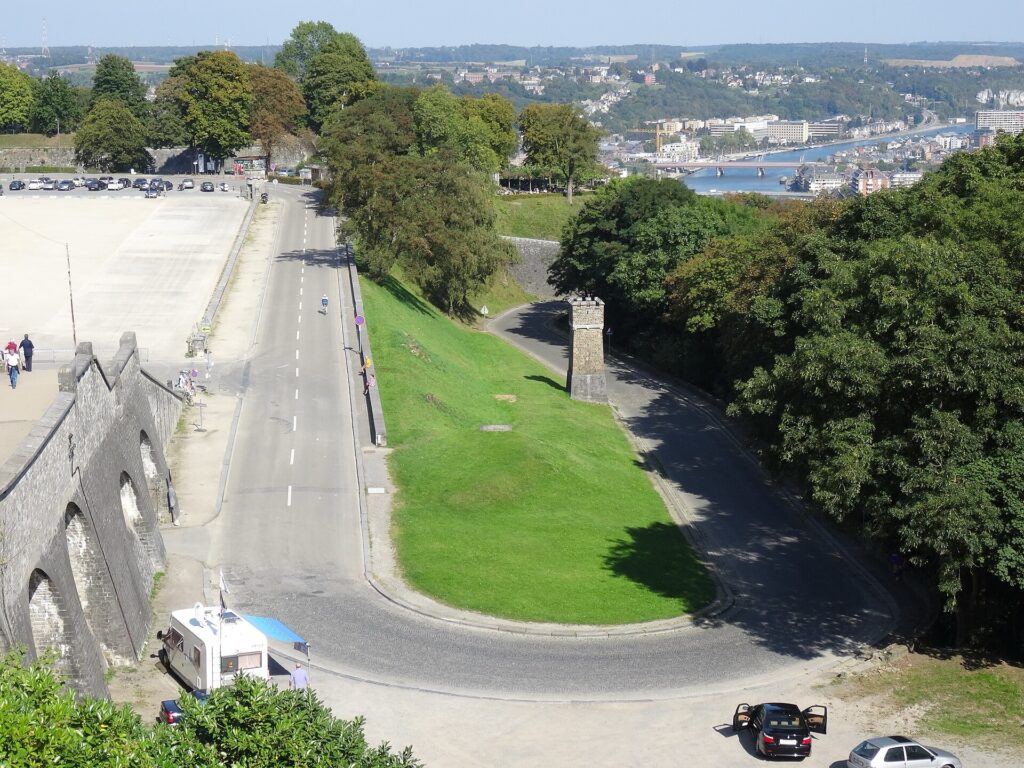
Van Avermaet, riding for BMC Racing Team, proved strongest on the uphill finish. He crossed the line two seconds ahead of Gallopin, with Bakelants taking third. The result illustrated how the citadel’s ascent could reward a powerful Classics rider capable of accelerating after several hours of racing.
The Tour de Wallonie provides a broader view of the region. As a stage race, it can move between industrial towns, agricultural districts and wooded uplands, incorporating different combinations of flat roads, rolling terrain and short climbs.
Its changing routes reveal places that the better-known Classics do not always visit. The race may pass through towns shaped by mining and manufacturing, agricultural communities on the plateaus or smaller settlements in the Ardennes.
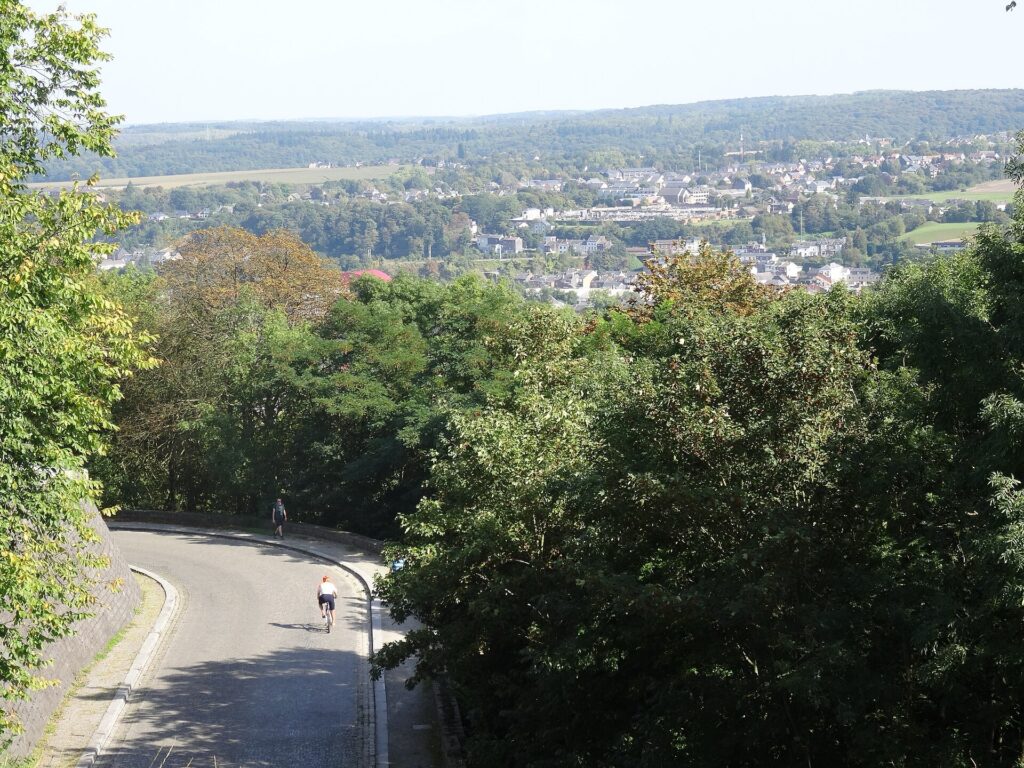
Regional and amateur events provide another important part of the cycling calendar. They depend on local clubs, volunteers, municipal authorities and organisers who sustain competition beyond the international spotlight. For developing riders, these races offer experience on demanding roads; for communities, they preserve a sporting tradition that reaches back through generations.
Industrial Decline and the Landscape That Remained
During the second half of the twentieth century, Wallonia’s industrial economy underwent profound changes. Coal mining declined, steel production was reorganised and many factories closed or reduced their activities. Communities that had grown around heavy industry faced difficult economic and social transitions.
The physical evidence remains visible across the former industrial belt. Spoil heaps rise above residential neighbourhoods, disused railway corridors cut through towns and former factory buildings occupy sites once central to local employment.

Four major mining sites—Grand-Hornu, Bois-du-Luc, Bois du Cazier and Blegny-Mine—were inscribed on the UNESCO World Heritage List in 2012. Together they preserve important examples of mining infrastructure, industrial architecture and workers’ settlements.
Some former industrial sites have since become museums, cultural centres or public spaces. Spoil heaps once associated with mining waste have developed vegetation and wildlife, while old transport corridors have sometimes been adapted for walking and cycling.
These transformations offer another way to explore Wallonia by bicycle, distinct from the competitive routes of the Ardennes Classics. Recreational cycling networks and former railway paths allow visitors to encounter industrial heritage at a slower pace, moving between communities whose histories were shaped by coal, steel and transport.
Philippe Gilbert and the Modern Walloon Tradition
On 17 April 2011, Philippe Gilbert won the Amstel Gold Race in the Netherlands. Three days later, he took victory at La Flèche Wallonne on the Mur de Huy. The following Sunday, he completed the sequence by winning Liège–Bastogne–Liège.
Gilbert had also won Brabantse Pijl earlier that month, completing a remarkable four-race sweep of the major hilly Classics of that spring.
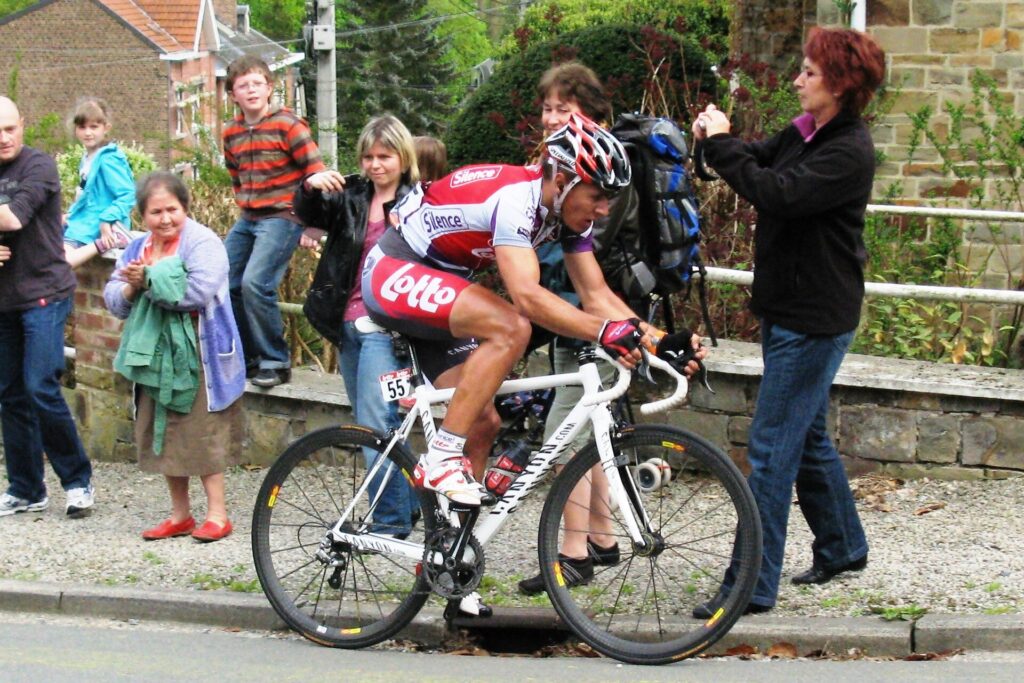
Born in Verviers and raised in the Liège region, Gilbert had grown up close to the roads that would later become central to his professional achievements. His 2011 victories were particularly significant because they connected a Walloon rider to the most prestigious races associated with the region’s cycling identity.
The Liège–Bastogne–Liège victory came after Gilbert had established himself as the strongest rider of the spring. In the final kilometres, he faced the Schleck brothers, Andy and Fränk, who were among the leading contenders. Gilbert proved faster in the finishing sprint, securing the Monument that held particular significance for a rider from the Liège area.
His career eventually extended far beyond the Ardennes. Gilbert won the Tour of Flanders, Paris–Roubaix and the 2012 world road championship, demonstrating an ability to succeed on cobbled roads, steep climbs and demanding one-day courses.
That versatility places him within a broader Belgian tradition of Classics racing, but his association with Liège remains especially strong. He became a contemporary representative of a region whose sporting reputation had been established long before his birth.
The Roads That Made a Cycling Heartland
Wallonia cycling history emerged from the relationship between its industrial communities and the roads connecting them. Coal mining and steelmaking transformed the Sambre and Meuse valleys, concentrating populations in towns where clubs, organisers and sporting newspapers helped cycling develop. The bicycle factories of Herstal provided a direct industrial connection to the sport, while riders such as Carmine Preziosi demonstrated how cycling could become part of the lives of working-class and immigrant communities.

The industrial landscape has changed considerably since the nineteenth century. Mines have closed, steel production has contracted and former industrial sites have acquired new cultural and environmental roles. Yet the roads that connect these communities continue to carry the races that helped establish Wallonia’s international reputation.
On the Mur de Huy, the road remains steep long after the barriers have been removed and the spectators have gone home. In the Ardennes, the climbs of Liège–Bastogne–Liège return to their ordinary role as connections between villages and valleys. Their gradients were created by the landscape, but their significance was built through generations of racing.
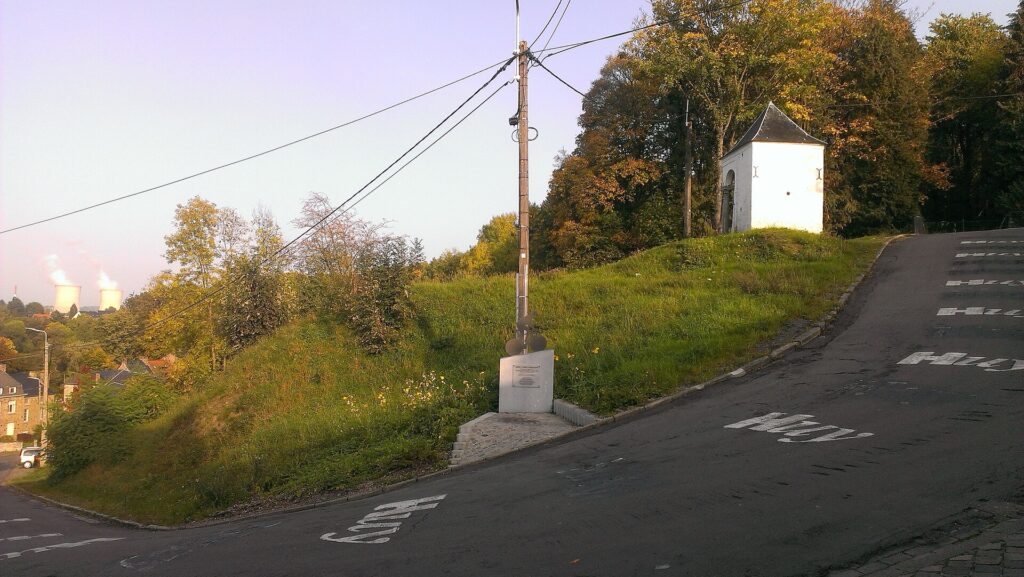
(Photo: Hoebele / CC BY-SA 4.0 / Source: Wikimedia Commons, File: 2017 Mur de Huy 3.jpg)